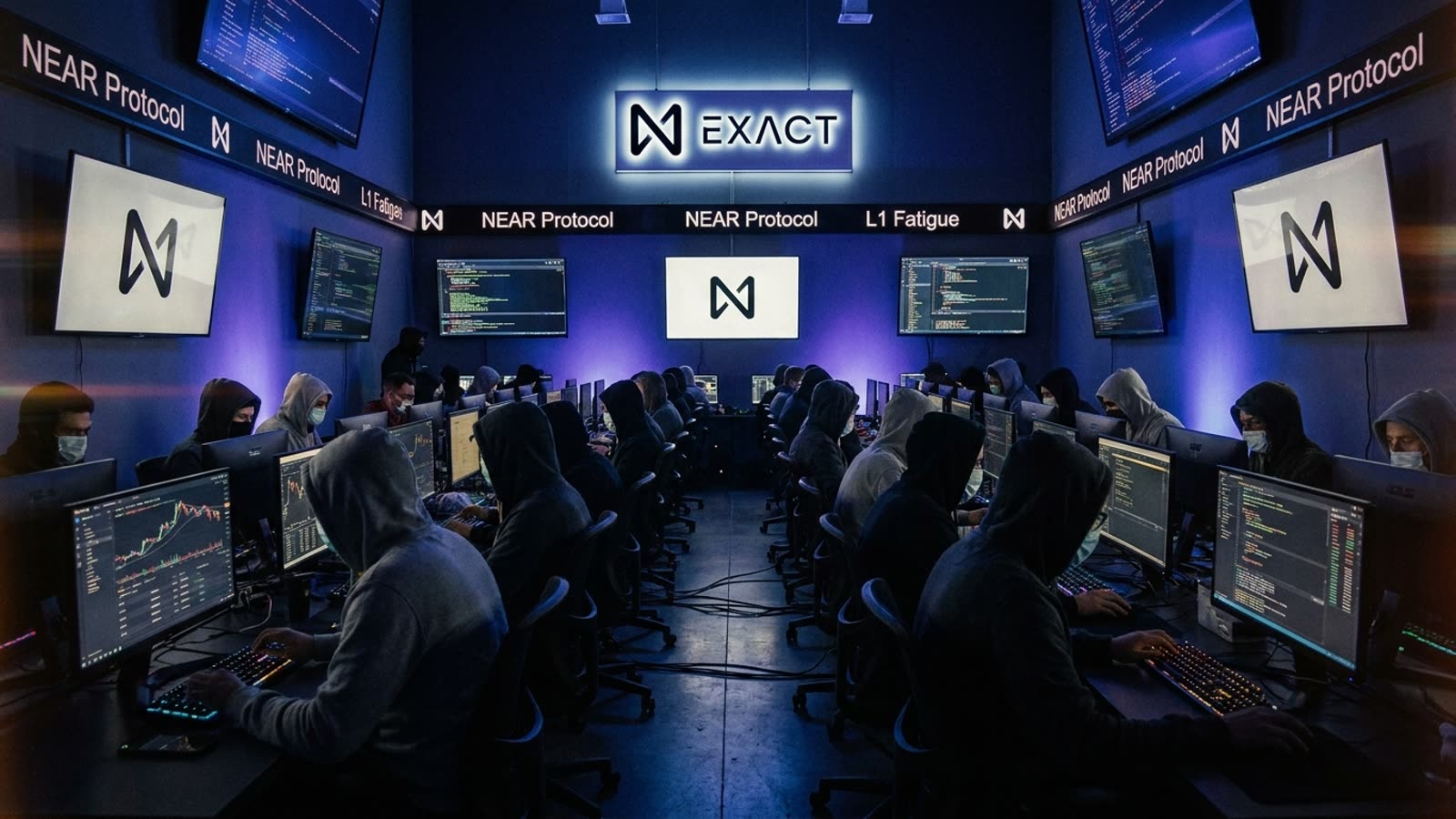
NEAR Protocol slipped 1.2 percent in the past twenty-four hours, a small move in isolation but one that arrives at an uncomfortable moment for a blockchain that once styled itself as the thinking person's alternative to Ethereum. Trading near $4.84, the token remains up more than 120 percent over the past year, yet that gain increasingly looks like a relic of the 2025 AI-agent hype cycle rather than a sign of durable adoption.
The problem is not that NEAR has failed; it is that NEAR has succeeded just enough to survive without succeeding enough to dominate. Its sharded architecture and human-readable account names were supposed to make onboarding frictionless. Its early pivot toward AI-agent infrastructure was supposed to position it as the natural home for autonomous on-chain actors. Neither bet has delivered a knockout.
The Solana shadow
Solana's relentless throughput improvements and its grip on retail speculation have made it the default destination for developers chasing speed and liquidity. Ethereum's rollup ecosystem, meanwhile, has absorbed much of the institutional capital that might otherwise have explored alternative layer-ones. NEAR finds itself in the uncomfortable middle: technically impressive, philosophically coherent, and perpetually overshadowed.
The chain's total value locked has plateaued in recent months, hovering in a range that suggests organic activity without explosive growth. Developers praise the tooling; users remain elsewhere.
The AI pivot's mixed returns
NEAR's bet on AI agents was prescient in timing but muddled in execution. The chain hosts several agent frameworks, yet none has achieved the viral adoption of Solana-based competitors. Part of the issue is branding: NEAR's messaging oscillates between enterprise seriousness and crypto-native irreverence, leaving potential partners uncertain which version they are buying into.
Foundation leadership has emphasized patience, arguing that infrastructure investments take years to compound. That may be true, but crypto markets rarely reward patience when shinier alternatives exist.
Our take
NEAR remains one of the more intellectually honest projects in a space dominated by vaporware and recycled narratives. Its technology is sound, its community is genuine, and its roadmap is plausible. None of that guarantees relevance. The layer-one wars have entered a consolidation phase where network effects matter more than marginal technical superiority. NEAR's best path forward may be to stop competing for generalist dominance and instead own a defensible niche—AI agents, perhaps, or privacy-preserving compute. A 1.2 percent dip is noise; the strategic drift is the signal.