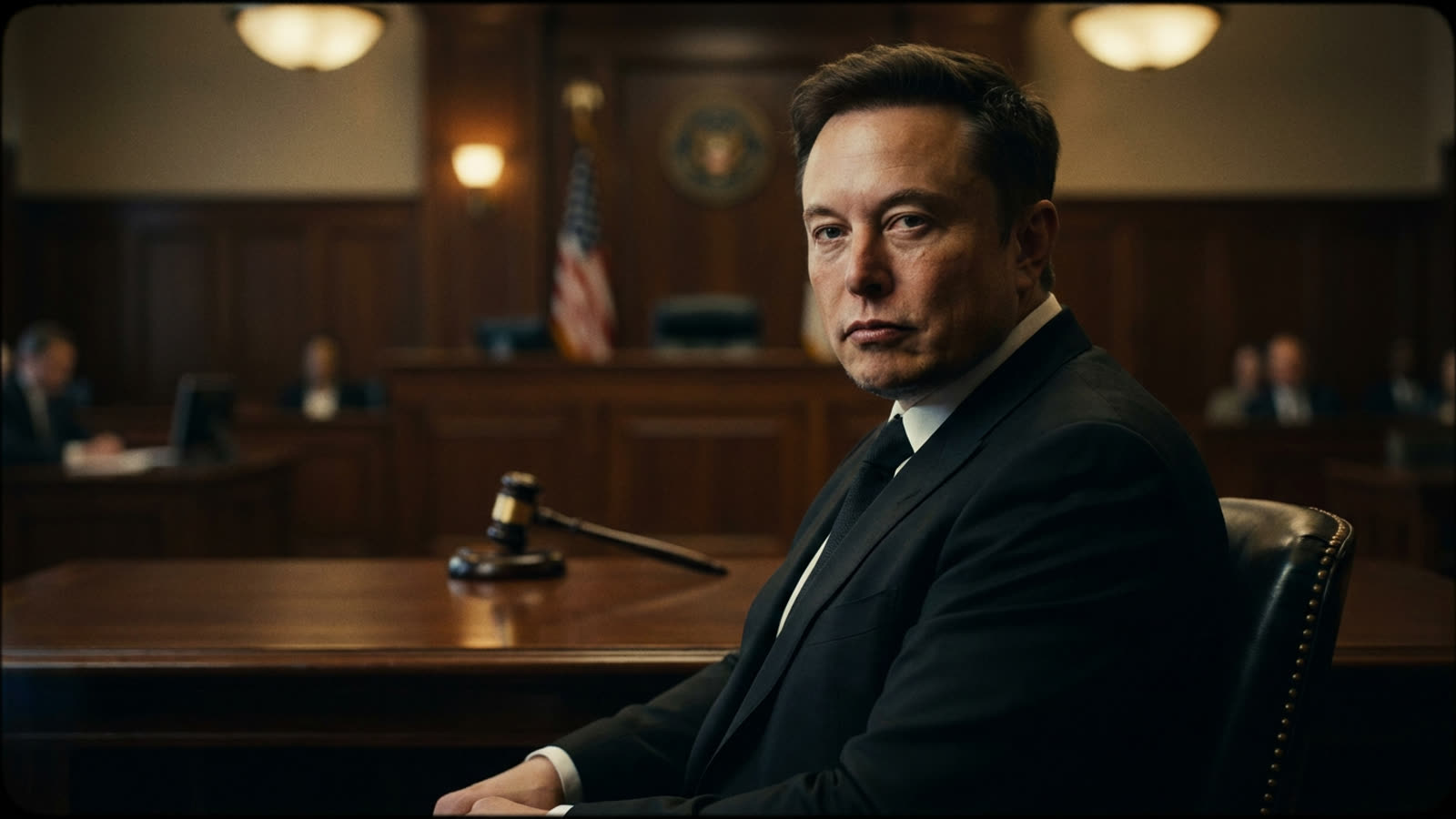
For years, Elon Musk has treated securities regulators the way he treats speed limits: as suggestions for lesser mortals. The SEC has obliged, repeatedly accepting settlements that amount to rounding errors on his net worth. But a federal judge's refusal to automatically approve his latest deal suggests the judiciary may be losing patience with this arrangement.
The settlement in question—a mere $1.5 million to resolve allegations that Musk failed to properly disclose his accumulating stake in Twitter before his 2022 acquisition—was supposed to be routine. Musk pays a pittance, admits no wrongdoing, and everyone moves on. Instead, the presiding judge flagged "red flags" in the agreement and declined to rubber-stamp it, demanding more justification for why this penalty serves the public interest.
The disclosure that wasn't
The underlying violation is almost comically straightforward. Securities law requires anyone acquiring more than 5% of a public company to disclose that stake within ten days. Musk blew past that deadline by weeks while continuing to buy shares, saving himself an estimated $150 million by purchasing at prices that would have risen had the market known a billionaire was accumulating a controlling position. The $1.5 million settlement represents roughly 1% of those savings—less than the interest Musk earns in a single day.
This is not Musk's first dance with the SEC. In 2018, he settled fraud charges over his infamous "funding secured" tweet about taking Tesla private, paying $20 million personally and agreeing to have his Tesla communications supervised. He has since repeatedly flouted that supervision with apparent impunity, tweeting market-moving statements without pre-approval. The agency's response has been to send sternly worded letters.
Why judicial skepticism matters
Federal judges typically defer to settlements between regulatory agencies and defendants, reasoning that the agency is best positioned to weigh enforcement priorities. But this deference is not unlimited. Judges can and occasionally do reject deals they view as inadequate, particularly when the public interest seems poorly served.
The "red flags" language is notable. It suggests the court sees a pattern—settlements that function less as deterrence than as licensing fees for continued misconduct. If the judge ultimately rejects this deal or demands modifications, it could force the SEC to either pursue more aggressive penalties or explain publicly why it won't.
More broadly, the ruling arrives as Musk's political influence has grown substantially. His prominent role in the current administration and his companies' extensive government contracts create an uncomfortable dynamic for regulators who might otherwise pursue him more aggressively. A judiciary willing to scrutinize sweetheart deals provides a check that enforcement agencies may be reluctant to exercise themselves.
Our take
The SEC has long operated on the theory that any settlement is better than protracted litigation against a defendant with unlimited resources and an appetite for combat. With Musk, this theory has produced a decade of settlements that he treats as minor inconveniences rather than meaningful consequences. A judge asking pointed questions about whether this serves anyone besides Musk is not judicial overreach—it is the system working as designed. The real question is whether the SEC will take the hint or continue pretending that fining a quarter-trillionaire the equivalent of a parking ticket constitutes securities enforcement.