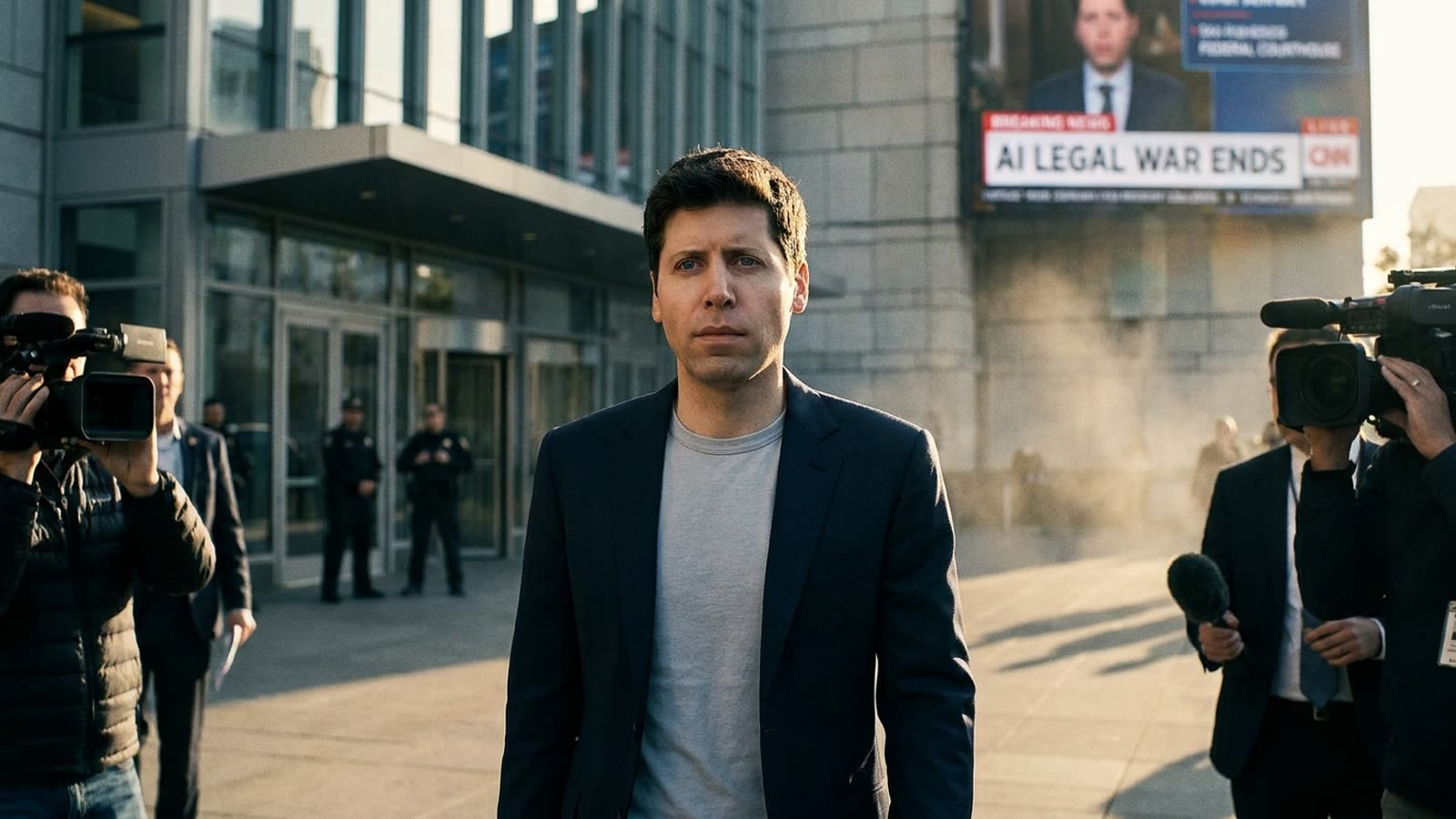
Elon Musk's sprawling legal assault on OpenAI and Sam Altman has ended not with a bang but with a judicial shrug. The case, which Musk positioned as a noble stand against the corruption of artificial general intelligence research, was always more autobiography than jurisprudence—a billionaire's attempt to litigate his way back into a company he helped create and then abandoned.
The court's dismissal strips away the rhetorical grandeur Musk draped over his claims. What remains is a familiar Silicon Valley story: a co-founder who left, watched his former venture become the most valuable AI company on Earth, and discovered that regret is not a cause of action.
The case that wasn't
Musk's legal theory rested on the premise that OpenAI had betrayed its founding nonprofit mission by partnering with Microsoft and pursuing commercial interests. He alleged that Altman and the board had essentially stolen the future from humanity by prioritizing profit over open research. The framing was apocalyptic; the evidence was not.
Courts are poorly equipped to adjudicate philosophical disputes about the trajectory of artificial intelligence. They are, however, quite good at identifying when a plaintiff lacks standing, when contracts don't say what plaintiffs wish they said, and when grievances—however deeply felt—don't constitute legal claims. Musk's suit failed on these mundane grounds, not because judges ruled on the nature of AGI.
The xAI shadow
The lawsuit's timing was never coincidental. Musk filed as his own AI venture, xAI, was ramping up to compete directly with OpenAI. The legal action served multiple purposes beyond the courtroom: it generated negative headlines for a competitor, positioned Musk as the responsible AI steward in contrast to Altman's alleged recklessness, and kept OpenAI's leadership distracted during a critical period of product development.
That strategy has now backfired. The dismissal hands Altman a clean narrative victory at precisely the moment OpenAI is expanding aggressively into new markets. Musk, meanwhile, must explain to xAI investors and partners why his public crusade against the industry leader amounted to nothing.
What the fight was actually about
Strip away the AGI rhetoric and the lawsuit was about control—specifically, Musk's lack of it. He provided early funding and credibility to OpenAI, then departed as the organization evolved in directions he opposed. When OpenAI became the most consequential AI company in the world, Musk found himself on the outside of a revolution he believed he had helped start.
This is not a unique Silicon Valley tragedy. The industry is littered with founders who left too early, investors who sold too soon, and visionaries who watched others execute on their ideas. What distinguished Musk's response was the scale of his platform and his willingness to frame personal grievance as civilizational concern.
Our take
Musk's loss is clarifying. The AI safety concerns he raised are real and worth serious debate—but they deserve better than to be weaponized in a proxy war between competing billionaires. OpenAI's governance deserves scrutiny; its rapid commercialization raises legitimate questions about mission drift. None of that made Musk the right messenger or litigation the right venue. The courts have now confirmed what was evident from the start: this was never really about saving humanity. It was about a man who couldn't accept being left behind.