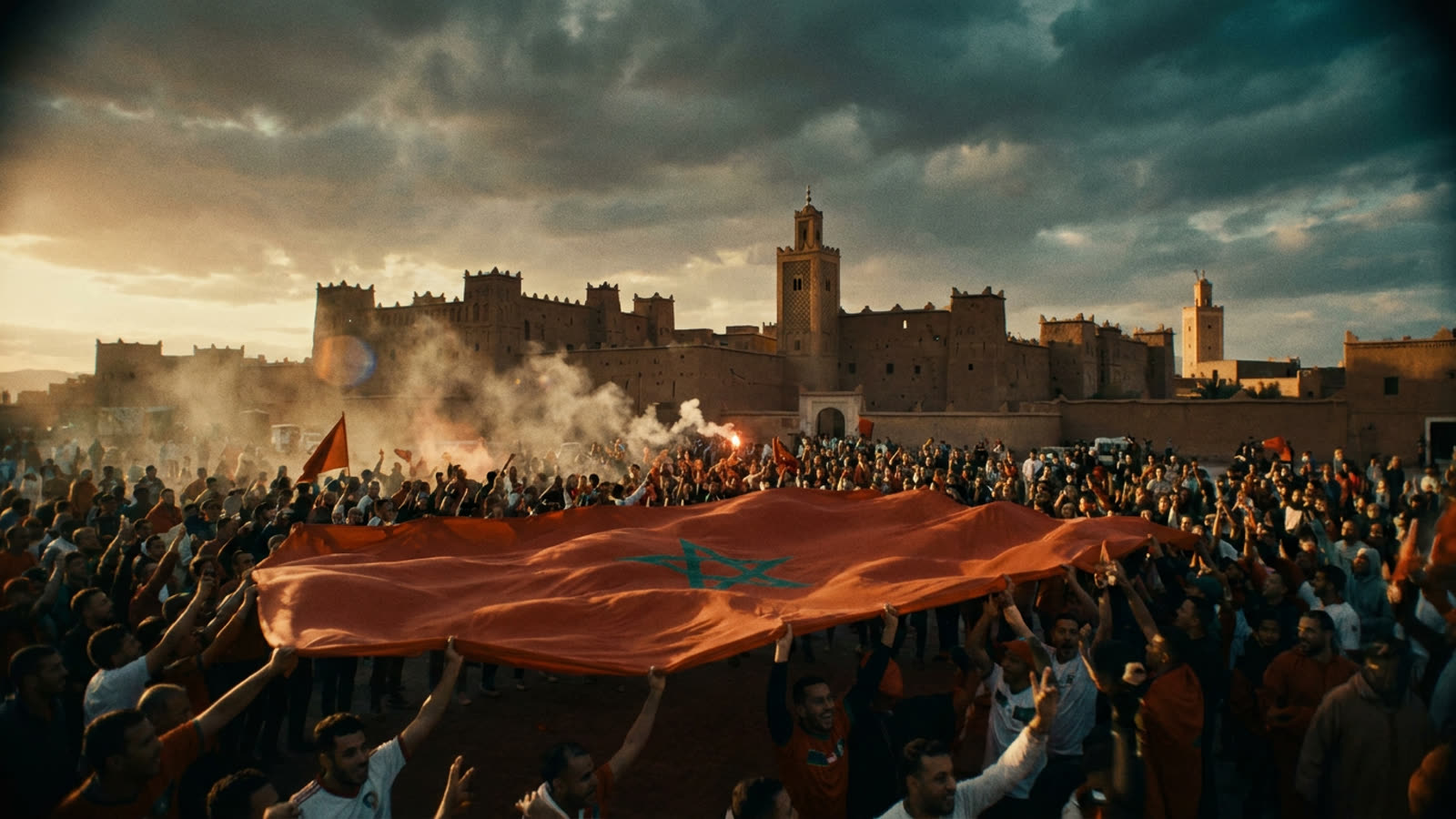
Morocco's World Cup campaign has officially moved past the "remember when they beat Spain?" phase and into something more durable: genuine contention.
The Atlas Lions' 2-1 victory over the Netherlands in the round of 16 was not the defensive siege that characterized their 2022 heroics. This was a controlled, tactically sophisticated performance against a Dutch side that entered the tournament as dark-horse favorites. Morocco took the lead, absorbed pressure intelligently, and struck again when the Netherlands overcommitted. The final whistle confirmed what the group stage had suggested: Walid Regragui has built a side that can hurt opponents in multiple ways.
The tactical evolution
Four years ago in Qatar, Morocco's path to the semifinals relied heavily on defensive organization and the occasional counterattacking dagger. They conceded just one goal in the entire tournament — an own goal — before losing to France. The approach was effective but felt like it had a ceiling.
This Morocco team retains that defensive discipline but has added genuine midfield control. Against the Netherlands, they dominated possession in the second half, something unthinkable in 2022. The blend of European-based technical players with the collective mentality Regragui demands has created a side that can adapt its style to the opponent. Against weaker teams, they can press and attack; against stronger ones, they can absorb and counter. That flexibility is what separates tournament contenders from one-round wonders.
What it means for the bracket
Morocco will face the winner of the Japan-Croatia match in the quarterfinals — a favorable draw on paper, though both opponents have shown quality. More importantly, Morocco has avoided the tournament's presumptive heavyweights until at least the semifinals. Brazil, Argentina, and France are all on the other side of the bracket. The path to a second consecutive semifinal is not just plausible; it looks probable.
The Netherlands, meanwhile, must reckon with another tournament disappointment. A golden generation that never quite materialized has given way to a transitional squad that lacks the individual brilliance to compensate for tactical limitations. Ronald Koeman's side created chances but never looked like the more dangerous team.
Our take
Morocco in 2022 felt like a beautiful anomaly — the tournament's feel-good story, destined to fade when the magic ran out. Morocco in 2026 feels like a program that has figured something out. They have continuity in coaching, a core of players in their prime at top European clubs, and the psychological advantage of having already proven they belong at this level. The Atlas Lions are not crashing the party anymore. They are hosting it.