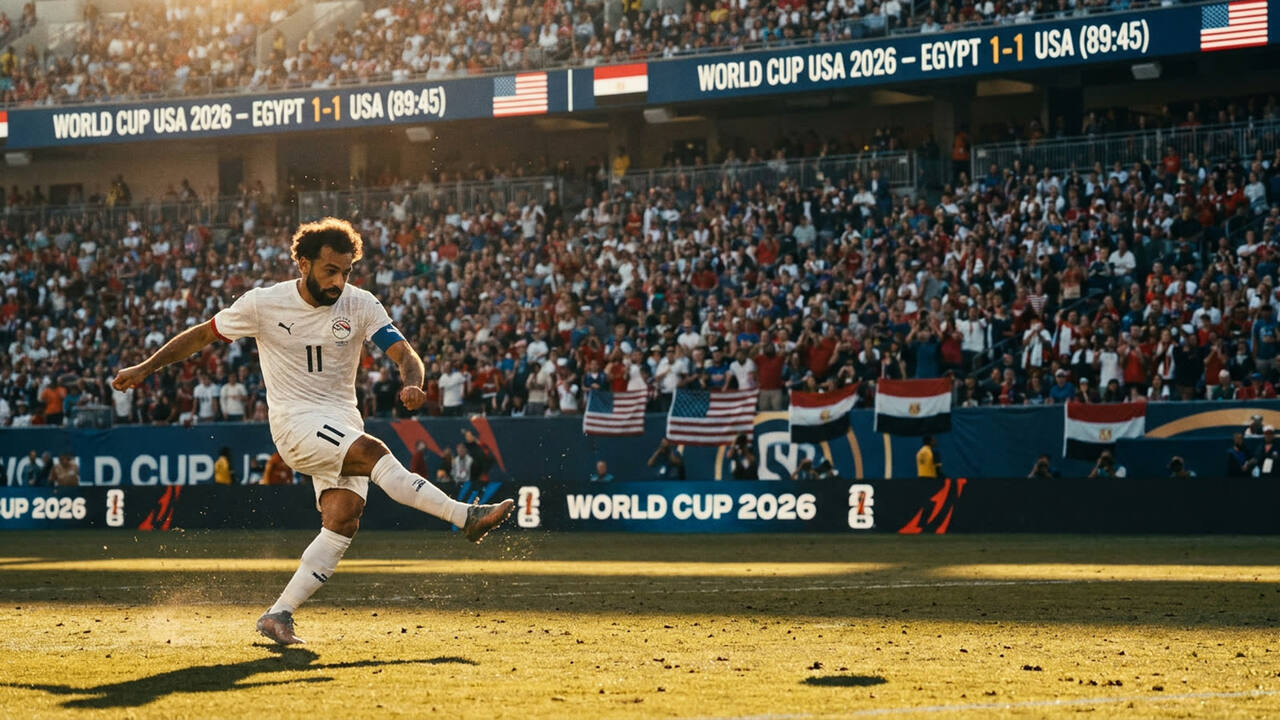
Mohamed Salah has scored 223 goals for Liverpool, won the Premier League, the Champions League, and collected individual honors that would fill a modest museum. In Egypt, none of it quite counts. What counts is the World Cup, and Egypt have never won a single match in the tournament's 96-year history.
That zero haunts African football's most decorated active player. Salah turns 34 next week, and while his pace remains devastating, the biological clock is not negotiable. Egypt's current squad — featuring Salah, the aging but still elegant Mahmoud Trezeguet, and a defense anchored by Omar Gaber — represents a concentration of talent the country may not see again for a generation. The 2026 World Cup, co-hosted by the United States, is the golden generation's final examination.
The weight of history
Egypt qualified for the 1934 World Cup, lost to Hungary, and then vanished from the tournament for 56 years. Their return in 1990 produced three draws and zero wins. Russia 2018 brought two defeats, including a heartbreaking loss to the hosts in which Salah played through a shoulder injury sustained in the Champions League final weeks earlier. The pattern is consistent: Egypt arrive, Egypt compete respectably, Egypt depart without a victory.
The psychological burden is immense. Egypt have won the Africa Cup of Nations seven times — more than any other nation — yet continental success has never translated to the global stage. Salah himself has spoken about the difference in pressure: at Liverpool, a loss means disappointment; with Egypt, a loss feels like national mourning.
The American opportunity
The 2026 format offers Egypt genuine hope. The expanded 48-team tournament means more games, more pathways, and a group stage where a single win could be enough to advance. Egypt's group, while challenging, lacks the traditional powerhouses that have historically crushed their ambitions. The mathematics favor a breakthrough.
More importantly, the tournament's North American venues suit Egypt's substantial diaspora. Matches in Houston, Dallas, and Atlanta will feel like home games, with Egyptian supporters likely to outnumber opponents' fans in several fixtures. Salah has always elevated his game when the crowd energy matches his internal intensity.
Our take
Salah's club legacy is secure regardless of what happens this summer. But legacies are strange things — they tend to be defined by what's missing rather than what's present. For a player who has conquered English football, European football, and African football, the absence of a single World Cup victory will always be the asterisk. Egypt's chances remain modest, but modest is better than none. Salah has perhaps three matches to rewrite a 92-year-old story. The pressure is absurd. The opportunity is real.