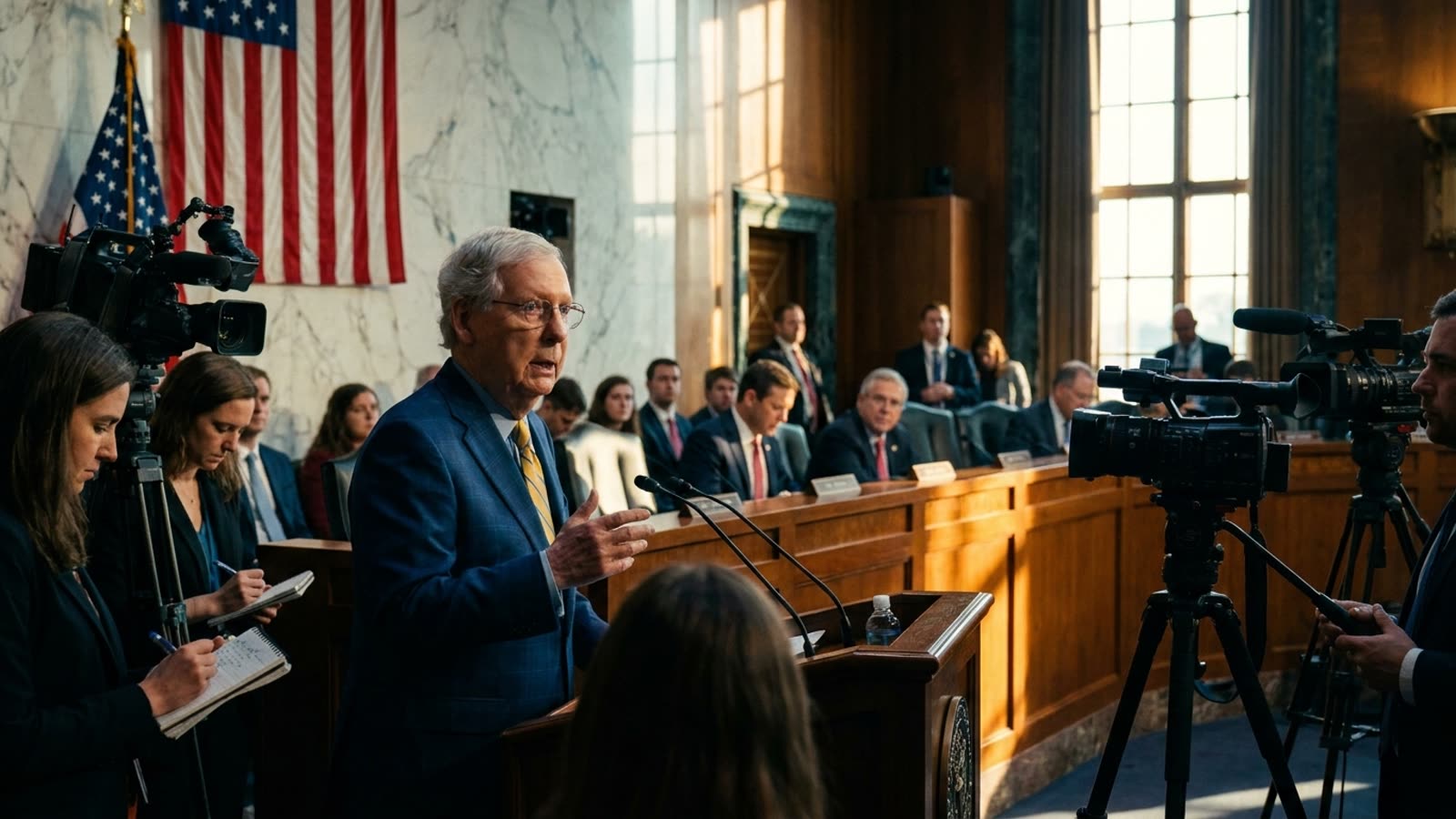
There is no more improbable survivor in American politics than Addison Mitchell McConnell III, and he knows it.
The Kentucky senator, now 84, has spent recent months navigating what aides delicately term "health episodes" — freezing incidents caught on camera, hospitalizations kept deliberately vague, a gait that has slowed to something approaching ceremonial. He announced last year he would step down from Republican leadership after the 2024 elections but remain in the Senate through his term's end in 2027. It was the rare McConnell concession: an acknowledgment that the body, unlike the Senate calendar, cannot be indefinitely manipulated.
The architect's blueprint
McConnell's legacy is architectural rather than rhetorical. He never delivered a memorable speech, never inspired a movement, never pretended to care about inspiring one. What he did was study procedure the way a chess grandmaster studies openings — not for elegance but for advantage. The blockade of Merrick Garland's Supreme Court nomination in 2016, followed by the rushed confirmation of Amy Coney Barrett in 2020, represented his masterwork: a 6-3 conservative Court majority that will shape American law for decades.
Critics call it hypocrisy. McConnell would call it winning. The distinction has never troubled him.
Power's physical toll
Washington has always accommodated infirmity in its senior statesmen — Strom Thurmond served until 100, Robert Byrd until 92 — but the modern media environment is less forgiving. McConnell's freeze episodes, replayed endlessly online, became symbols in the broader debate about gerontocracy in American governance. His continued presence in the chamber, even diminished, speaks to something beyond mere stubbornness: the Senate remains the only arena where his particular skills retain currency.
He has outlasted three presidents, countless would-be successors, and an entire generation of colleagues who underestimated his patience. The tortoise metaphor his team once embraced has aged into something more ambiguous.
Our take
McConnell deserves neither the hagiography his allies prefer nor the demonization his opponents indulge. He is simply the most consequential legislative strategist of the past half-century, a man who understood that in a system designed for gridlock, the player who best tolerates stalemate wins. Whether that victory was worth the institutional damage — a Supreme Court confirmation process now nakedly partisan, a Senate more tribal than deliberative — is a question he has never shown interest in answering. History will. He seems unbothered by the wait.