The Republican Party's tariff consensus, such as it ever was, is fracturing at the worst possible moment for the former president's economic agenda.
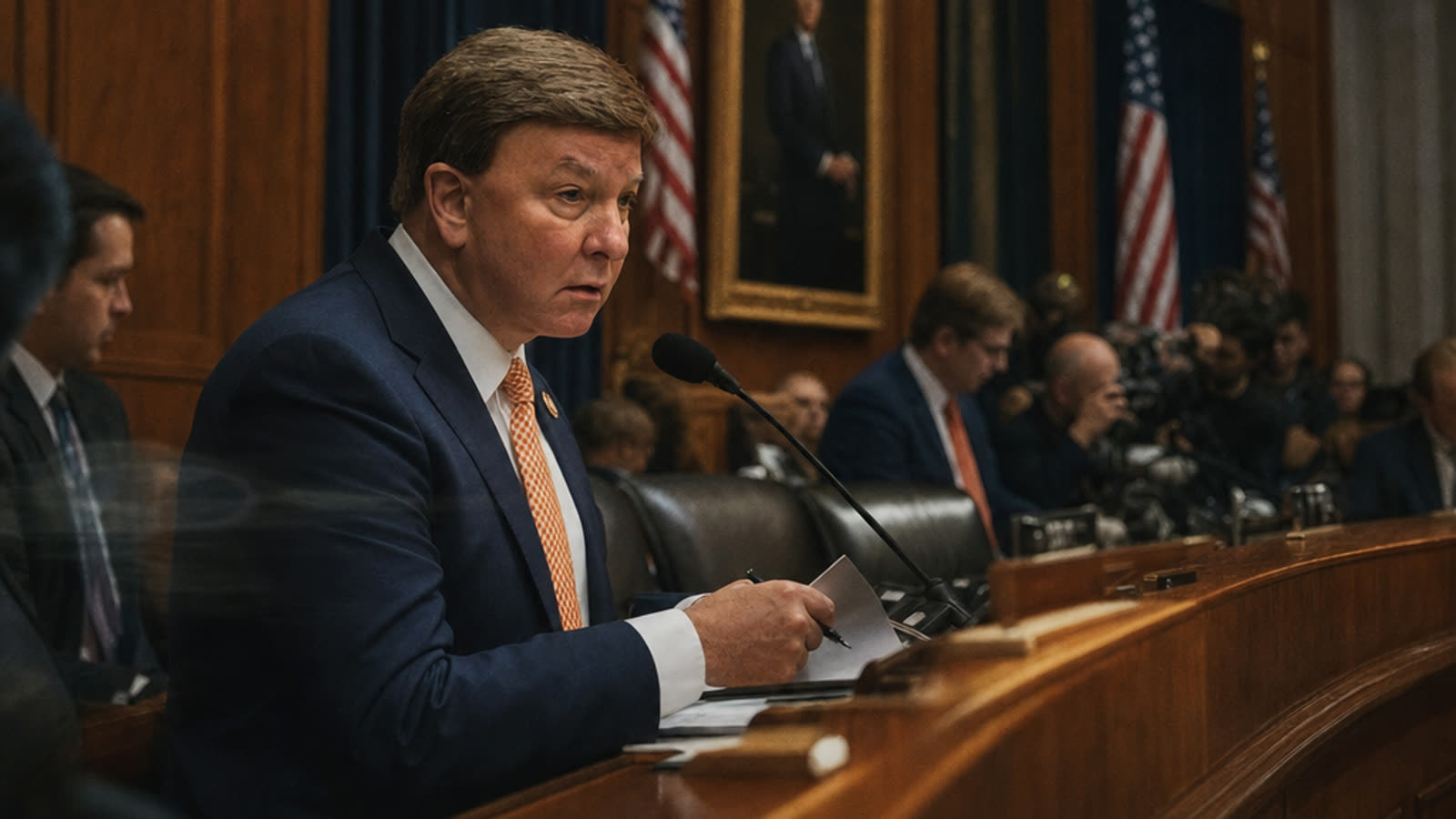
Mike Rogers, the former congressman now running for Michigan's open Senate seat, has publicly distanced himself from Donald Trump's sweeping tariff proposals — a remarkable act of apostasy in a party that has spent years genuflecting to Trumpian trade doctrine. Rogers isn't some Never-Trump relic clinging to the ghost of free-market Republicanism; he's a Trump-endorsed candidate in one of the most consequential Senate races of the cycle. And he's doing the math that matters in the industrial Midwest: tariffs may play well at rallies, but they terrify the manufacturers, autoworkers, and agricultural exporters who actually decide elections in states like Michigan.
The Michigan calculation
Rogers's break is strategic, not ideological. Michigan's economy remains deeply entangled with global supply chains — the auto industry alone accounts for nearly one in five manufacturing jobs in the state. Broad tariffs, particularly on Chinese components and materials, would ripple through every tier of the automotive supply chain, raising costs for the Big Three and their vast network of suppliers. Rogers, who represented a district that includes significant manufacturing, understands that voters in Macomb County don't want lectures about trade deficits; they want to know whether their jobs are secure.
The political context makes the move even more notable. Rogers is locked in a tight race against Democrat Elissa Slotkin, herself a former congresswoman with a national security background. Slotkin has hammered the tariff issue relentlessly, framing Trump's trade proposals as a threat to Michigan's economic recovery. Rogers's decision to create daylight with Trump on this specific issue is a tacit acknowledgment that Slotkin's attacks are landing.
What this means for the national party
Rogers is not alone, even if he's the most prominent Republican to say the quiet part out loud. Across the Rust Belt, GOP candidates are threading an increasingly difficult needle: embracing Trump's populist energy while quietly hedging on the policies that could alienate the suburban and exurban voters they need. The tariff question exposes a fundamental tension in the MAGA coalition — between the rhetorical appeal of economic nationalism and the practical reality that American manufacturing depends on integrated global markets.
The national party apparatus has largely ignored these defections, preferring to maintain the fiction of unified support for Trump's economic vision. But the fractures are real, and they're appearing precisely where Republicans can least afford them: in the swing states that will determine Senate control.
Our take
Rogers's tariff apostasy won't cost him Trump's endorsement — the former president needs Michigan too badly to punish dissent right now. But it reveals something important about the limits of MAGA economic doctrine: when the rubber meets the road in competitive states, Republican candidates are discovering that voters care more about their paychecks than about winning abstract arguments over trade deficits. The question is whether this pragmatic streak survives contact with a potential second Trump administration, or whether it's merely a convenient fiction for the campaign trail.