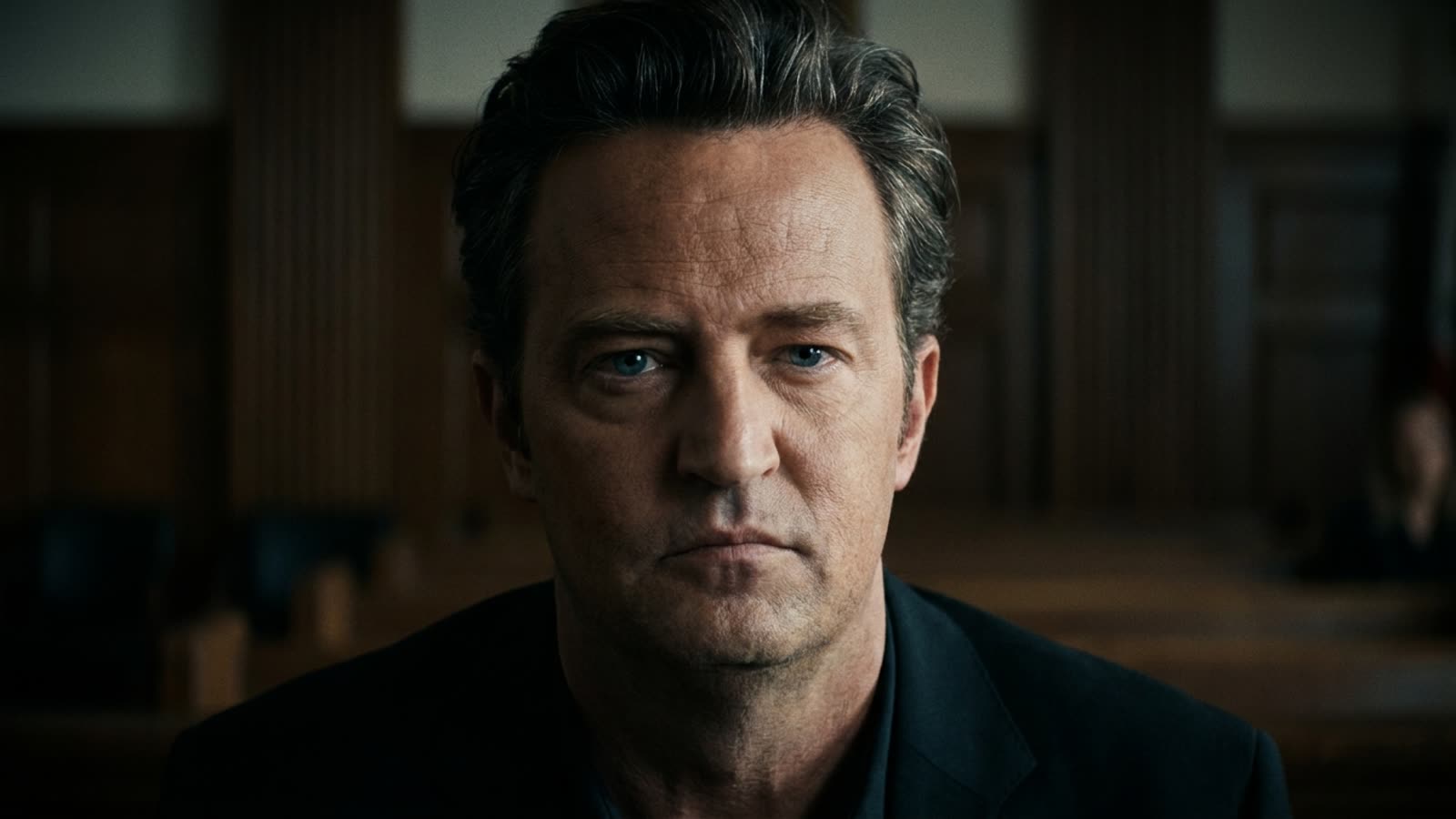
The legal reckoning over Matthew Perry's death has moved from the clinical to the deeply personal. Suzanne Morrison, the late actor's mother, testified in court this week against Kenneth Iwamasa, Perry's longtime personal assistant who has already pleaded guilty to conspiracy to distribute ketamine in connection with the star's October 2023 death. Her complaint: Iwamasa's behavior at Perry's funeral was, in Morrison's telling, disrespectful and inappropriate.
The specific allegations remain somewhat opaque in public filings, but the thrust is clear enough. Morrison believes the man who injected her son with the ketamine that killed him had no business attending the memorial, and that his conduct there compounded the injury. It is a mother's grief weaponized in a courtroom, and it speaks to the peculiar horror of this case—the people closest to Perry, the ones paid to care for him, are the ones who allegedly facilitated his spiral.
The enabling apparatus
Iwamasa is not the only figure caught in the federal investigation. Two doctors and a so-called "ketamine queen" have also faced charges for their roles in supplying Perry with the drug in the weeks before his death. The actor was found unresponsive in his hot tub at his Pacific Palisades home; the coroner ruled the cause of death as acute ketamine effects, with drowning and coronary artery disease as contributing factors.
What has emerged since is a portrait of a man surrounded by people willing to provide whatever he wanted. Perry had been open about his addiction struggles—his memoir, published just a year before his death, detailed decades of substance abuse and multiple rehab stints. The ketamine was ostensibly for depression treatment, but the quantities involved and the manner of administration suggest something far less therapeutic.
The funeral as battleground
That Morrison chose to make Iwamasa's funeral conduct part of the legal record is notable. It transforms the case from a straightforward drug prosecution into something more elemental: a family's attempt to reclaim dignity from those who, in their view, stole it. The assistant had worked for Perry for years. He knew the family. He attended the funeral. And now he stands accused not just of criminal negligence but of a kind of moral trespass.
This is the texture of celebrity death in 2026—the private grief made public, the memorial service becoming evidence, the people who once formed the inner circle now adversaries in depositions.
Our take
Matthew Perry's death was always going to be a story about systems rather than individuals. The doctors who over-prescribed, the assistant who administered, the network of suppliers who saw a wealthy addict as a client rather than a patient—they are symptoms of an industry that has never figured out how to protect its most vulnerable members from themselves. Morrison's courtroom testimony won't bring her son back, but it does something almost as important: it refuses to let the people who enabled his death pretend they were merely bystanders.