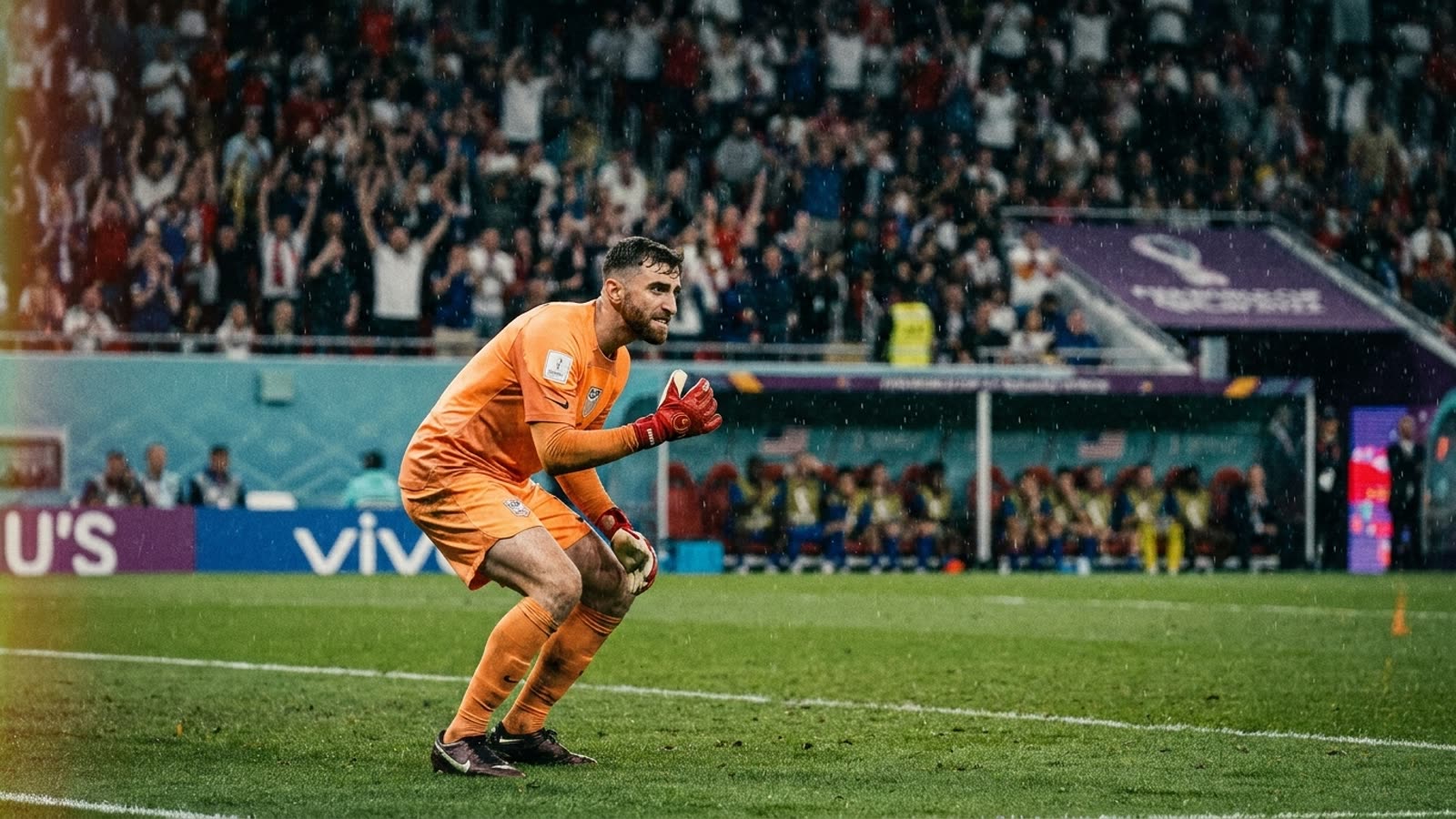
The easiest thing to do after the United States' loss to Türkiye would be to blame Matt Turner. The Arsenal backup conceded repeatedly, earning a dismal 3/10 rating that will dominate headlines and social media discourse for days. But focusing solely on the goalkeeper misses the more uncomfortable truth: Turner's performance was symptomatic of an American program that has confused ambition with preparation.
The host nation entered this World Cup with expectations calibrated to home advantage rather than honest assessment. Gregg Berhalter's squad was supposed to leverage familiar conditions, partisan crowds, and the psychological weight of playing on native soil. Instead, the Türkiye match exposed what happens when narrative outpaces reality.
The goalkeeper question nobody wants to answer
Turner's struggles are not new. His Arsenal tenure has been defined by cup appearances and Europa League minutes, not Premier League pressure. The American coaching staff has long treated the goalkeeper position as a problem to manage rather than solve, rotating between Turner, Ethan Horvath, and various MLS options without ever committing to genuine competition or development.
The result is a first-choice keeper who lacks the rhythm of regular high-stakes football. Turner's positioning failures against Türkiye were not aberrations but patterns—the kind that emerge when a player's match sharpness comes from training sessions rather than competitive minutes. Other nations solve this by demanding their keepers find clubs where they start. America has accepted a backup as its number one.
Structural complacency
The deeper issue extends well beyond the eighteen-yard box. American soccer has spent a decade celebrating progress—the growth of MLS, the emergence of European-based players, the cultural mainstreaming of the sport—without interrogating whether that progress has translated to genuine World Cup competitiveness.
The Türkiye loss suggests it has not. The Americans were outworked in midfield, exposed on the flanks, and unable to generate consistent attacking threat. Turner's errors were the most visible failures, but they occurred within a system that had already ceded control of the match. A better goalkeeper might have kept the scoreline respectable; he would not have changed the fundamental dynamic.
What comes next
The knockout rounds loom, and the USMNT remains alive by virtue of the expanded tournament format. But survival is not the same as hope. The Americans must now decide whether Turner continues as the starter—a decision with no good options, only less bad ones—while simultaneously addressing the tactical deficiencies the Türkiye match laid bare.
Host nations have historically received favorable draws and benefited from intangible advantages. The United States may yet advance further than this performance suggests they deserve. But the Türkiye result has stripped away the comforting fiction that home advantage could paper over genuine weaknesses.
Our take
Matt Turner will absorb the criticism because goalkeepers always do—their mistakes are singular and devastating in ways that midfield sloppiness never is. But the honest assessment of American soccer's World Cup position requires looking past the obvious scapegoat. Turner had a terrible night. The program that put him in that position, without genuine alternatives or sufficient preparation, had a worse one. The USMNT's problem is not that their goalkeeper failed them against Türkiye. It's that they built a system where his failure was always more likely than his success.