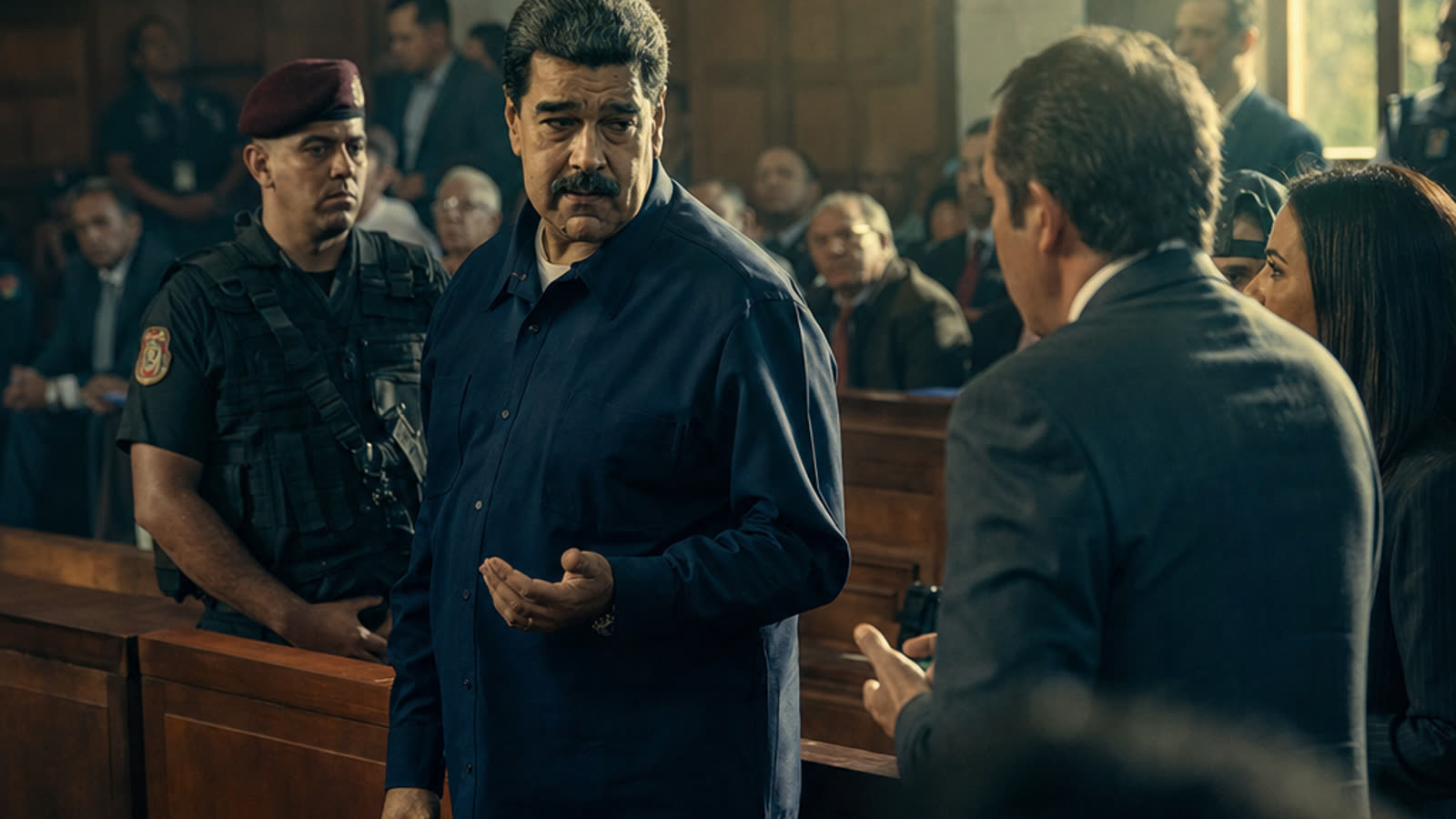
The International Criminal Court has issued arrest warrants for former Venezuelan President Nicolás Maduro and his wife, Cilia Flores, on charges of torture and crimes against humanity — a historic first for a Latin American leader and a development that will change precisely nothing on the ground in Caracas.
Maduro, who clung to power through a disputed 2024 election that most international observers deemed fraudulent, now joins the exclusive club of sitting or former heads of state wanted by The Hague. The charges stem from systematic repression of political opponents, including documented cases of arbitrary detention, forced disappearances, and torture in state security facilities. The evidence, compiled over years by UN investigators and human rights organizations, is damning. The enforcement mechanism is nonexistent.
The ICC's structural problem
The court's fundamental weakness has never been its investigative capacity or legal reasoning — it has been its complete dependence on member states to actually arrest indicted individuals. Vladimir Putin has an outstanding ICC warrant. He traveled to Mongolia, an ICC member state, in September 2024. Nothing happened. Omar al-Bashir evaded arrest for over a decade while attending summits across Africa. The court issues warrants; the world shrugs.
Venezuela withdrew from the ICC in 2017, though the court retains jurisdiction over crimes committed before that date. Even if Maduro were to set foot in a cooperating country, the political calculus of actually detaining him would likely override legal obligations. Latin American solidarity, fear of destabilizing an already fragile region, and the simple reality that Maduro commands a military that remains loyal to him all conspire against enforcement.
What the indictment actually accomplishes
The warrant does achieve something, albeit modest. It formally documents state-sponsored atrocities in a way that cannot be easily dismissed as American imperialism or opposition propaganda. It constrains Maduro's travel options, however slightly. It signals to mid-level officials in Venezuela's security apparatus that they too might eventually face accountability, potentially creating fractures in regime loyalty.
The Biden administration, which spent years attempting to negotiate with Maduro over oil sanctions and political prisoners, will likely welcome the development rhetorically while doing nothing to facilitate arrest. The Trump administration before it oscillated between maximum pressure and bizarre flirtation with the strongman. Neither approach dislodged him.
Our take
International criminal justice remains an aspirational project rather than a functional system. The Maduro indictment is legally sound, morally correct, and practically irrelevant. It joins a growing pile of warrants that serve primarily as historical documentation rather than instruments of accountability. The ICC was designed for a world where great powers would cooperate to enforce international norms; it operates in a world where they manifestly do not. Maduro will die in Caracas, in exile, or in power — but almost certainly not in a cell in The Hague.