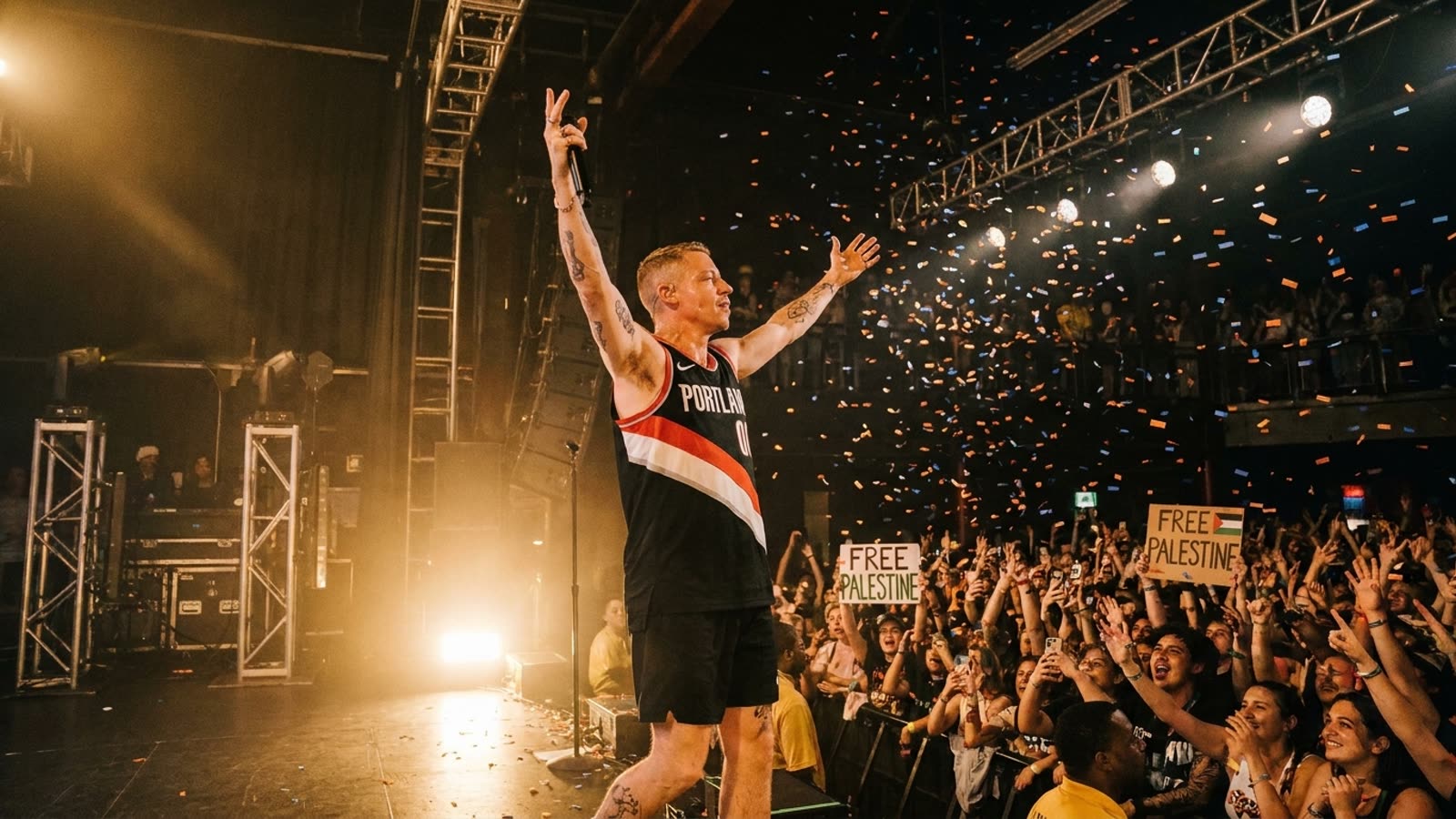
Macklemore wrapped his Free Palestine benefit tour at a sold-out London venue last night, capping a months-long run that began when Ed Sheeran's management quietly removed him from the Loop Tour lineup in early October. The stated reason was vague—"scheduling conflicts"—but the timing, weeks after Macklemore released a pro-Palestinian single and began publicly advocating for ceasefire, told a different story. Rather than apologize or pivot, the 43-year-old Seattle rapper leaned in, booking independent venues across Europe and funneling proceeds to humanitarian organizations working in Gaza and the West Bank.
The cost of conviction
Being dropped from a major tour is not a minor professional setback. The Loop Tour, anchored by Sheeran's stadium-filling appeal, would have put Macklemore in front of tens of thousands of fans nightly and delivered the kind of exposure that independent artists spend careers chasing. Instead, he played 2,000-capacity rooms and accepted the algorithmic punishment that comes with taking a geopolitical stance in an industry that prefers its stars apolitical. Streaming services didn't blacklist him—they didn't need to. Playlist placements quietly dried up, and radio programmers moved on. The tour still sold out, but to a self-selecting audience that came because of the controversy, not in spite of it.
What makes the move notable is not the stance itself—plenty of artists have voiced support for Palestinian civilians—but the willingness to absorb real professional consequences for it. Celebrity activism often costs nothing; this one cost something. Macklemore has always occupied an awkward space in hip-hop: a white rapper whose biggest hits leaned into social commentary ("Same Love," "White Privilege II") but whose commercial success often felt like it came at the expense of Black artists doing similar work with less visibility. This tour won't erase that tension, but it does suggest he understands that using a platform means occasionally losing access to bigger ones.
The Ed Sheeran calculation
Sheeran's team has not commented beyond the initial "scheduling" explanation, which is probably wise. The British singer-songwriter has spent a decade cultivating an image of approachable, apolitical relatability—he's the guy who plays stadiums but still seems like he'd show up at your wedding. Keeping Macklemore on the bill would have invited protests, media scrutiny, and the risk of alienating ticket-buyers in markets where Israel-Palestine is a third-rail issue. Dropping him was the safer play, and in the touring business, safety is revenue. It's also a reminder that the infrastructure of popular music—promoters, sponsors, venue owners—has little appetite for controversy, even when the artist in question is a supporting act.
Our take
Macklemore's tour won't shift policy or end a war, and it's worth noting that choosing discomfort when you've already made tens of millions is a different calculation than it would be for an artist still trying to break through. But in an era when most celebrity activism is carefully stage-managed to offend no one and cost nothing, there's something clarifying about watching someone accept real professional downside for a belief. The tour raised a reported seven figures for relief organizations, which is more than most benefit concerts manage, and it did so without the usual corporate co-signs or sponsor logos. Whether that makes Macklemore brave or simply willing to trade stadium access for a different kind of credibility is a question his audience has already answered by showing up. The rest of the industry, meanwhile, has shown what it values: Ed Sheeran's balance sheet over anyone's conscience.