Speed has been the organizing principle of premium travel for a century. The Concorde, the private jet, the helicopter transfer from tarmac to helipad—luxury meant compression of time, the annihilation of distance. Now the most coveted tickets in travel do the opposite. They make the journey longer, slower, and considerably more expensive than the alternative.
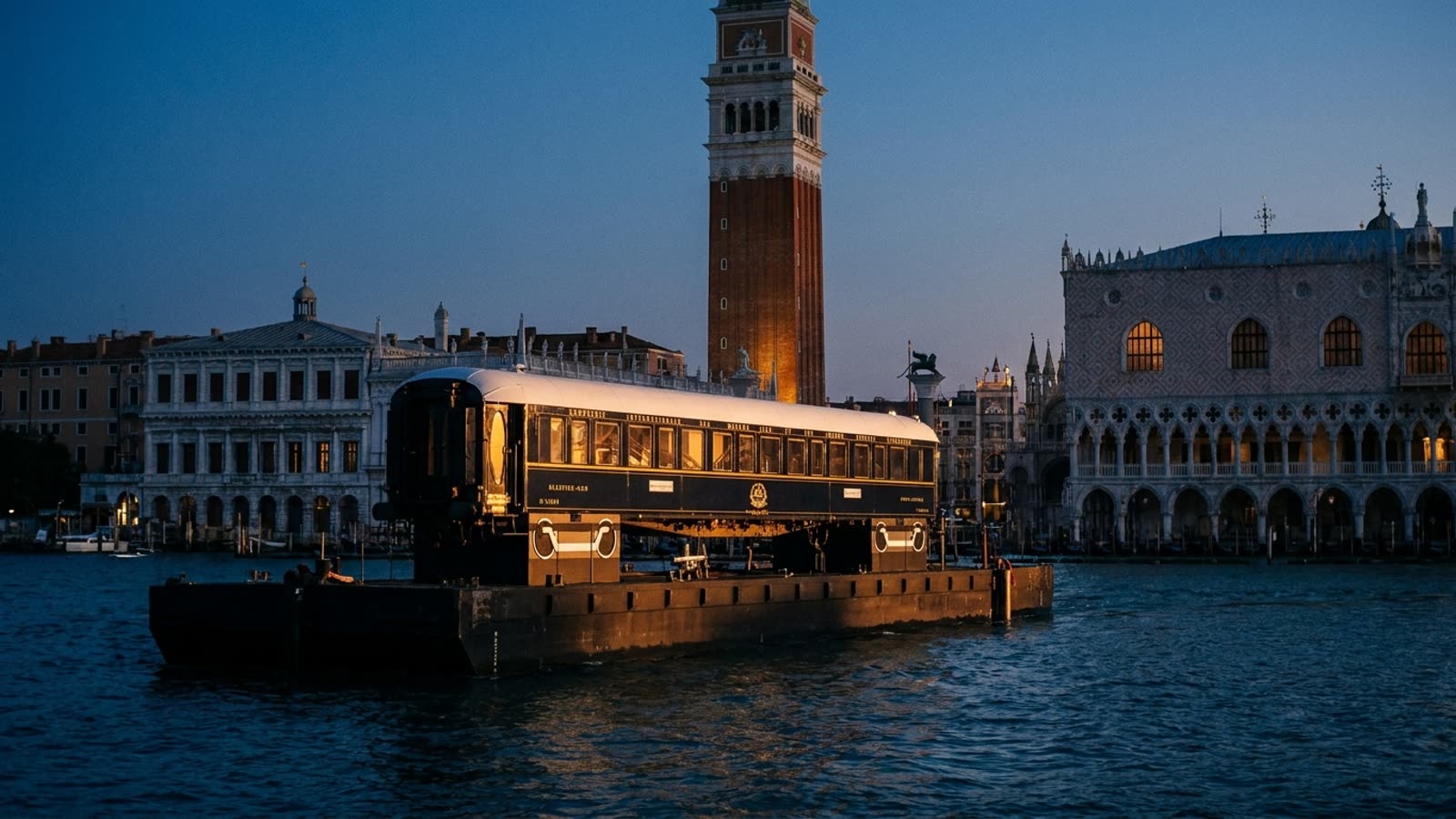
The Venice Simplon-Orient-Express charges upward of €5,000 for a single night between London and Venice. Belmond's new Grand Suites, introduced in recent years, push that figure past €25,000. For context, a business-class flight covers the same route in two hours for under €2,000. The train takes twenty-four. Travelers are paying a twelve-fold premium to arrive later.
The economics of deliberate inefficiency
This inversion of logic makes perfect sense once you understand what's actually being sold. The sleeper train doesn't compete with aviation on transport; it competes with the boutique hotel, the destination restaurant, the curated experience. A night aboard the Orient-Express or Japan's Seven Stars in Kyushu isn't about getting somewhere. It's about being somewhere—a moving hotel with a captive audience and no cell service.
The business model reflects this. Operators invest heavily in interiors, food, and staff-to-guest ratios that would bankrupt an airline. The Seven Stars carries thirty passengers attended by a crew of nearly equal size. Meals are multi-course affairs featuring regional ingredients sourced along the route. The train becomes the destination, and the destination becomes incidental.
Why slowness became scarce
The appeal is partly reactionary. After decades of optimization—faster connections, tighter layovers, lounge access measured in minutes—wealthy travelers discovered that efficiency had costs. The airport experience, even at its most premium, remains a gauntlet of security theater, fluorescent lighting, and the ambient anxiety of delays. A sleeper train offers something airports cannot: genuine calm, enforced disconnection, and the old-fashioned pleasure of watching landscape scroll past a window.
There's also a generational shift in what luxury signifies. For younger high-net-worth travelers, conspicuous consumption has become gauche; conspicuous time has replaced it. The ability to spend twenty-four hours doing nothing productive, in an era of constant connectivity, signals a kind of wealth that a first-class cabin cannot. You're not just rich enough to fly private. You're rich enough not to care when you arrive.
The expansion underway
Operators have noticed. Accor acquired Orient Express as a brand and is developing new routes and a hotel collection around the name. Midnight Trains, a French startup, has announced plans for affordable-ish sleeper services connecting European capitals, betting that the romance of rail travel can scale beyond the ultra-wealthy. In North America, Amtrak's long-distance routes—once considered relics—have seen renewed interest, with private suites selling out months ahead despite prices that dwarf coach flights.
The infrastructure challenges remain significant. High-speed rail networks were built to move passengers quickly, not luxuriously. Dedicated sleeper routes require track access, station agreements, and rolling stock that's expensive to maintain. But the margins on a €25,000 suite are forgiving, and the waiting lists suggest demand outstrips supply.
Our take
The sleeper train revival isn't nostalgia—it's a correction. Travel optimized purely for speed became a miserable experience for everyone, including those paying the most. The train offers an alternative value proposition: arrival as afterthought, journey as product. Whether this remains a niche for the wealthy or expands into something more democratic depends on whether operators can make slowness profitable at lower price points. For now, the message is clear. In a world that won't stop accelerating, the ultimate luxury is permission to be late.