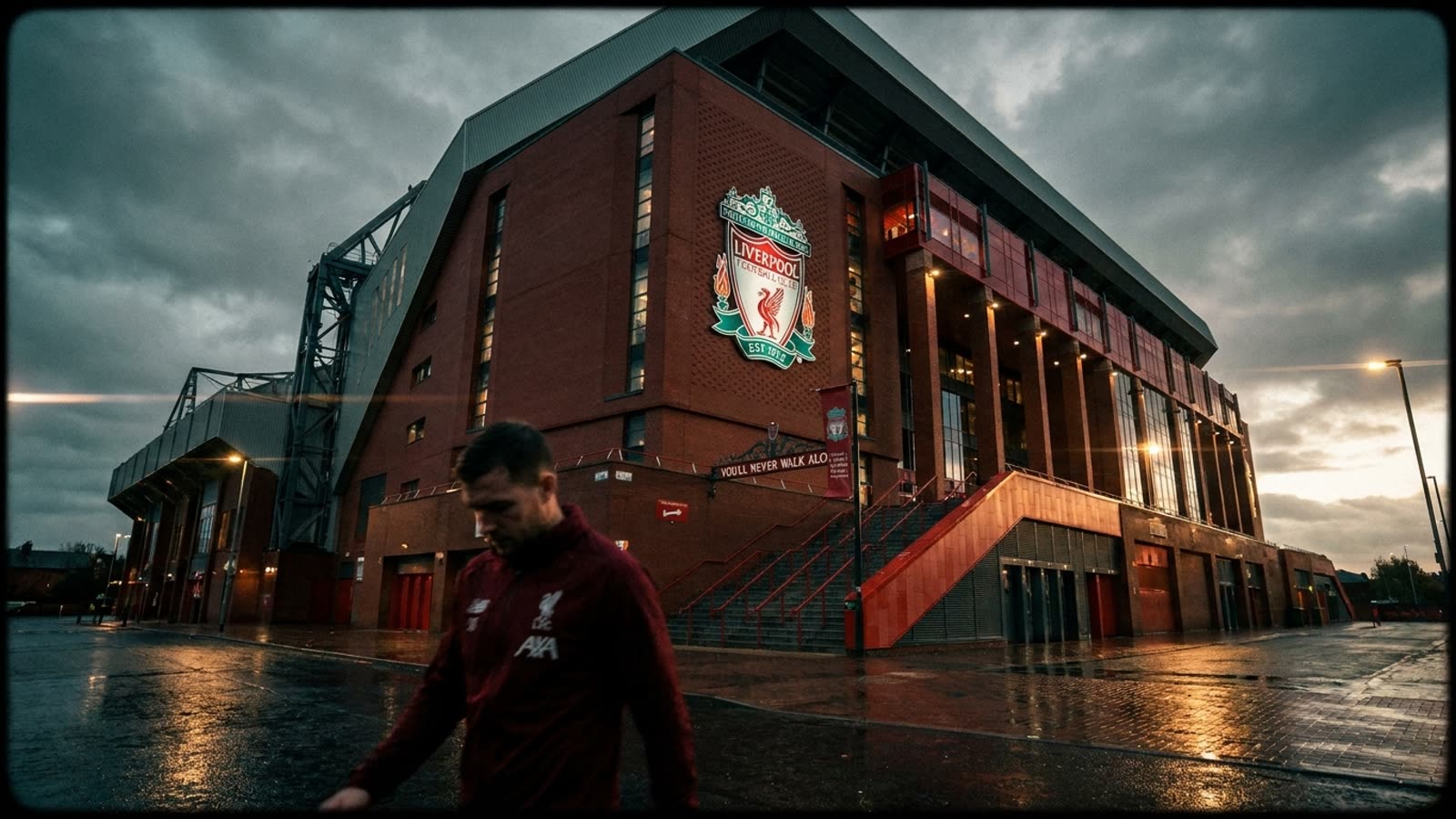
Liverpool find themselves in an unusual position this autumn: competitive but unconvincing, collecting points while hemorrhaging certainty about what kind of team they actually are. Under Andoni Iraola, the club that once defined itself through relentless pressing and full-throttle attacking football has become something more tentative—a side that wins often enough to stay in conversations but rarely enough to dominate them.
The Champions League has been particularly unkind to the Reds' self-image. Where domestic fixtures can paper over systemic cracks, European nights have a way of exposing them in high definition.
The Bradley Barcola question
Iraola's decision to deploy Bradley Barcola as a central striker rather than his natural wide position has become the defining tactical puzzle of Liverpool's season. The Frenchman, signed from Paris Saint-Germain to provide pace and creativity from the flanks, has found himself pressed into service as a false nine—a role that maximizes his movement but minimizes his goal threat.
The logic is not entirely unsound. Barcola's intelligence and pressing instincts suit a system that asks its forwards to initiate defensive sequences. But the execution has been inconsistent, and opponents have learned that Liverpool's attacking transitions lack the clinical edge that Mohamed Salah once provided. The experiment continues, but the clock is ticking.
Defensive fragility remains the constant
For all the attention paid to Liverpool's attacking reconfiguration, the back line remains the more pressing concern. Iraola inherited a defense that had grown comfortable under Jürgen Klopp's high-line system, but his more possession-oriented approach has left defenders exposed in ways they were not prepared for.
The numbers are damning: Liverpool are conceding chances at a rate that would have been unthinkable three seasons ago. Individual errors have compounded systemic vulnerabilities, and the midfield's inability to shield the back four has turned routine transitions into genuine emergencies.
A manager still finding his voice
Iraola arrived at Anfield with a reputation as a tactician's tactician, a manager whose Bournemouth side had punched above its weight through clever positional play and disciplined structure. At Liverpool, those qualities have been harder to discern. The squad's quality has paradoxically made his job more difficult—elite players require elite coordination, and the integration process has been slower than anyone anticipated.
The Basque manager has earned goodwill through results, but results alone will not sustain a project that was supposed to represent evolution rather than mere continuation. Liverpool supporters have been patient, but patience is a finite resource at clubs that expect trophies.
Our take
Liverpool are not in crisis, but they are in something arguably more dangerous: drift. Iraola has the intelligence to build something coherent at Anfield, but intelligence without time is just potential. The Champions League knockout rounds will arrive before the identity does, and that mismatch could define his tenure. The Reds need to decide what they are before Europe decides for them.