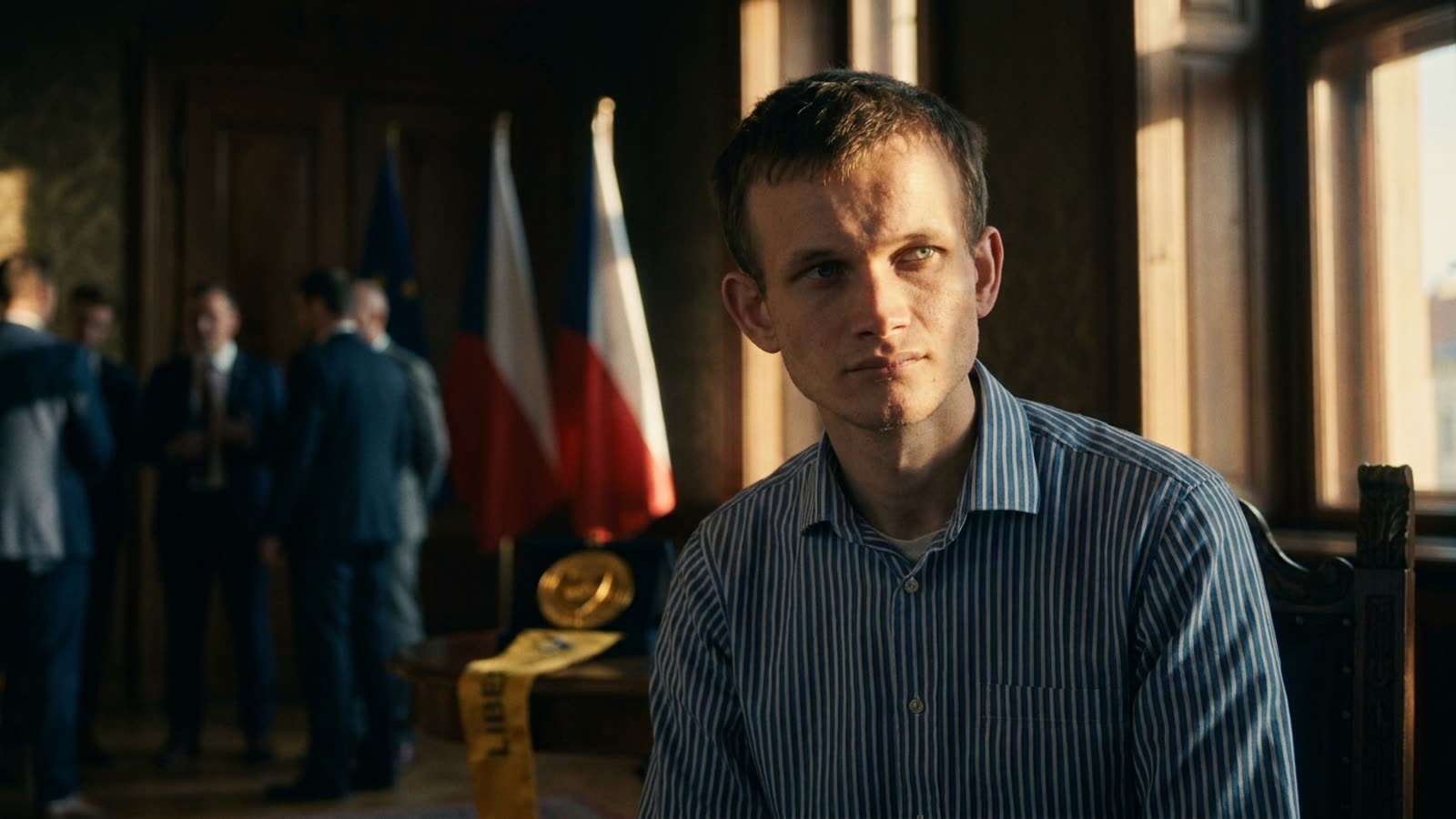
Liberland, the self-proclaimed microstate wedged between Serbia and Croatia on a disputed sliver of Danube marshland, has bestowed its Order of Merit on Vitalik Buterin. The ceremony took place at ETH Prague 2026, and the optics were unmistakable: a stateless nation built on blockchain infrastructure honoring the architect of the world's most programmable blockchain. It is easy to dismiss Liberland as a libertarian cosplay project—seven square kilometers, no UN recognition, a population measured in passport holders rather than residents. But the award matters less for what it confers on Buterin than for what it reveals about the evolving relationship between crypto ideology and real-world sovereignty.
The Justin Sun connection
Liberland's most consequential backer is Tron founder Justin Sun, whose involvement has transformed the micronation from a thought experiment into something with actual infrastructure budgets. Sun's capital has funded everything from citizenship NFTs to a nascent judiciary running on smart contracts. His presence also imports the reputational baggage that follows him—SEC settlements, accusations of market manipulation, a flair for spectacle over substance. Buterin accepting an honor from a Sun-adjacent project is notable precisely because the two represent divergent strains of crypto culture: Buterin the philosopher-engineer, Sun the relentless promoter. That they now share a stage suggests the movement's internal factions may be converging around a common political project, even if they disagree on aesthetics.
Blockchain governance, stress-tested
Liberland's experiment is no longer theoretical. The micronation claims to have processed property disputes, residency applications, and even small-claims arbitration through on-chain mechanisms. Whether these processes would survive contact with a hostile state actor remains untested—Serbia and Croatia have both ignored Liberland's existence rather than actively suppressing it. But the template is being watched. Próspera in Honduras, Catawba Digital Economic Zone in the United States, and various Gulf-state free zones have all flirted with blockchain-native legal structures. Buterin's endorsement, however symbolic, lends credibility to the thesis that code can substitute for courts.
Why ETH Prague matters
The venue choice was strategic. ETH Prague has become the European gathering point for Ethereum's more ideologically committed developers—those who still talk about public goods, quadratic funding, and credible neutrality. Liberland's presence there was an implicit argument that these ideas have a physical address, not just a GitHub repository. The conference circuit is where crypto movements recruit true believers, and Liberland is clearly recruiting.
Our take
Liberland remains more manifesto than nation, and Buterin's medal will not change that. But the ceremony crystallizes something real: crypto's political wing is no longer content to lobby existing governments or wait for regulatory clarity. It is building parallel structures and daring the world to notice. The question is whether these experiments will mature into genuine alternatives or collapse under the weight of their own contradictions. For now, they have Vitalik's blessing—which, in this industry, still counts for something.