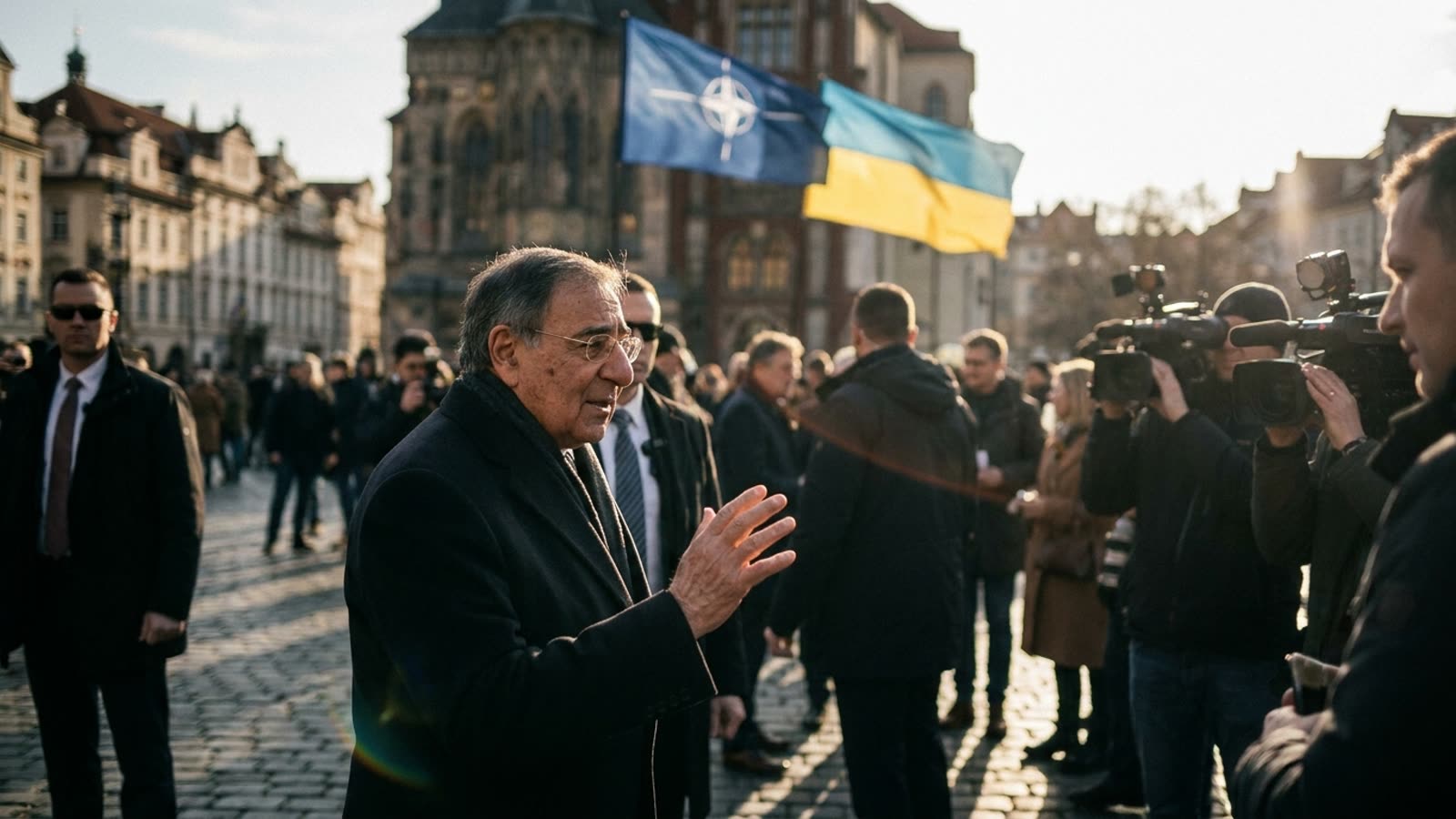
The question of how much to arm Ukraine has never been whether, but how fast and how openly. Leon Panetta, who ran both the CIA and the Pentagon under Obama, is now arguing that NATO's incremental approach has failed on its own terms: it has neither defeated Russia nor created conditions for a durable settlement. His prescription—arm Ukraine to the teeth to pressure Putin into genuine negotiations—is not new, but hearing it from a figure of his stature at this particular moment suggests the strategic debate in Washington is shifting.
Panetta's argument rests on a familiar but underappreciated logic. Half-measures in war tend to produce the worst of both worlds: enough commitment to sustain a grinding conflict, not enough to change its trajectory. The West has provided Ukraine with sufficient weaponry to prevent collapse but insufficient firepower to reclaim territory at scale. The result is a frozen conflict that bleeds both sides while Putin waits out Western fatigue.
The credibility problem
What makes Panetta's intervention notable is its timing. NATO members are heading into a period of renewed uncertainty about American commitment, with European capitals quietly gaming out scenarios in which Washington's attention—and defense budgets—pivot elsewhere. Panetta is essentially telling the alliance that strategic ambiguity has become strategic incoherence. If NATO's goal is Ukrainian sovereignty, the current posture does not achieve it. If the goal is merely to avoid escalation, that too is failing, as Russia continues to test red lines that keep moving.
The counterargument—that aggressive arming risks direct NATO-Russia confrontation—has merit but has also calcified into an excuse for drift. Every major weapons system delivered to Ukraine, from HIMARS to F-16s, was preceded by months of hand-wringing about escalation that never materialized in the catastrophic forms predicted. Putin's red lines have proven more elastic than Western caution assumed.
The negotiation paradox
Panetta's most interesting claim is that arming Ukraine is the precondition for, not the obstacle to, meaningful diplomacy. This inverts the conventional wisdom that weapons deliveries prolong war. In his telling, Putin will negotiate seriously only when the military cost of continuing exceeds the political cost of compromise. That threshold has not been reached because NATO has calibrated its support to sustain Ukraine rather than to shift the battlefield calculus decisively.
Whether this theory of the case is correct remains contested. Some analysts argue Putin's war aims have already narrowed to consolidating gains in the east, making a negotiated settlement more plausible regardless of Western arms flows. Others contend that no amount of weaponry will change Kremlin calculations rooted in existential framing of the conflict.
Our take
Panetta is articulating what many in the foreign policy establishment believe but few say publicly: NATO's Ukraine policy has been strategically incoherent, driven more by fear of escalation than by a theory of victory. Whether his prescription is correct matters less than the fact that the current approach has failed to produce either military success or diplomatic opening. The alliance will eventually have to choose between genuine commitment and managed decline of its position. Panetta is betting that saying so out loud might accelerate that reckoning.