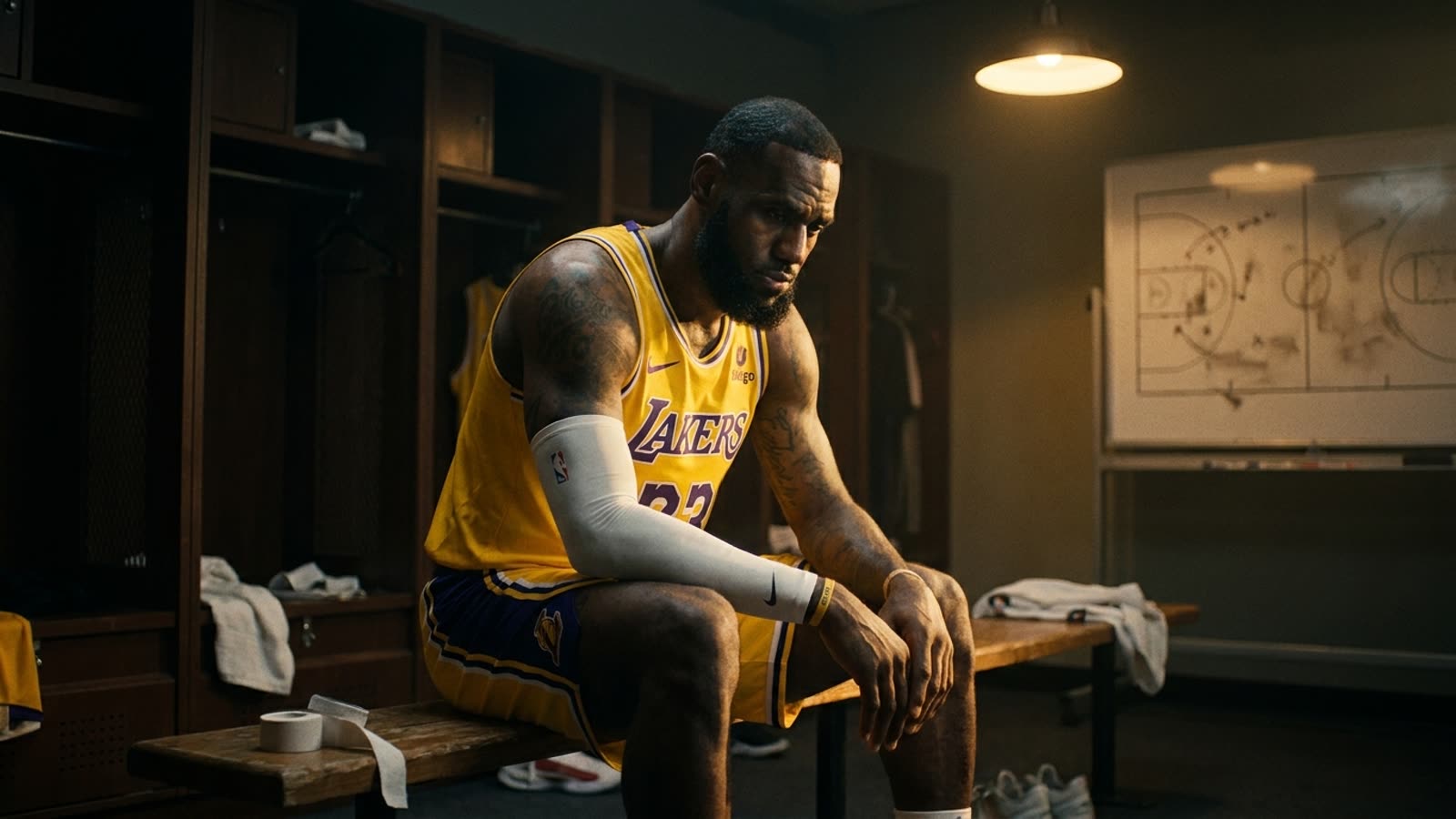
When LeBron James says his team is out-talented, he is not offering analysis. He is delivering a verdict.
The Lakers' postseason collision with the Oklahoma City Thunder has produced the kind of mismatch that statistics confirm but superstars rarely acknowledge. James, entering his 23rd NBA season with nothing left to prove and no reason to dissemble, looked at the roster disparity and said what everyone watching already knew: the Thunder are simply better. Not better-coached, not better-prepared, not playing with more energy. Better. The word he chose—'out-talented'—is the one that cannot be fixed by halftime adjustments or motivational speeches.
The weight of the word
LeBron James has spent two decades refusing to cede anything to anyone. He has dragged undermanned Cleveland teams to Finals appearances, willed a patchwork Lakers roster to a bubble championship, and consistently argued that effort and execution could overcome any deficit. For him to publicly acknowledge a talent gap is not candor. It is capitulation. The Thunder, built around Shai Gilgeous-Alexander's surgical brilliance and Chet Holmgren's otherworldly versatility, represent everything the Lakers are not: young, deep, ascending. Oklahoma City's core will be together for a decade. Los Angeles is held together by the gravitational pull of a 41-year-old.
What the Lakers cannot buy
The franchise has spent aggressively to surround James with complementary pieces, but the NBA's economics have shifted. The Thunder accumulated assets through patience and draft capital while the Lakers traded futures for presents that became pasts. Anthony Davis remains elite when healthy—a qualifier that has become a punchline—but the supporting cast lacks the two-way dynamism that defines championship-caliber rosters. James can still produce 25-point triple-doubles, but producing them against a team with superior athletes at four positions is an exercise in diminishing returns.
The succession question
Bronny James's presence on the roster was supposed to provide a storybook coda to his father's career. Instead, it has become a footnote to a larger problem: the Lakers have no clear path forward. They are too good to lottery their way to generational talent, too flawed to seriously contend, and too invested in the LeBron timeline to rebuild. James's admission is not just about this series. It is about the structural reality that no amount of midseason trades or coaching changes will alter.
Our take
LeBron James telling the truth is not news. LeBron James telling this particular truth—that his team simply does not have the horses—is an epitaph written in real time. The Lakers will eventually move on from the James era, and when they do, this moment will be remembered as the one where even he stopped pretending otherwise. Championships require talent, and talent is what Oklahoma City has and Los Angeles does not. The greatest player of his generation has finally met a problem he cannot solve by being LeBron James.