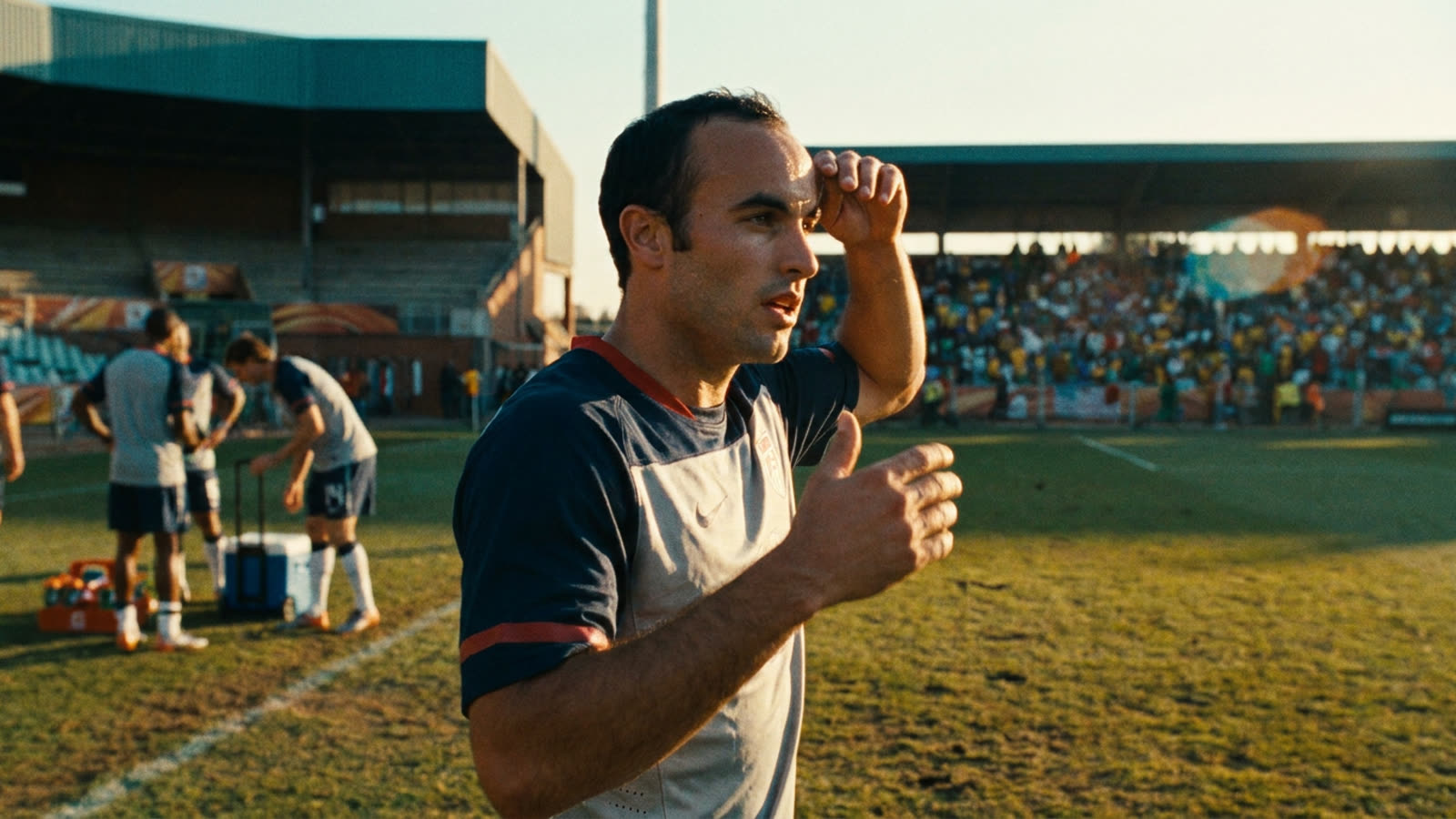
When Landon Donovan says the United States can win the World Cup, the instinct is to smile politely and change the subject. The man scored the most famous goal in American soccer history against Algeria in 2010, so he's earned his optimism. But Donovan isn't merely cheerleading from the studio—he's making a structural argument about tournament soccer that deserves examination rather than dismissal.
The case runs roughly like this: the USMNT survived a group containing England and a dangerous Iran side, emerging with seven points and genuine momentum. The knockout bracket, thanks to seeding quirks, has placed the Americans on a path that avoids Argentina until a potential final. And in single-elimination competition, where one deflected clearance or one penalty save can rewrite history, the gap between "plausible upset" and "impossible dream" is narrower than league tables suggest.
The bracket math
Donovan's optimism hinges on favorable geography. The United States faces Mexico in the Round of 16—a rivalry match, yes, but one where American players have dominated recent editions. A quarterfinal against the winner of Japan-Australia follows, neither of whom has reached a World Cup semifinal since 2002 and 2006 respectively. The semifinal would likely mean Germany or France, but by then the Americans would have home-crowd advantage in what could be a Los Angeles fixture. Tournament soccer rewards teams that peak at the right moment, not necessarily the ones with the deepest talent pools.
The "good breaks" caveat
Donovan's qualifier—"they just need a lot of good breaks"—is doing significant work in his thesis. Christian Pulisic would need to stay healthy through seven knockout matches. Weston McKennie would need to continue his midfield dominance. Matt Turner would need to produce a signature save when the moment demands it. None of this is impossible, but stacking these probabilities reveals the fragility of the dream. Greece won Euro 2004 with precisely this formula: defensive discipline, set-piece efficiency, and an opponent's missed chance at the critical moment. The model exists. It's just exceedingly rare.
Our take
Donovan is doing what legends do: creating belief where spreadsheets counsel skepticism. The United States almost certainly will not win the World Cup—Argentina's depth, France's experience, and Germany's home-tournament pedigree all represent superior bets. But "almost certainly not" is different from "cannot," and in a competition where the host nation plays with 80,000 screaming supporters behind them, stranger things have happened. The smart money says the American run ends in the quarterfinals. The romantic money says Donovan might just be seeing something the rest of us are too cynical to admit.