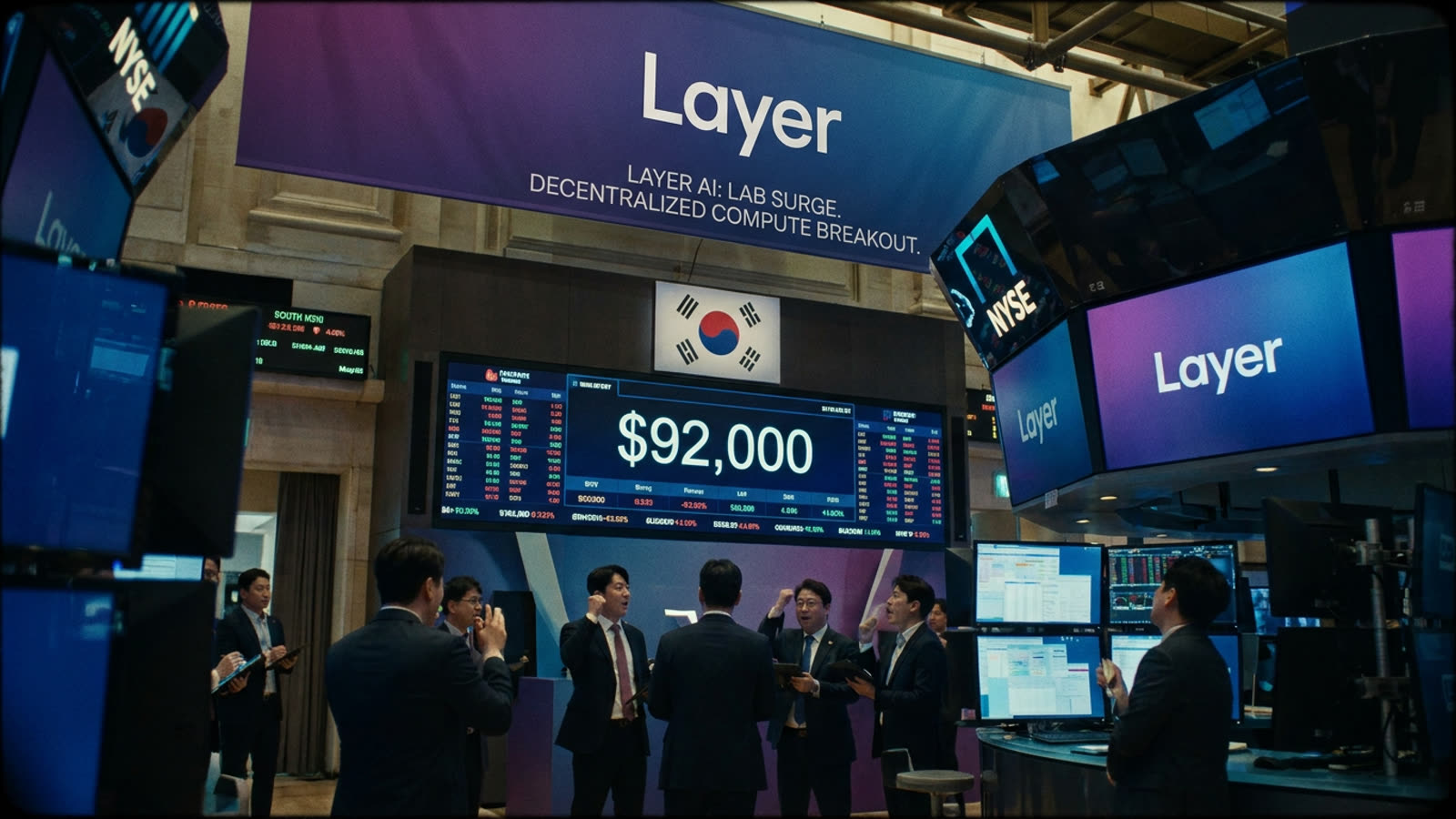
The crypto market's latest darling is not another dog coin or Ethereum killer—it is a token designed to make artificial intelligence and blockchain infrastructure actually work together. LAB, the native asset of the Layer AI protocol, surged nearly 30% in the past 24 hours, vaulting into the top 30 by market capitalization and forcing traders to reconsider which narratives will define the second half of 2026.
The move is striking not because AI tokens are new—they are not—but because LAB represents something more specific: infrastructure for decentralized compute marketplaces where GPU owners can rent capacity to AI developers without intermediaries. In a world where Nvidia chips remain scarce and cloud computing costs continue to climb, the pitch is increasingly resonant.
Why now, and why LAB specifically
The timing appears linked to several converging factors. Layer AI recently announced integrations with major model-training frameworks, making it easier for developers to tap into its distributed compute network. The protocol has also been quietly accumulating partnerships with enterprise clients who need GPU access but balk at centralized cloud pricing. Most critically, the broader market rotation into "real utility" tokens—assets tied to actual revenue-generating protocols rather than pure speculation—has created tailwinds for projects with demonstrable use cases.
LAB's tokenomics help explain the price action. A significant portion of supply remains locked in staking contracts that secure the compute marketplace, meaning the freely tradable float is smaller than the market cap suggests. When demand spikes, price moves get amplified.
The AI-crypto thesis, stress-tested
Skeptics have long questioned whether blockchain adds anything meaningful to AI infrastructure. The counterargument: decentralized compute networks can offer censorship resistance, geographic distribution, and price competition that centralized providers cannot match. For certain workloads—particularly those involving sensitive data or operating in regulatory gray zones—these properties matter.
LAB's surge suggests at least some capital is betting this thesis will prove out. The token's year-to-date performance now outpaces most layer-one chains, and trading volumes indicate institutional rather than purely retail interest.
Our take
Most AI-crypto crossover projects have been vaporware dressed in buzzwords. LAB appears to be something rarer: infrastructure that solves a genuine problem. Whether the token price sustains these levels depends on execution, but the market is clearly signaling that decentralized compute is no longer a fringe idea. The question is not whether AI and blockchain will converge—it is which protocols will capture the value when they do.