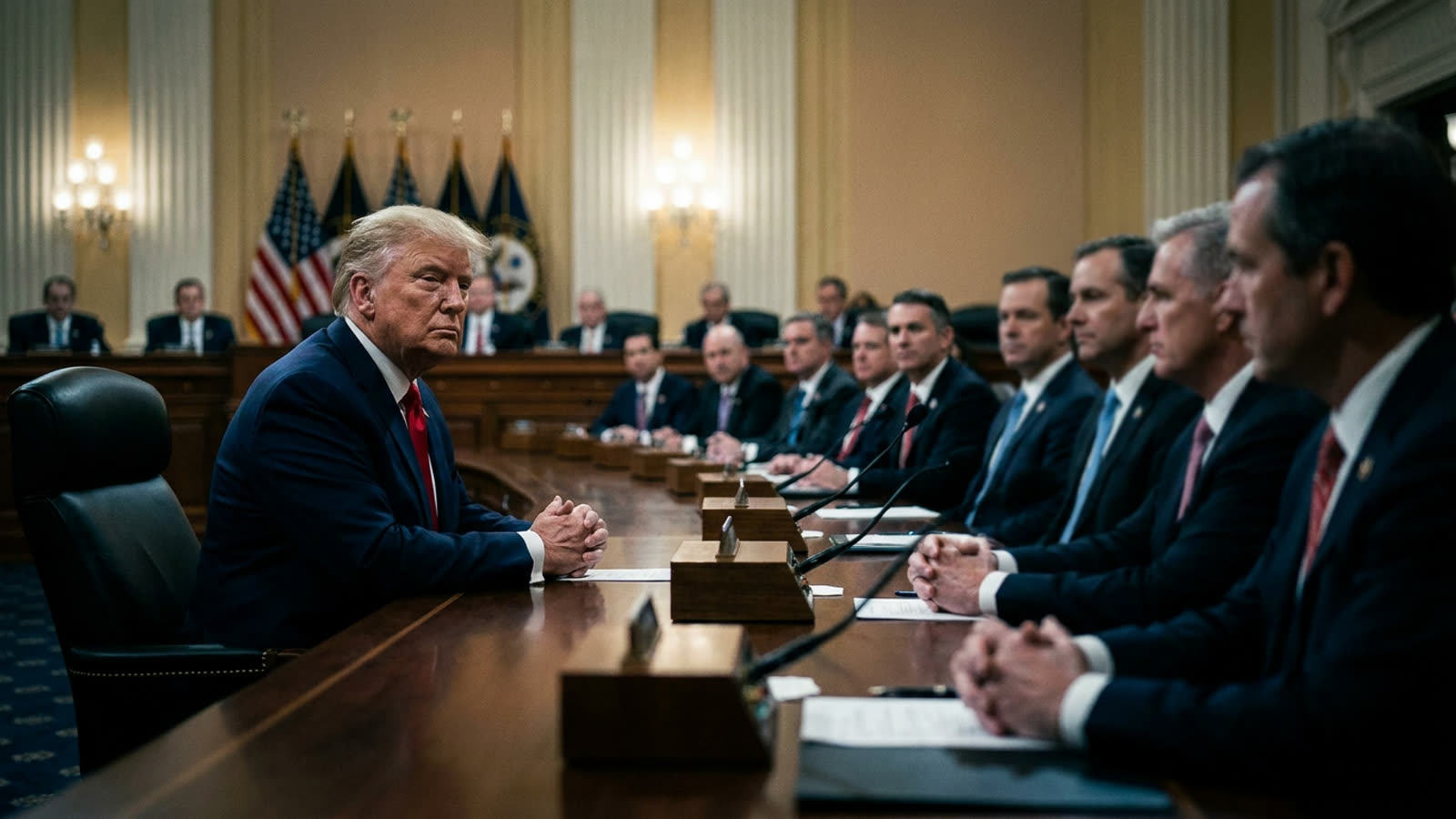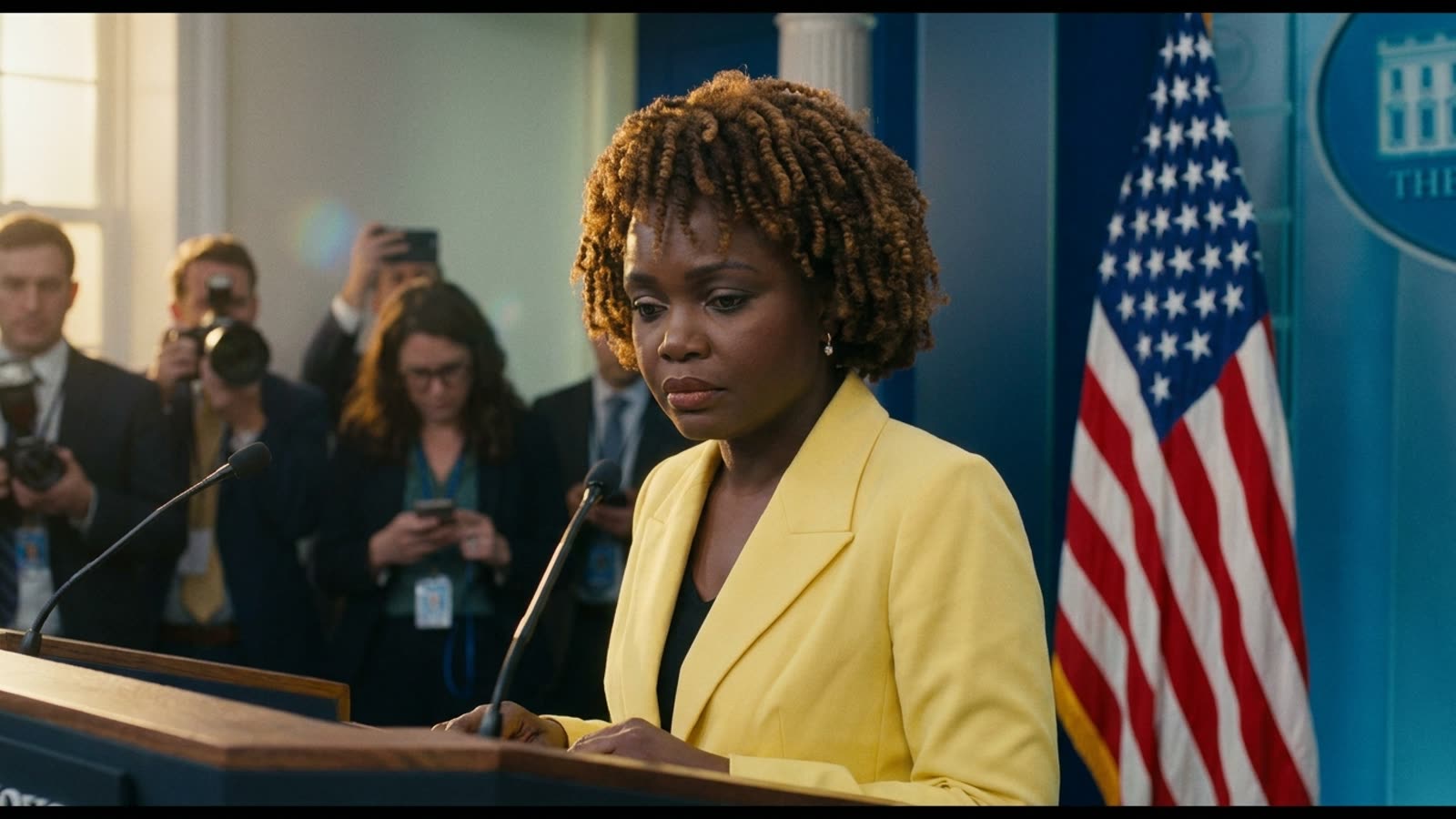
The White House announced Thursday that Press Secretary Karine Jean-Pierre will step down at the end of the month, ending a tenure defined less by what she said than by the administration's apparent inability to decide what it wanted her to say.
Jean-Pierre's exit comes after months of briefings that left reporters, allies, and the American public struggling to understand basic facts about the Iran conflict: its objectives, its timeline, its cost, its endgame. The contradictions weren't subtle. On consecutive days in April, she described the military operation as both "limited in scope" and "as expansive as necessary." She announced casualty figures that the Pentagon subsequently revised. She insisted the administration had been transparent about war costs while refusing to confirm numbers that had already leaked to three major outlets.
The impossible job
In fairness to Jean-Pierre, her position was structurally untenable. A press secretary can only communicate what the principal decides, and President Trump's approach to the Iran conflict has been deliberately kaleidoscopic—bellicose one moment, conciliatory the next, always leaving room to claim he meant something else. Jean-Pierre was tasked with imposing coherence on a strategy that treated ambiguity as a feature rather than a bug.
But the role of press secretary has always involved translating presidential impulses into digestible talking points. Jean-Pierre's predecessors managed this with varying degrees of success. Her failure was one of adaptation: she continued delivering carefully prepared statements in an environment that demanded improvisational agility, and she defended positions that the president himself would abandon hours later on social media.
The credibility deficit
The deeper problem is institutional. The White House press operation has lost something harder to recover than a single spokesperson: the presumption that its statements bear some relationship to reality. Reporters now treat briefings as exercises in decoding rather than information-gathering. Foreign governments have learned to wait for Trump's direct communications rather than relying on official channels. Even congressional Republicans, theoretically allies, have complained privately that they cannot trust White House assurances on basic legislative matters.
Jean-Pierre's successor—no name has been floated publicly—inherits this credibility deficit along with the podium. The structural incentives that produced the current chaos remain unchanged. Trump shows no indication of wanting a more disciplined communications strategy; if anything, he appears to believe the confusion serves his interests by keeping opponents off-balance.
Our take
Karine Jean-Pierre was not a great press secretary, but she was asked to do something closer to performance art than public communication. Her departure is being framed as accountability, but it functions more as sacrifice—a ritual offering to the idea that someone should pay for the administration's messaging failures, even if the person most responsible has no intention of changing course. Her replacement will face the same impossible choice: lie convincingly, or tell truths the president will contradict before the briefing ends. The job has become a test not of competence but of willingness to be publicly humiliated in service of an administration that views loyalty as a one-way street.