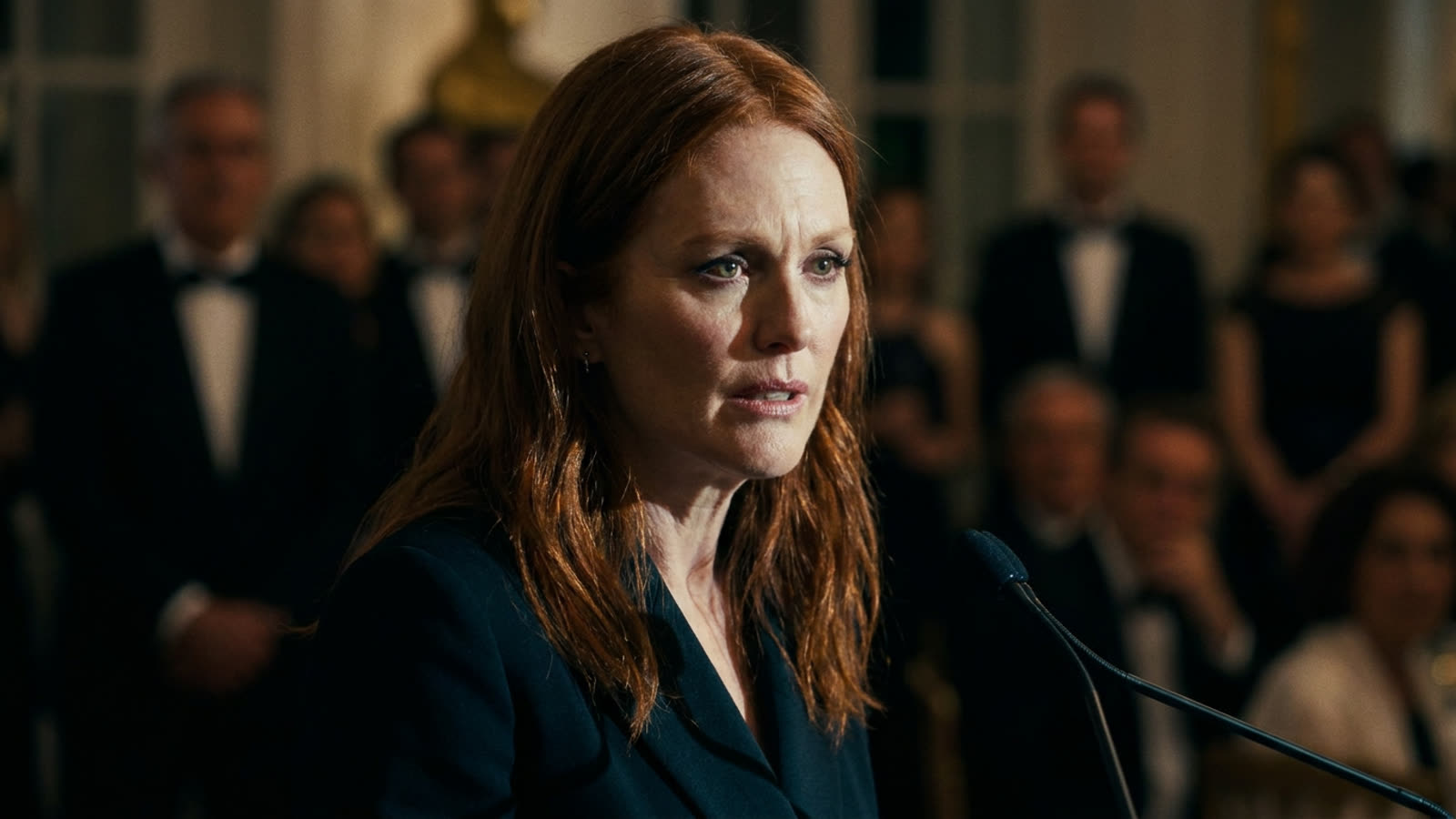
The Cannes Film Festival runs on champagne, sunscreen, and carefully calibrated statements about the state of cinema. Julianne Moore apparently didn't get that memo. At Kering's annual Women in Motion dinner on Sunday night—the luxury conglomerate's flagship event celebrating women in film—the Oscar-winning actress took the microphone and offered what can only be described as a controlled detonation of industry pleasantries.
"I fucking love actresses," Moore declared to a room of executives, filmmakers, and fellow stars, her voice carrying the kind of conviction usually reserved for closing arguments. What followed was less a speech than a feminist battle cry, delivered with the precision of someone who has spent three decades watching the industry's treatment of women up close.
The context behind the candor
Moore, 65, has occupied a peculiar position in Hollywood: too talented to ignore, too outspoken to fully embrace. Her filmography reads like a masterclass in choosing interesting work over easy paychecks—from Todd Haynes's queer period dramas to her recent turn in Jesse Eisenberg's directorial debut. But her Cannes remarks weren't about her own career. They were about the systemic failures that have pushed countless actresses out of the industry entirely.
The Women in Motion initiative, now in its eleventh year, has become Cannes's most visible acknowledgment that the festival's history is overwhelmingly male. Only two women have ever won the Palme d'Or. The dinner honours female filmmakers and performers, but it also serves as an annual reminder of how much work remains undone.
Why profanity matters
There's a reason Moore's expletive landed with such force. Cannes is a place where difficult truths get smoothed into diplomatic language, where structural inequality becomes "an ongoing conversation" and pay gaps become "industry challenges." By punctuating her declaration with an f-bomb, Moore refused that sanitisation. She made it impossible to mistake her passion for politeness.
The timing matters too. This year's festival has been notably light on female-directed competition entries. The industry's post-pandemic contraction has disproportionately affected women behind the camera. And the conversation around AI in filmmaking—very much present at this year's Croisette—carries its own gendered implications about whose labour gets automated first.
Our take
Julianne Moore has earned the right to say whatever she wants at Cannes. But the real question is whether the executives clinking glasses at that dinner will remember her words when they return to Los Angeles and London and start making decisions about next year's slates. Loving actresses is easy. The hard part is greenlighting their projects, matching their male co-stars' quotes, and trusting them to carry films past the age of forty. Moore gave the industry a mirror. Whether anyone actually looks into it is another matter entirely.