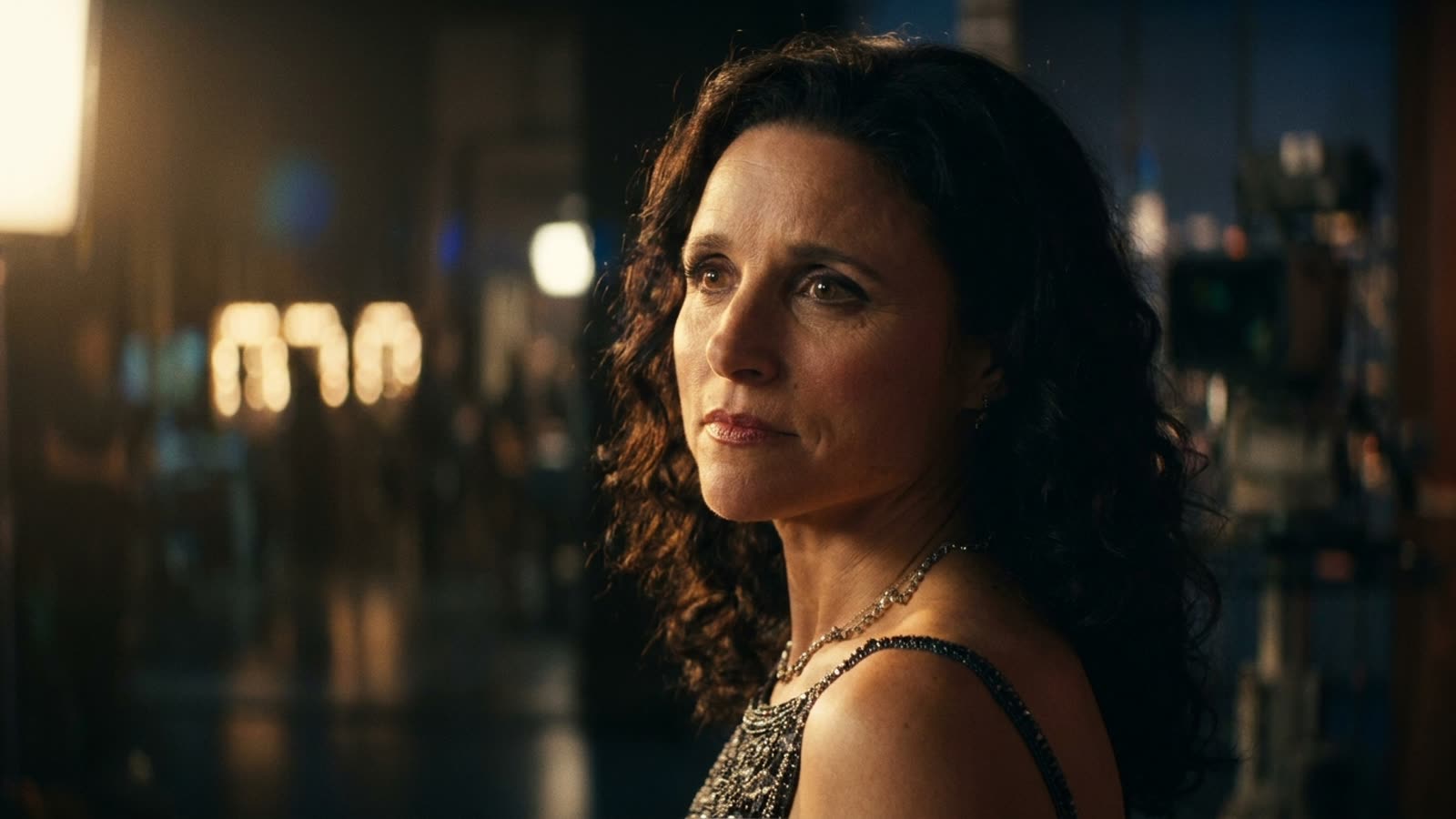
There is a particular art to the celebrity farewell appearance, and Julia Louis-Dreyfus has clearly studied it with the same intensity she once brought to perfecting Elaine Benes's little kicks. When she arrived on "The Late Show with Stephen Colbert" this week—ostensibly to promote her animated film "The Sheep Detectives"—she did what any seasoned comedic assassin would do: she put on a character and went for the jugular.
The character, of course, was Selina Meyer, the magnificently venal former president from "Veep," a show that ended in 2019 but whose satirical DNA has only grown more relevant in the intervening years. Louis-Dreyfus slipped back into Selina's skin with unsettling ease, delivering lines that landed somewhere between roast and eulogy.
The art of the graceful knife twist
"Your cancellation gave Trump such pleasure," she told Colbert, her timing impeccable. Then came the coup de grâce: she called him the "Stormy Daniels of late night." The comparison was surgical—both figures, after all, have made careers out of antagonizing the same man, and both are now exiting the stage as he returns to power. The joke worked because it contained an uncomfortable kernel of truth about the limits of satirical resistance.
Colbert, to his credit, took the hits with the bemused resignation of a man who has spent nine years making Trump jokes and is perhaps ready to stop. "The Late Show" ends its run on May 21, and the timing feels less like a network decision than a cosmic punchline. The show that defined itself through opposition to one political era is closing just as that era reasserts itself.
Why Selina still works
What made Louis-Dreyfus's choice so effective was its implicit commentary. Selina Meyer was never a Trump analog—she was something more uncomfortable, a bipartisan portrait of American political ambition stripped of ideology. Bringing her back now, in the final days of a show that often struggled to satirize a reality more absurd than fiction, felt like an acknowledgment that "Veep's" approach might have been the right one all along. Mock the system, not just the man.
The segment also served as a reminder of Louis-Dreyfus's singular position in American comedy. At 65, she remains one of the few performers who can shift between broad physical comedy and precise verbal devastation within a single breath. Her six consecutive Emmy wins for "Veep" were not accidents.
Our take
This was more than a promotional appearance; it was a small act of television criticism disguised as a bit. Louis-Dreyfus understood that Colbert's finale week needed something sharper than nostalgia, and she delivered it with the same controlled viciousness that made Selina Meyer one of the great comic creations of the century. If late-night television is indeed entering its twilight, at least someone remembered to turn out the lights with style.