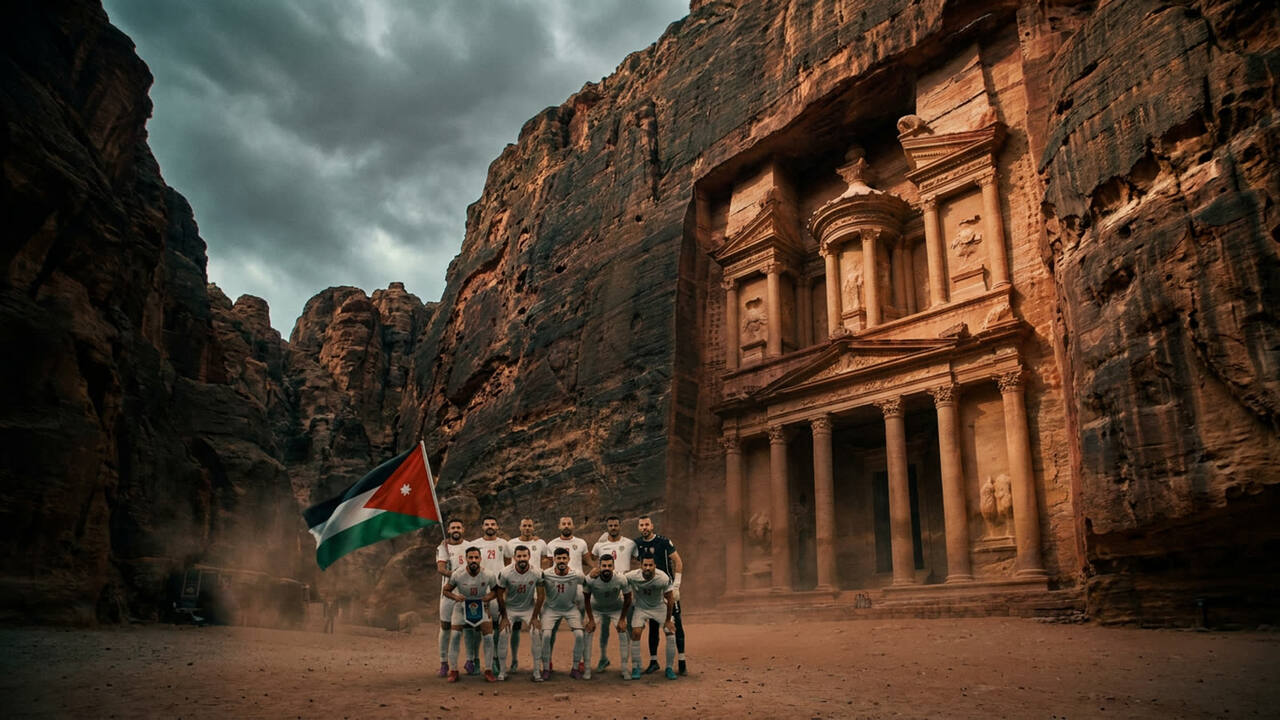
For a country that has never produced a player in Europe's top five leagues, reaching the World Cup was supposed to be the achievement itself. Jordan's 2-1 loss to Austria in their tournament debut will not trouble the record books, but it marks the culmination of a football project that seemed fantastical even five years ago.
The Nashama — Arabic for "the brave ones" — arrived in North America as the tournament's most improbable qualifiers. A nation of 11 million wedged between footballing giants Saudi Arabia and Iraq, Jordan secured their spot through a qualification campaign that saw them defeat traditional Asian powers and survive a playoff gauntlet that would have broken more established programmes.
A tactical mismatch with dignity intact
Austria's Ralf Rangnick deployed the high-pressing system that has made his side one of Europe's most uncomfortable opponents, and Jordan's backline — composed entirely of players from the Jordanian Pro League — struggled to build from the back. The Austrians scored twice in the first half through Marcel Sabitzer and Christoph Baumgartner, exploiting the space behind Jordan's ambitious midfield line.
Yet the Jordanians refused to collapse. Mousa Al-Taamari, the lone Jordan player with significant European experience from his time in Belgium, pulled one back in the 67th minute with a curling effort that briefly silenced the Austrian contingent in MetLife Stadium. The final twenty minutes saw Jordan push for an equaliser that never came, but the effort drew respect from neutrals and pundits alike.
What qualification means beyond the pitch
Jordan's football federation has operated on a budget that would embarrass a mid-table MLS side. Their qualification triggered a reported $9 million FIFA payout — more than their entire annual operating budget in previous years. The government declared a national holiday when they secured their spot, and King Abdullah II personally greeted the squad at the airport.
The ripple effects extend beyond Jordan's borders. Palestinian fans, many holding Jordanian citizenship, have adopted the Nashama as their de facto World Cup representatives. The team's run has become a rare source of regional pride in a part of the world where football allegiances typically fracture along political lines.
Our take
Jordan will likely exit this tournament in the group stage — their remaining matches against France and Denmark offer little statistical hope. But measuring this campaign by results misses the point entirely. The Jordanian federation has demonstrated that sustained investment in youth development and coaching infrastructure can overcome resource disadvantages that once seemed insurmountable. In a World Cup expanded to 48 teams precisely to give smaller nations their moment, Jordan has delivered exactly what the format promised: a story worth telling, even in defeat.