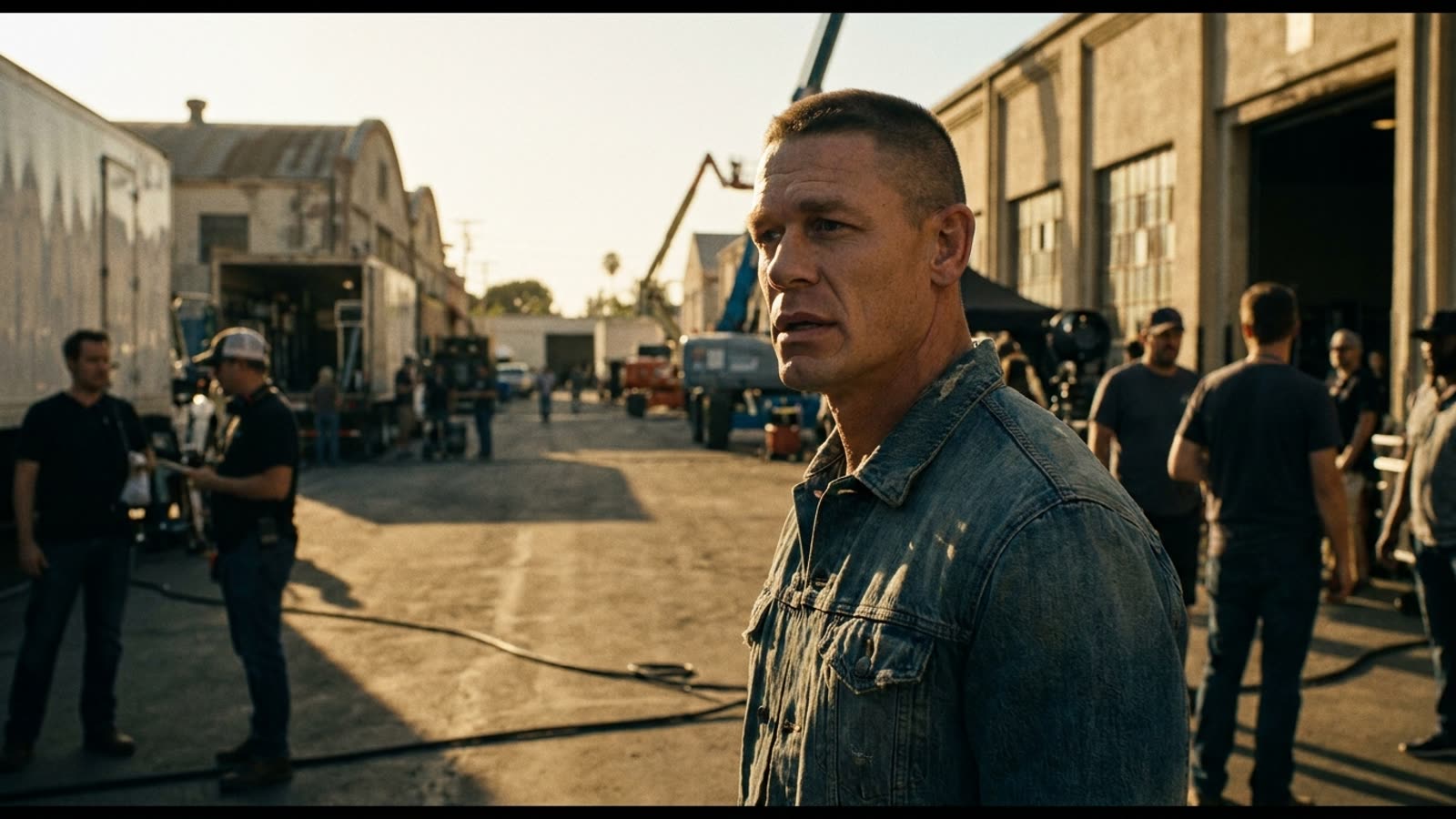
John Cena walked into a clinic this week, had his head shaved, and posted about it on social media. The 49-year-old former WWE champion is undergoing his second hair transplant procedure, and rather than hiding behind hats for months, he announced it to his millions of followers with the casualness of someone scheduling a dental cleaning.
This is what male vanity looks like in 2026: not denial, but documentation.
The transplant goes mainstream
Hair restoration surgery has existed for decades, but for most of that time it carried the whiff of desperation—the domain of aging executives and insecure actors who would sooner claim "good genetics" than admit to follicular intervention. That stigma has largely evaporated. Elon Musk's transformation from his PayPal-era hairline to his current fuller look is perhaps the most documented case study in tech circles. Wayne Rooney spoke openly about his procedures years ago. More recently, a generation of influencers and athletes have treated transplants as content rather than secrets.
Cena's openness about round two is notable precisely because he didn't need to say anything. He could have blamed a movie role, claimed a style change, or simply gone quiet for a few months. Instead, he chose transparency—a calculation that being honest about enhancement now carries less reputational risk than being caught hiding it later.
The economics of follicles
The hair restoration industry has grown substantially over the past decade, driven partly by improved techniques like FUE (follicular unit extraction) that leave minimal scarring and allow for more natural results. Procedures that once required obvious "hair plug" patterns now produce gradual, believable outcomes. The technology improved; the price, while still substantial, became accessible to the merely affluent rather than exclusively the wealthy.
For celebrities, the calculus is straightforward. Their faces are their assets, and hair—fairly or not—remains coded as youth, vitality, and virility. A leading man with a receding hairline faces different casting calls than one with a full head of hair. The investment pays professional dividends.
Our take
Cena's casual disclosure is more culturally significant than the procedure itself. We've entered an era where male celebrities increasingly treat cosmetic enhancement the way female celebrities have long been expected to—as maintenance rather than moral failing. The honesty is refreshing, even if it comes with its own performance of authenticity. At least when Cena tells interviewers he's "all natural" in the gym, we'll know exactly which parts he's talking about.