Beneath the marble lobbies and designer boutiques of Japan's great department stores lies a parallel universe where a retired schoolteacher and a corporate executive stand shoulder to shoulder, united in their pursuit of the perfect strawberry. The depachika — a portmanteau of "depāto" (department store) and "chika" (basement) — represents something Western retail has never quite managed: the democratization of obsessive quality.
These subterranean food halls occupy a peculiar position in Japanese commercial culture. They are neither supermarkets nor specialty shops, neither fast food nor fine dining. They exist in a liminal space where a single musk melon can command the price of a modest handbag upstairs, yet the crowds pressing against the glass cases span every demographic imaginable.
The architecture of abundance
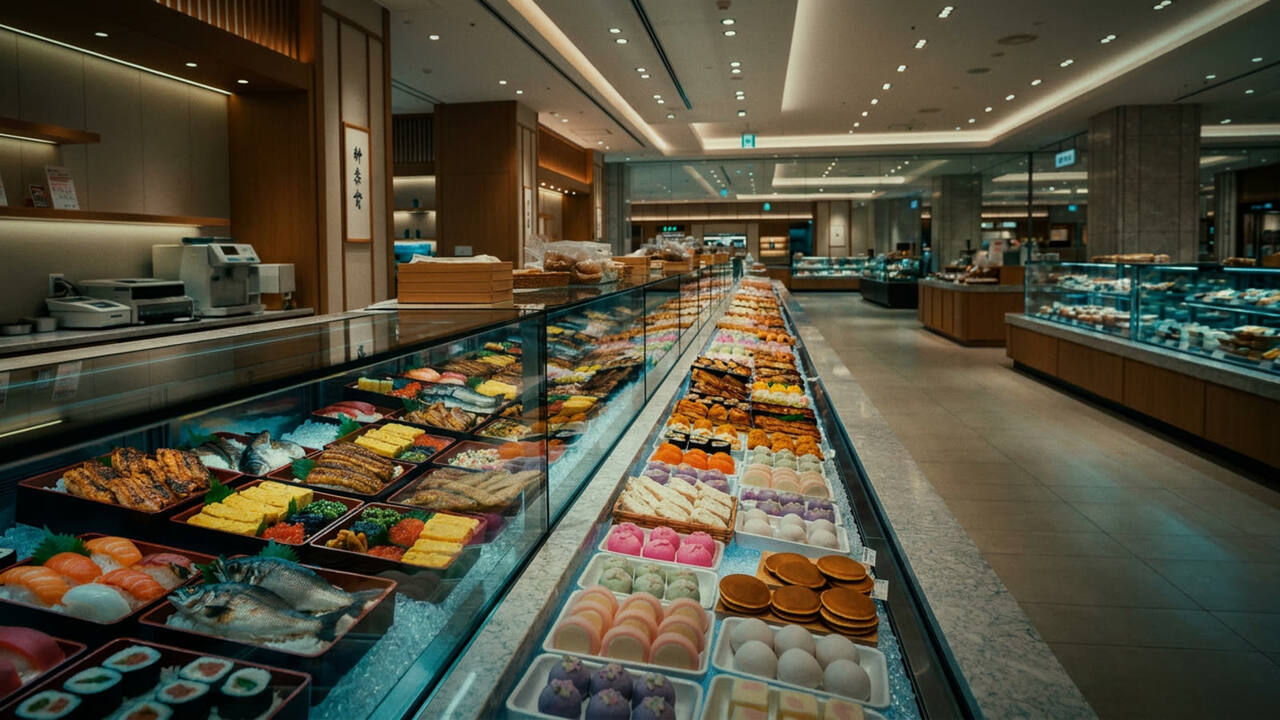
The typical depachika operates on principles that would give a Western retail consultant heart palpitations. Aisles are deliberately narrow, forcing intimacy with both merchandise and fellow shoppers. Lighting is calibrated to make wagashi gleam like jewels and sashimi glisten with oceanic freshness. The air carries competing currents of roasting tea, fresh mochi, and the subtle funk of aged miso.
What strikes foreign visitors first is the labor intensity. Each counter is staffed by specialists who have often spent years mastering a single category — the tamagoyaki vendor who has flipped the same sweet omelet tens of thousands of times, the wagashi artisan who shapes seasonal confections according to traditions predating the department store itself. This is retail as performance art, with wrapping elevated to an aesthetic discipline.
Commerce as cultural preservation
The depachika serves a function that transcends mere shopping. It operates as a living museum of regional Japanese food culture, gathering producers from across the archipelago under one climate-controlled roof. A Kyoto confectioner whose family has made yatsuhashi for generations shares space with an Hokkaido dairy whose butter has achieved cult status. The basement becomes a map of Japan's culinary geography.
This curatorial role explains why depachika have survived — even thrived — while department store fashion floors have struggled against e-commerce. You cannot click to purchase the experience of watching a craftsperson assemble your bento, nor can algorithms replicate the serendipity of discovering a regional specialty you never knew existed. The depachika sells something Amazon cannot ship: the theater of quality.
Our take
Western retailers have attempted depachika-style food halls with mixed results, typically missing the essential ingredient: sincerity without pretension. The Japanese model works because it treats food as worthy of the same reverence as fashion or art, while simultaneously making that reverence accessible to anyone with a train pass and modest budget. The grandmother buying six perfect grapes receives the same white-gloved service as the executive assembling a gift box. In an age of algorithmic personalization and frictionless checkout, the depachika's stubborn insistence on human expertise and tactile beauty feels less like nostalgia than prophecy.