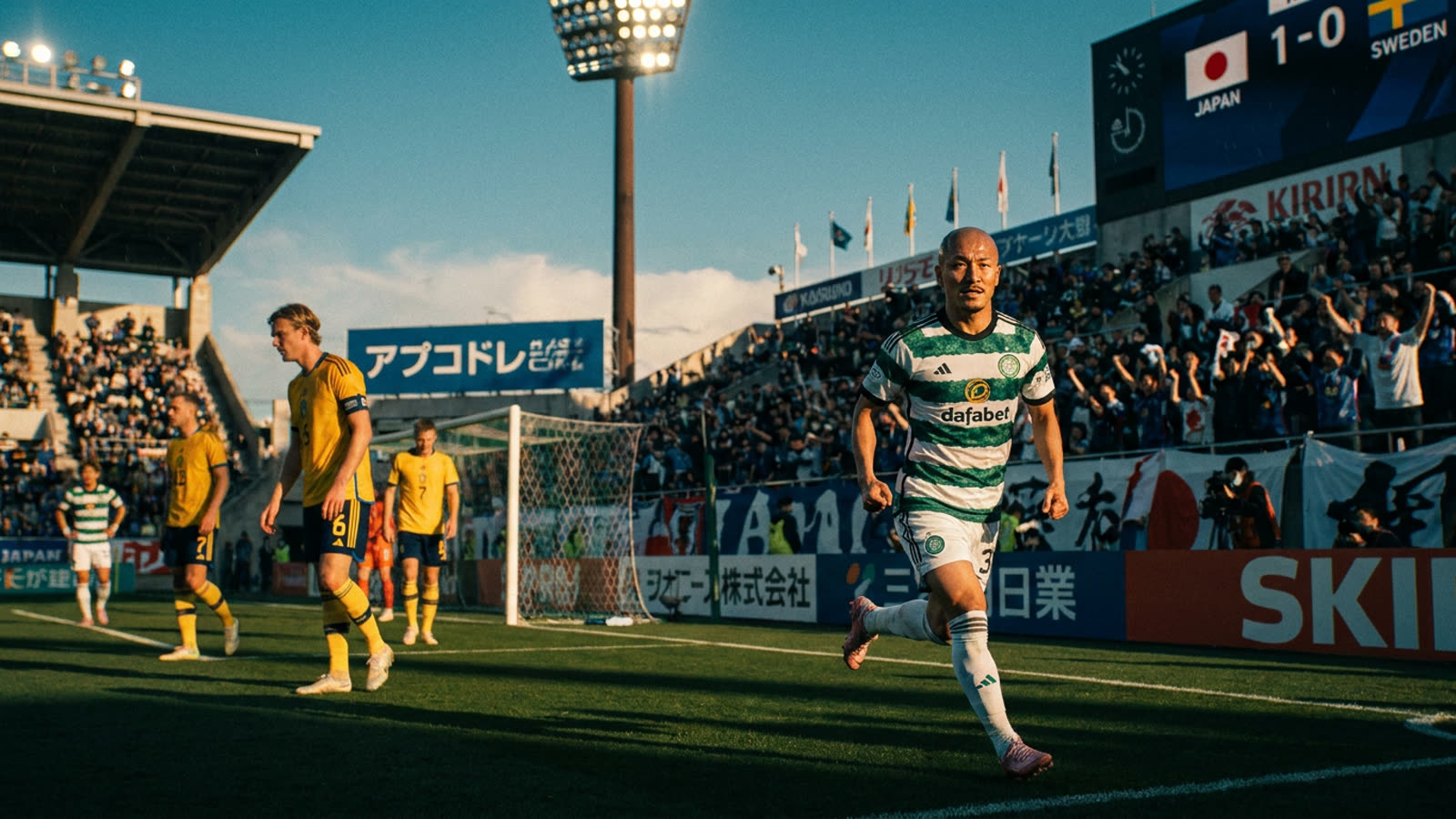
The goal itself was almost too simple to carry such weight. Daizen Maeda, the Celtic forward who has spent years learning to thrive in the physical chaos of British football, found himself unmarked at the back post and finished with the clinical efficiency that has become Japan's calling card at this tournament. Sweden, a team that entered the World Cup with legitimate aspirations, suddenly looked every bit their age.
This is what happens when a footballing nation finally believes it belongs. Japan have been knocking on the door of the global elite for two decades, collecting respectable group-stage exits and the occasional shock result. But something shifted in the lead-up to this tournament—a quiet confidence that replaced the historic deference to European and South American powers. Manager Hajime Moriyasu has built a squad that presses with the intensity of a Bundesliga side, transitions with the speed of the Premier League's best, and possesses the technical foundation that Japanese academies have been refining for a generation.
The Swedish paradox
Sweden arrived in North America with perhaps their most talented squad since the 1994 side that finished third. Alexander Isak has become one of Europe's most feared strikers; Viktor Gyökeres finally earned the big-tournament stage his club form demanded; the midfield depth suggested a team capable of grinding through the knockout rounds. And yet the Swedes have looked curiously hesitant when it matters most—as if the weight of expectation, so unfamiliar to a nation accustomed to overachievement, has become its own burden.
The contrast with Japan is instructive. Where Sweden seemed to tighten under pressure, the Japanese players moved with the freedom of a team that has nothing to lose and everything to prove. Maeda's goal was the product of a system that creates chances through relentless movement, not individual brilliance. When it came, it felt inevitable.
What this means for the bracket
A Japanese victory would set up a quarterfinal against either the United States or Turkey—a fixture that would carry enormous commercial and symbolic significance. For FIFA, a Japan deep run is the kind of narrative that justifies the expanded tournament format and the North American hosting experiment. For the Japanese Football Association, it represents the return on three decades of systematic investment in youth development, league infrastructure, and the strategic export of players to Europe's top leagues.
Sweden, meanwhile, would face the familiar questions about tournament mentality that have haunted Scandinavian football since Denmark's improbable 1992 European Championship. The talent is undeniable; the collective will to impose it on the biggest stages remains elusive.
Our take
This match feels like a generational inflection point. Japan have spent years being patronized as plucky underdogs who play attractive football but lack the steel for knockout rounds. That narrative is dying in real time. Sweden, conversely, may look back at this tournament as the moment their golden generation discovered that talent alone guarantees nothing. Maeda's goal was simple. Its implications are anything but.