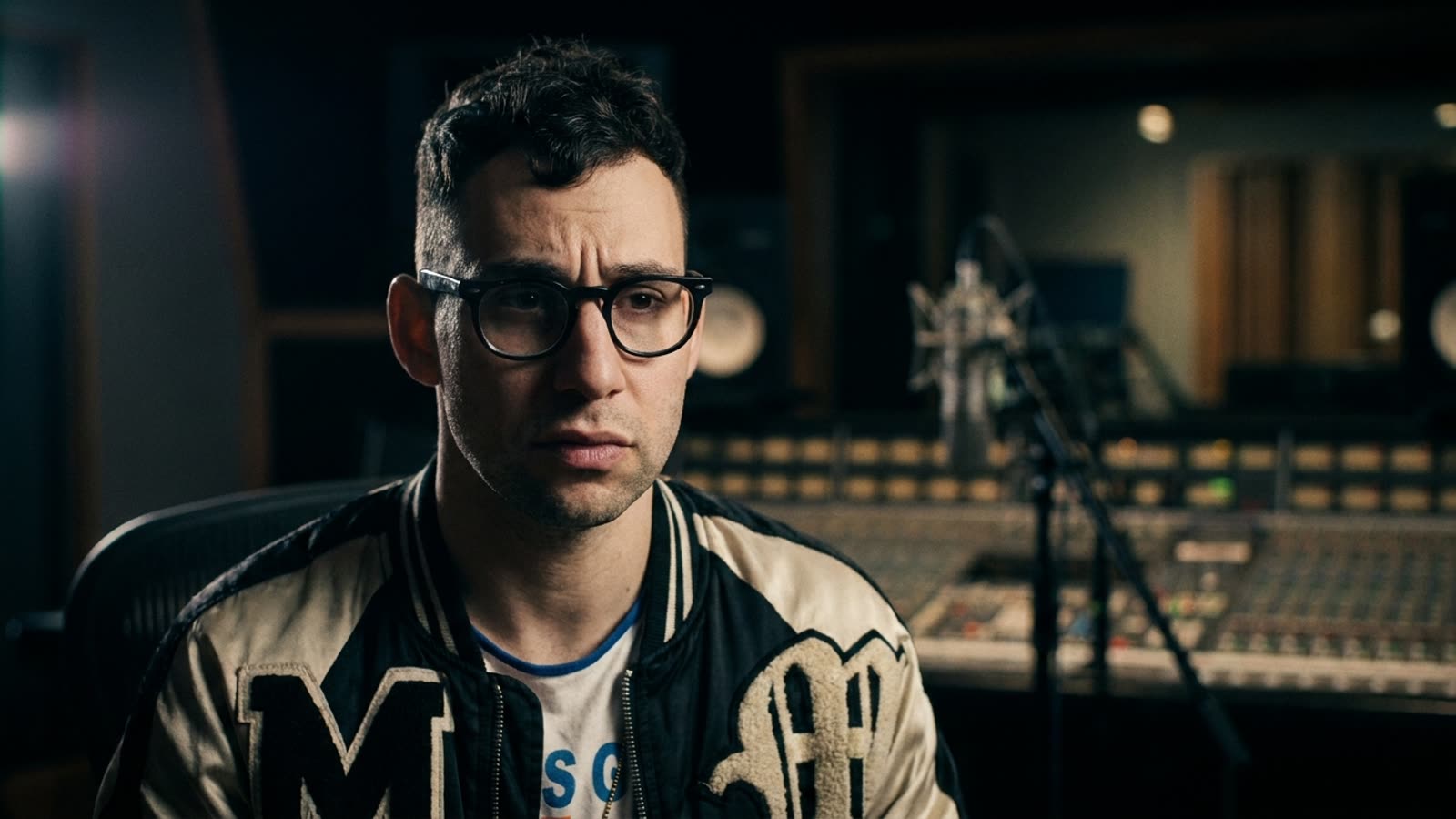
The producer behind Taylor Swift, Lana Del Rey, and The 1975 has never been one for diplomatic restraint, but his Wednesday Instagram journal entry hit with particular venom. Jack Antonoff declared that anyone using AI to make music is a "godless whore," adding that "bad actors will willingly reveal themselves through slop." It's the kind of statement that sounds unhinged until you realize he might be the last major hitmaker willing to say it out loud.
The ancient ritual defense
Antonoff's argument rests on music-making as something sacred—"an ancient ritual," in his words. This is romantic, perhaps naively so, but it points to a real tension in creative industries. The same week Antonoff posted his screed, Universal Music Group quietly expanded its partnership with an AI company to generate "reference tracks" for songwriters. Sony has filed patents for AI-assisted composition tools. The major labels publicly denounce AI training on copyrighted material while privately racing to integrate generative tools into their workflows. Antonoff's rage isn't directed at some hypothetical future; it's aimed at an industry transformation already underway behind closed doors.
Why 'slop' is the operative word
The term "slop" has become internet shorthand for AI-generated content that floods platforms with technically competent but spiritually vacant material. Antonoff's use of it is telling. He's not arguing that AI music sounds bad—increasingly, it doesn't—but that it represents a category error, mistaking output for expression. The distinction matters less to Spotify's algorithm than it does to the humans who once believed they were participating in culture rather than consuming product. A streaming platform optimized for engagement has no mechanism for distinguishing between a song that took three years of heartbreak to write and one that took three seconds of prompting.
The economic reality he's ignoring
Antonoff can afford to be purist. He commands fees that most working musicians will never see, and his rolodex includes artists who sell out stadiums. For the session guitarist trying to pay rent, or the jingle writer competing against AI-generated library music, the calculus is grimmer. The "godless whores" Antonoff condemns may simply be people adapting to an industry that has systematically devalued their labor for two decades. Streaming already hollowed out the middle class of music; AI threatens to eliminate it entirely. Moral clarity is easier when you're already at the top.
Our take
Antonoff's language is deliberately inflammatory, designed to provoke exactly the discourse it's generating. But beneath the provocation is a genuine question the industry refuses to answer honestly: if the point of music is human connection, what happens when humans are optional? The labels want it both ways—the efficiency of machines and the authenticity of artists—and Antonoff is calling the bluff. He'll be proven right or irrelevant within five years. There's no middle ground left.