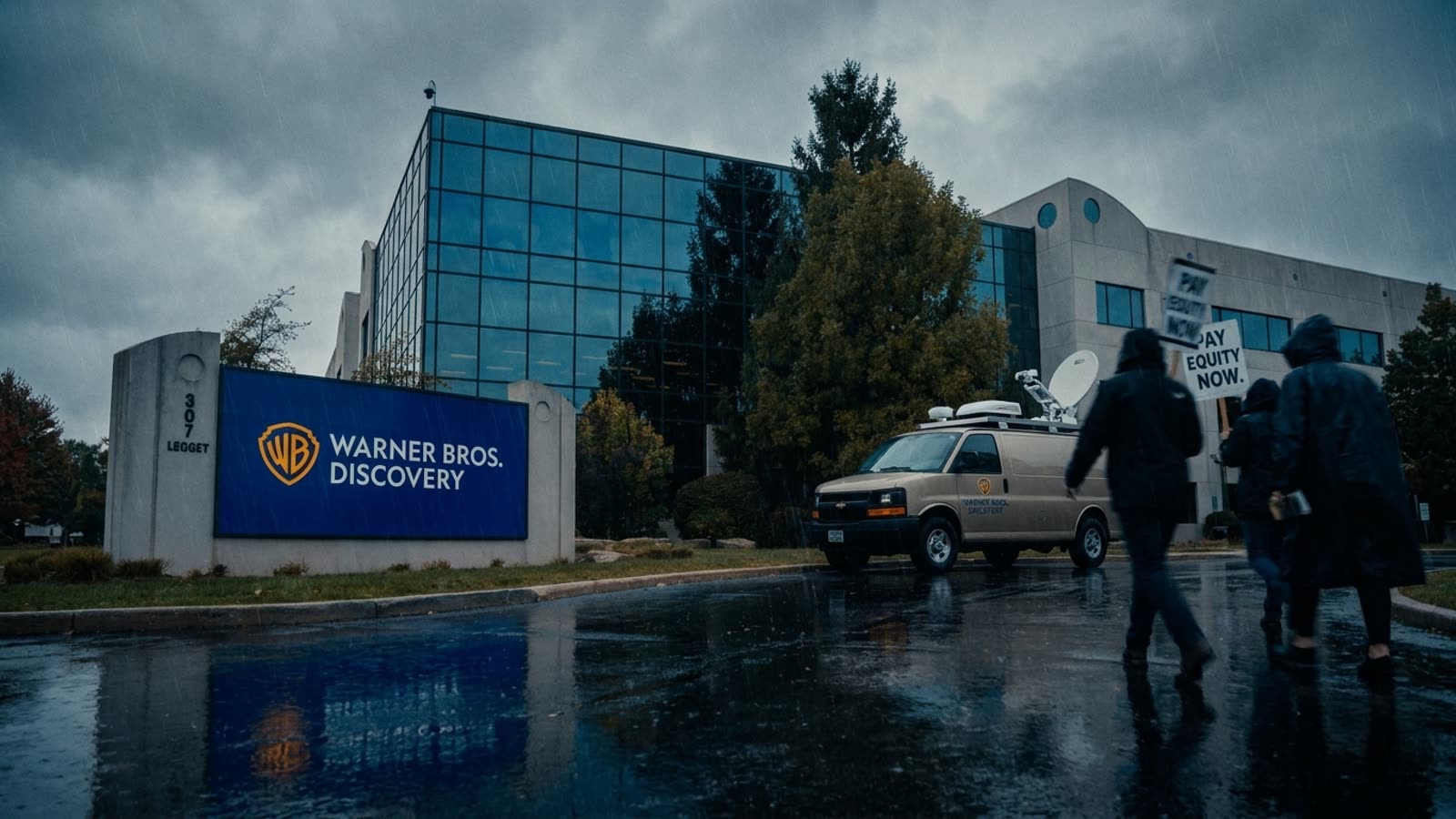
Proxy advisory firm Institutional Shareholder Services has recommended that Warner Bros. Discovery shareholders vote against the company's executive compensation package, citing concerns about pay structures tied to the pending Paramount merger. The rebuke lands at a delicate moment: Warner Bros. is attempting to close one of the most consequential media consolidations in a generation while its stock languishes and its streaming unit continues to burn cash.
ISS wields enormous influence over institutional voting. When it issues a negative recommendation on executive pay, companies often scramble to negotiate changes or face embarrassing say-on-pay defeats at annual meetings. For Warner Bros. CEO David Zaslav—already one of the most generously compensated executives in media—the advisory firm's intervention threatens to turn shareholder approval into a referendum on whether leadership deserves rich payouts while rank-and-file employees absorb layoffs.
The merger math problem
The Paramount deal, if completed, would create a content behemoth theoretically capable of competing with Netflix and Disney+. But the financial logic remains contested. Warner Bros. Discovery carries substantial debt from the 2022 WarnerMedia merger, and Paramount's own balance sheet is hardly pristine. Combining two leveraged, streaming-challenged companies does not automatically produce a healthy one—it may simply produce a larger unhealthy one.
ISS appears concerned that executive compensation packages have been structured to reward deal completion rather than long-term value creation. In other words, management gets paid handsomely for closing the transaction regardless of whether shareholders ultimately benefit. This is a classic agency problem, and ISS is flagging it before the vote.
Governance as competitive disadvantage
Media companies have historically operated with governance structures that would make tech investors blanch: dual-class shares, entrenched founders, boards stacked with loyalists. Warner Bros. Discovery inherited some of these tendencies, and the Paramount combination—with its own complicated ownership history involving Shari Redstone's National Amusements—promises more of the same.
The ISS recommendation suggests that institutional shareholders are growing impatient. In an industry where capital allocation decisions can make or break a company's streaming future, investors want assurance that executives are aligned with their interests, not merely with deal tombstones on their walls.
Our take
Zaslav's compensation has been a lightning rod since before the Discovery-WarnerMedia merger closed, and the Paramount deal only amplifies the optics problem. ISS is doing what it does: providing cover for institutional investors who want to register displeasure without organizing a full revolt. Whether shareholders actually reject the pay package matters less than the signal being sent. The combined Warner-Paramount entity, if it emerges, will operate under a cloud of governance skepticism from day one. That is a self-inflicted wound in a business where trust and long-term vision are supposed to be the product.