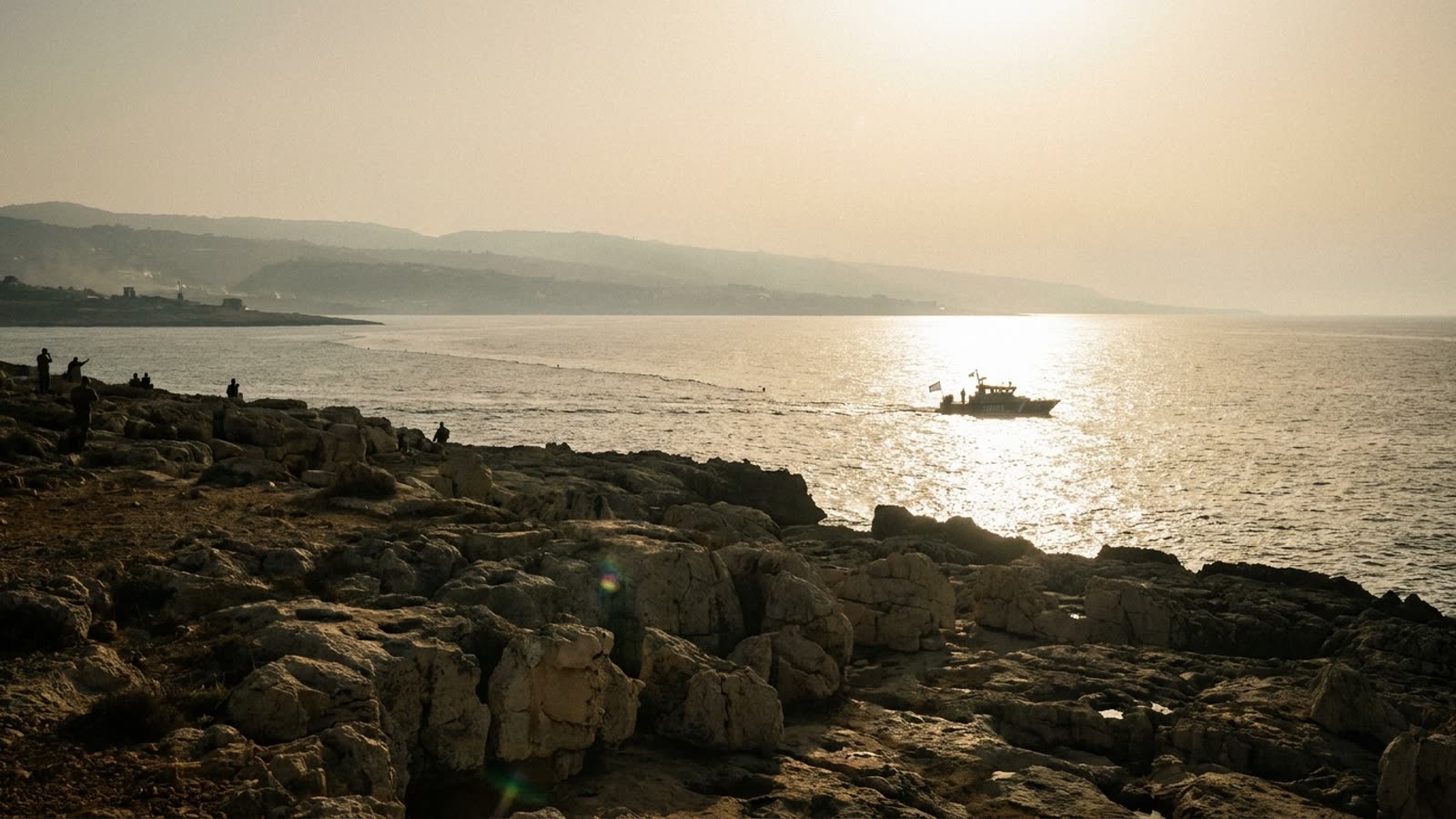
The ceasefire announcement, confirmed by officials in Jerusalem and Beirut on Wednesday, is less about ending active hostilities—which have been sporadic since Hezbollah's tactical retrenchment in late 2025—than about signaling that both governments are willing to lock in gains before a potential US-Iran breakthrough reshuffles the regional deck.
The agreement commits both sides to full implementation of the 2022 maritime boundary deal, including disputed provisions on energy exploration rights in the Qana gas field. More significantly, it establishes a joint monitoring mechanism with French and American observers, the first formal security coordination between the two countries since the 2006 war.
Why Tehran is paying attention
Hezbollah's acquiescence to the deal—telegraphed through carefully worded statements from party officials over the past week—suggests that Iran has given its Lebanese proxy permission to stand down. That permission does not come free. Tehran has spent years positioning Hezbollah's arsenal as leverage in any nuclear negotiation; a stable Israel-Lebanon border diminishes that card's value.
The timing is not coincidental. With the House voting this week to constrain President Trump's Iran war powers, and European intermediaries reportedly shuttling between Washington and Tehran, the Iranians appear to be clearing underbrush ahead of serious talks. A quiet northern border for Israel removes one of Prime Minister Netanyahu's stated preconditions for engaging with any Iran framework.
The domestic politics on both sides
For Netanyahu, the ceasefire is a rare piece of good news amid coalition turbulence and ongoing judicial battles. He can credibly claim that military pressure—including the targeted strikes of late 2025—produced diplomatic results without a ground campaign. The Israeli right will grumble about legitimizing Hezbollah's continued presence, but the security establishment has been quietly advocating for exactly this kind of managed deterrence.
In Lebanon, caretaker Prime Minister Najib Mikati gains a modest but real achievement to present to international creditors. The country's economic collapse has made any semblance of stability a political asset. Whether the agreement survives Lebanon's perpetual governmental dysfunction is another question, but for now Mikati can point to French investment interest in the gas fields as a tangible benefit.
What remains unsettled
The ceasefire does not address Hezbollah's precision-guided missile inventory, which Israeli officials consider an existential threat. Nor does it resolve the status of the Shebaa Farms, the sliver of territory that Hezbollah has long cited as justification for its armed status. These are deliberate omissions; both sides chose a narrow, achievable agreement over a comprehensive settlement that would have collapsed under its own weight.
The French and American observer mission is also notably modest—a few dozen personnel with monitoring but not enforcement authority. If either side decides to test the arrangement, the observers will document violations, not prevent them.
Our take
This is a ceasefire of convenience, not conviction, and that is precisely why it might hold. Neither Israel nor Hezbollah wants a full-scale war while larger regional negotiations remain in play. The agreement's cynicism is its strength: everyone gets something, no one gets everything, and the costs of defection are temporarily higher than the costs of compliance. If the Iran talks collapse, expect the northern border to heat up again within months. But if a deal emerges, historians may mark this week as the moment the region's geometry began to shift.