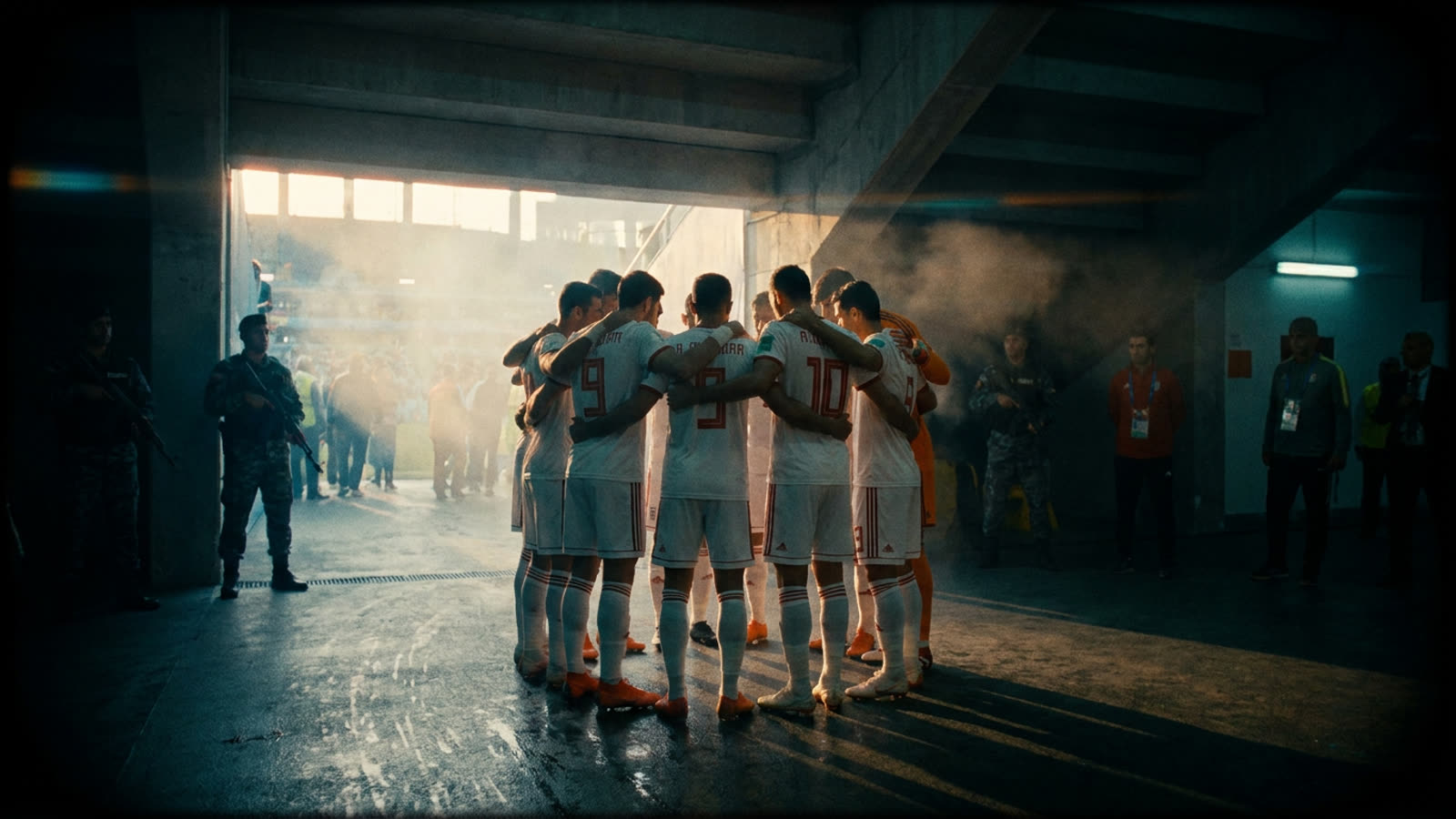
The Department of Homeland Security has quietly resolved one of the stranger logistical puzzles facing the 2026 FIFA World Cup: what happens when a nation under comprehensive U.S. sanctions qualifies for a tournament co-hosted on American soil. Iranian players and staff will be permitted to enter the United States, but only twenty-four hours before each match, and they must depart within a similarly tight window afterward. It is hospitality of the most grudging variety.
The mechanics of minimal welcome
The arrangement, confirmed by DHS officials this week, threads a needle that FIFA has been anxiously watching for months. Under normal circumstances, Iranian nationals face severe visa restrictions and are largely barred from U.S. entry. The World Cup exemption creates a carve-out so narrow it barely qualifies as one. Players cannot arrive early to acclimate. Families are not covered. The usual pre-tournament training camps that other nations enjoy on American soil are effectively off the table for Team Melli.
FIFA had reportedly pressed for broader accommodations, arguing that competitive fairness required equal treatment. Washington's counter-argument was implicit but unmistakable: Iran remains under some of the heaviest sanctions the U.S. imposes on any nation, and a soccer tournament does not suspend geopolitics.
Precedent and its limits
This is not the first time sports have forced uncomfortable diplomatic improvisations. The 1998 World Cup draw famously placed the U.S. and Iran in the same group, producing a politically charged match in Lyon. But that game was on neutral French soil. The 2026 edition, spread across the United States, Mexico, and Canada, presents a different problem: the sanctioning power is also the host.
The DHS solution borrows from the playbook used for United Nations General Assembly sessions, where diplomats from adversarial nations receive tightly scoped visas to attend meetings in New York. The difference is that those arrangements are routine and decades old. This one was negotiated under time pressure, with FIFA reportedly warning that failure to accommodate Iran could trigger legal challenges or even relocation of matches.
What it signals about the tournament's politics
The World Cup has always been a stage for geopolitical theater, but the 2026 edition is shaping up to be unusually charged. The Iran arrangement arrives alongside FIFA's separate decision to ban Iranian fans from purchasing tickets through official channels—a move that pleased Washington but infuriated Tehran. Players will be present; supporters will be largely absent. The stadium atmosphere for Iran's matches promises to be surreal.
For the U.S. government, the narrow exemption is a way to avoid the embarrassment of a participating nation being unable to field its team while still maintaining the posture of maximum pressure. For Iran, it is a reminder that even in the theoretically apolitical realm of sport, American leverage extends to the most granular details of daily life.
Our take
There is something almost comic about a superpower calibrating visa windows down to the hour for soccer players, as if an extra day of acclimatization might constitute a sanctions violation. But the comedy masks a real tension: the World Cup's universalist aspirations keep colliding with a world that is anything but. The DHS deal lets the tournament proceed without a forfeit or a lawsuit, but it also ensures that Iran's participation will feel less like inclusion than supervised visitation. FIFA wanted a global celebration. What it got, at least for one team, is a geopolitical checkpoint.