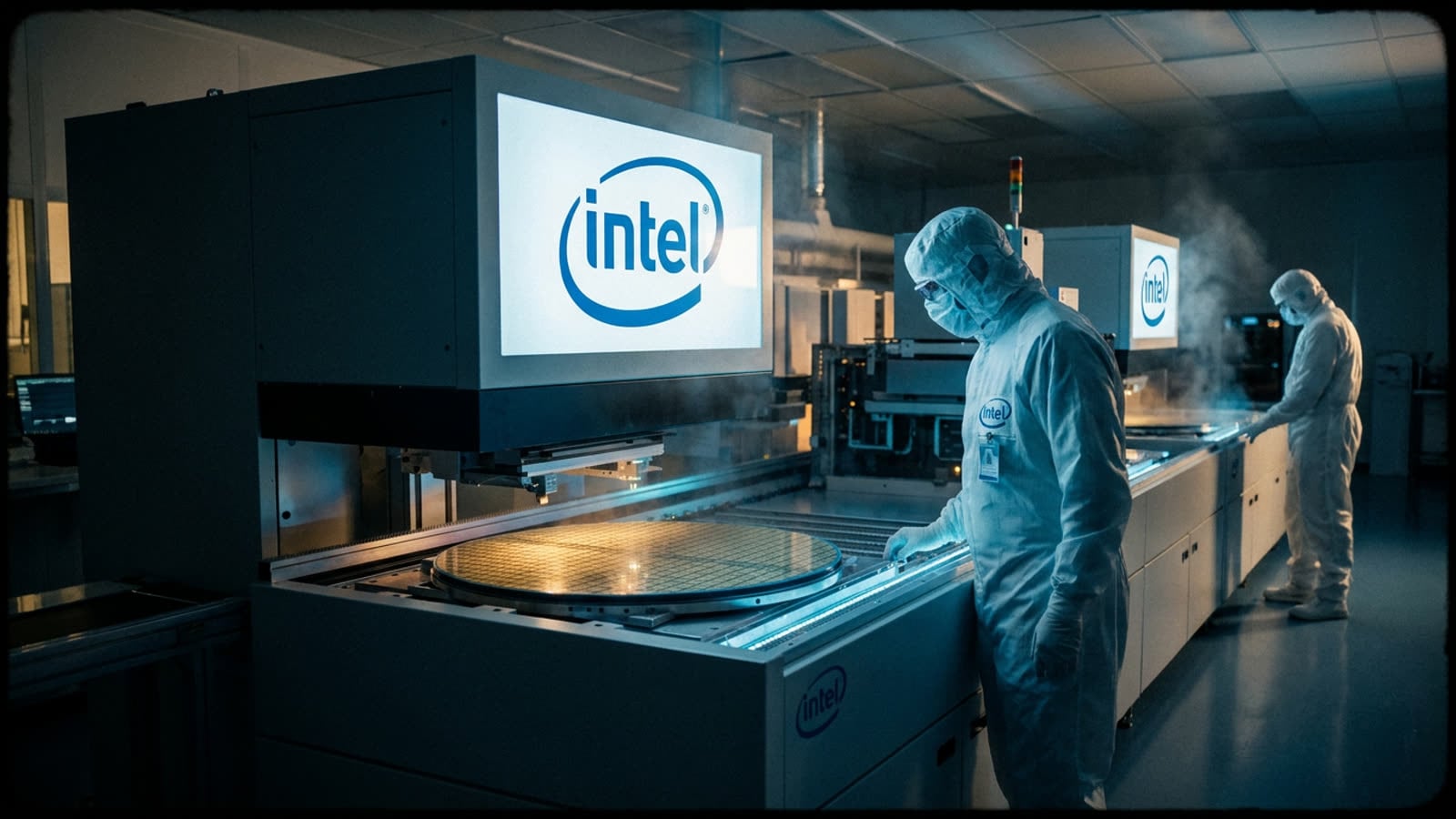
Intel's pitch to the AI infrastructure market has always been some variation of "wait for the next one." Now, with its forthcoming Falcon Shores accelerator, the company is making that case again—this time with an emphasis not on beating Nvidia's performance benchmarks but on undercutting its total cost of ownership. Cheaper silicon, lower power draw, cooler operating temperatures. It is a sensible strategy for a company that cannot win the horsepower war. Whether enterprise buyers will care is another matter entirely.
The announcement, made at a developer event this week, positions Falcon Shores as the pragmatist's choice for AI inference workloads—the unglamorous but increasingly dominant use case as companies move from training experimental models to deploying them at scale. Intel is targeting data center operators who have watched their electricity bills balloon alongside their Nvidia GPU orders and are now searching for ways to run inference cheaply enough to turn a profit on AI-powered products.
The thermal arbitrage play
Intel's claim that Falcon Shores will run cooler than Nvidia's H100 and AMD's MI300X is not trivial. Cooling is the hidden tax on AI infrastructure—one that manifests as real estate constraints, water consumption, and geographic limitations on where data centers can economically operate. A chip that generates less heat per unit of useful computation could, in theory, allow denser rack configurations and reduce the auxiliary costs that have made AI infrastructure so capital-intensive.
But Intel has been making versions of this argument for years, and the market has consistently chosen Nvidia's raw throughput over Intel's efficiency promises. The question is whether the AI buildout has matured to the point where operators are optimizing for margin rather than capability.
The credibility deficit
Intel's problem is not that its argument is wrong—it is that the company has spent the better part of a decade failing to execute on its data center roadmap. The Ponte Vecchio accelerator, Falcon Shores' predecessor, arrived late and underperformed. Intel's foundry business has struggled to match TSMC's manufacturing prowess. And the company's stock has become a byword for value traps among semiconductor investors.
None of this means Falcon Shores will fail. But it does mean Intel is asking the market to extend credit it has not earned. Enterprise procurement cycles are long, and CIOs who bet on Intel's last generation of AI hardware are not eager to repeat the experience.
Our take
Intel is probably right that the AI infrastructure market will eventually care more about efficiency than peak performance—that is how every computing paradigm matures. The company's misfortune is that it needs that maturation to happen on its timeline, not the market's. Falcon Shores may be a genuinely good product. It may also arrive just in time to compete with Nvidia's next generation, which will inevitably be faster, cooler, and more efficient than whatever Intel benchmarked against. The treadmill does not stop for turnaround stories.