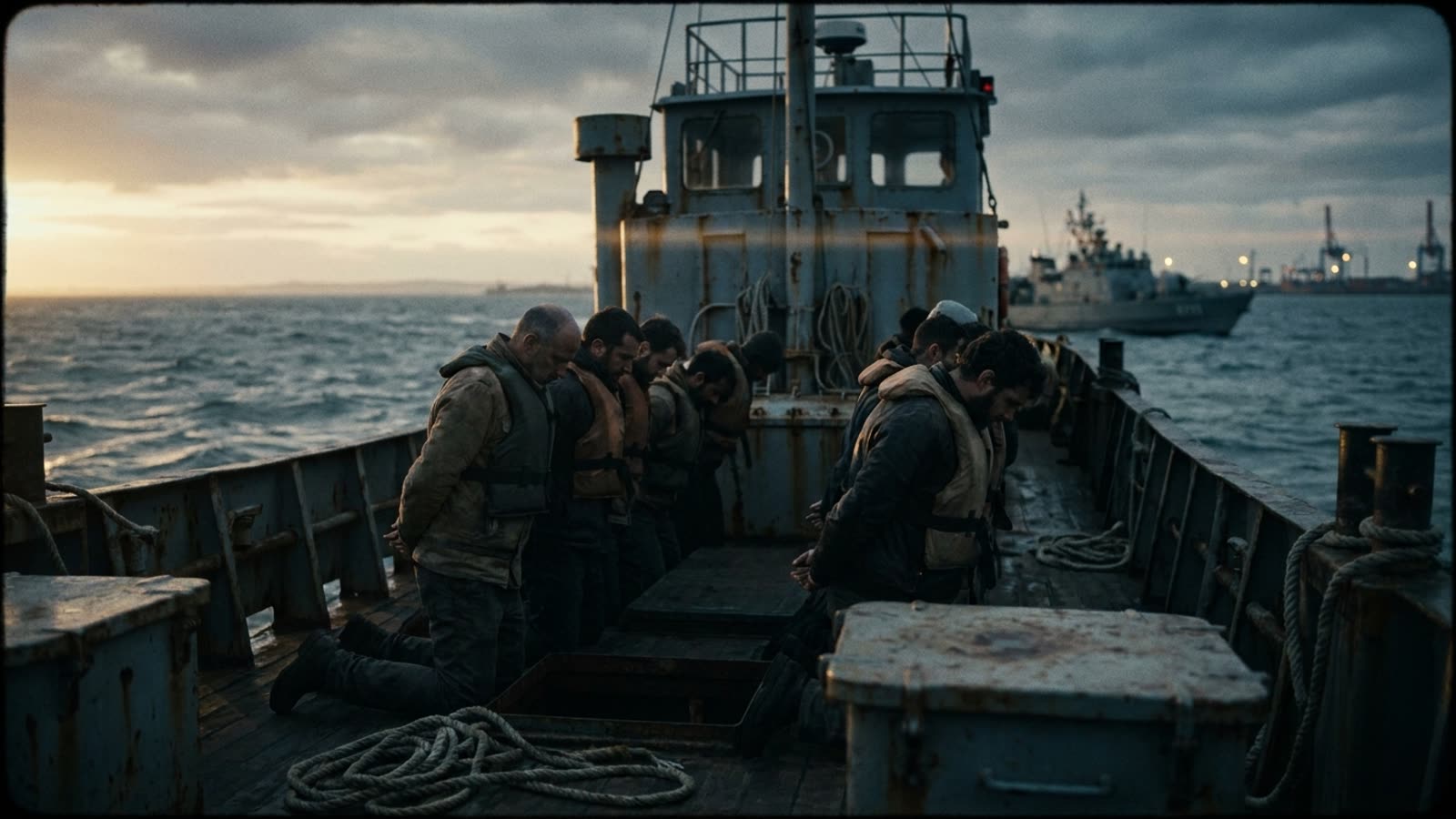
When Indian merchant sailors signed contracts to crew tankers traversing the Persian Gulf, they expected the ordinary hazards of maritime life: rough seas, long separations from family, the tedium of months at anchor. They did not expect to become prisoners of a war between Washington and Tehran that their government had studiously avoided joining.
Yet that is precisely what has happened. Indian nationals — estimates suggest dozens, possibly more — have found themselves detained, injured, or killed as the Trump administration's military campaign against Iran's nuclear program spilled across shipping lanes that carry much of the world's oil. The fury building in New Delhi represents something more consequential than a diplomatic spat: it is a stress test for India's entire foreign-policy architecture, which has long depended on maintaining productive relationships with both Washington and its adversaries.
The human toll
India supplies a disproportionate share of the world's commercial seafarers — by some estimates, nearly 10 percent of the global merchant fleet is crewed by Indian nationals. The Persian Gulf routes, among the most lucrative in the industry, have long attracted Indian mariners willing to accept the region's elevated risk premiums. That calculus has now inverted catastrophically.
Reports filtering back to families in Kerala, Gujarat, and Maharashtra describe sailors stranded on vessels unable to leave port, crews detained by Iranian authorities as suspected spies, and at least several deaths from military strikes on commercial shipping that Tehran claims were carrying contraband. The Indian government has been uncharacteristically vocal in its protests, summoning the American ambassador and issuing statements that stop just short of condemning U.S. operations directly.
Modi's neutrality under strain
Prime Minister Narendra Modi has spent a decade constructing a foreign policy premised on strategic autonomy — close defense ties with Washington, continued energy purchases from Russia, and economic engagement with Iran despite American sanctions. The Iran war has made this balancing act nearly impossible.
Washington wants India to enforce sanctions rigorously and deny Iranian vessels access to Indian ports. Tehran wants continued oil purchases and diplomatic support. Indian public opinion, inflamed by images of detained sailors and grieving families, wants the government to do something — though what, exactly, remains unclear. Modi's government has responded with the diplomatic equivalent of a shrug: expressions of concern, calls for de-escalation, and no concrete policy shifts.
The problem is that neutrality works only when the belligerents respect it. Indian-flagged vessels and Indian nationals are being caught in the crossfire regardless of New Delhi's official stance, and the government's inability to protect its citizens is becoming a domestic political liability.
Our take
The sailors' plight illuminates a truth that great-power strategists prefer to ignore: wars have externalities, and those externalities fall disproportionately on people who never asked to be involved. India's fury is justified, but it also reflects the limits of strategic autonomy in a world where American military reach extends to every shipping lane. New Delhi will eventually have to choose a side, or accept that its citizens will continue paying the price for its ambivalence. Neither option is attractive, which is precisely why Modi has avoided the choice for so long. That luxury may be expiring.