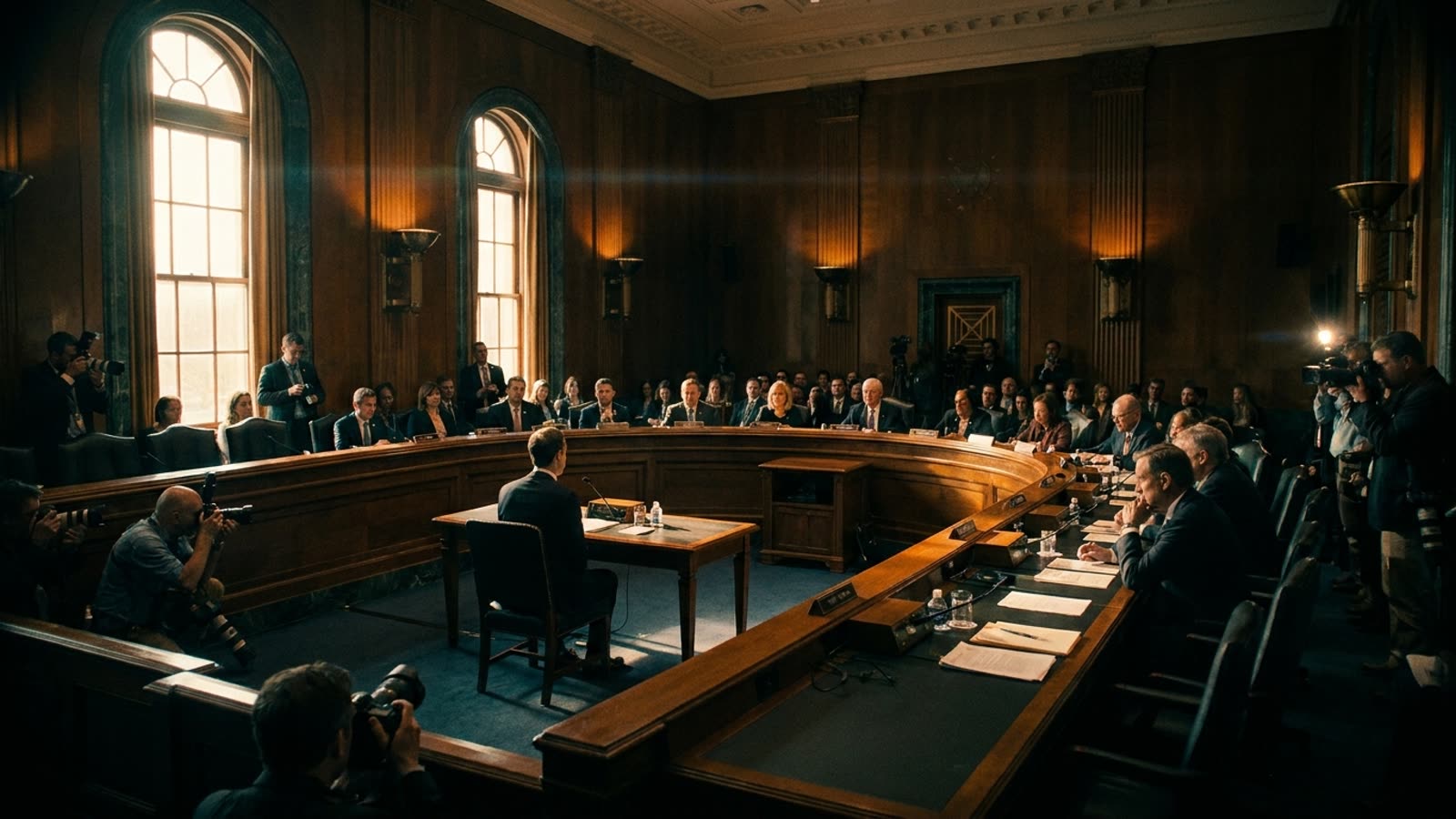
The framers devoted exactly one sentence to the matter. Article II, Section 2 of the Constitution grants the president power to appoint ambassadors, judges, and principal officers "by and with the Advice and Consent of the Senate." From this spare instruction, the upper chamber has constructed an elaborate apparatus of delay, leverage, and obstruction that now defines the rhythm of American government more than any legislation.
The transformation happened gradually, then suddenly. For most of American history, confirmation votes were perfunctory. Cabinet nominees were approved on voice votes the same day they were named. Judicial confirmations rarely drew opposition unless a nominee had obvious disqualifying flaws. The Senate understood its role as ensuring basic competence and ethical standing, not as a second referendum on the election's outcome.
The mechanics of modern delay
Today's confirmation process operates through two distinct chokepoints. First, a nominee must clear the relevant committee—Judiciary for judges, Finance for Treasury, Foreign Relations for ambassadors. Committee chairs control the calendar, and a hostile chair can simply decline to schedule a hearing indefinitely. The nominee exists in bureaucratic purgatory, neither confirmed nor rejected, their professional life suspended.
Should a nominee survive committee, they face the floor. Here, any senator may place a "hold"—an informal but powerful tradition allowing individual members to block consideration. Holds are often anonymous, creating a system where a single senator can halt an appointment without public accountability. Breaking a hold requires invoking cloture, which demands floor time the majority leader may not wish to spend. With hundreds of positions requiring confirmation, the arithmetic becomes impossible.
What changed and when
The inflection point arrived during the Reagan administration, when confirmation battles over judicial nominees began attracting sustained political attention. The Bork nomination of 1987 introduced the modern playbook: organized opposition, extensive media campaigns, and the treatment of confirmation as a political contest rather than a procedural formality. Each subsequent decade ratcheted the stakes higher.
The filibuster's application to executive branch nominees—once unthinkable—became routine. When the Democratic majority eliminated the filibuster for most nominations in 2013, and Republicans extended that change to Supreme Court nominees in 2017, the reforms paradoxically intensified partisan warfare. Without the filibuster as a release valve, every confirmation became a zero-sum contest where the minority party had nothing to lose from total opposition.
The vacancy crisis nobody discusses
The practical consequences extend far beyond headline battles over Supreme Court seats. At any given moment, hundreds of positions requiring Senate confirmation sit vacant. Ambassadorships go unfilled for years. Agency leadership operates through acting officials who lack the authority and legitimacy of confirmed appointees. The federal bench accumulates vacancies that slow the administration of justice.
This vacancy crisis creates a shadow government of career officials and temporary placeholders who exercise enormous power without democratic accountability. It also concentrates authority in the handful of confirmed officials who do exist, distorting the organizational design of the executive branch in ways the Constitution never anticipated.
Our take
The confirmation process has become a victim of its own success as a political weapon. Both parties discovered that obstruction carries minimal electoral cost while delivering substantial tactical benefits—and neither has incentive to disarm unilaterally. The result is a system that punishes competent nominees, rewards those willing to endure public humiliation, and leaves the machinery of government perpetually understaffed. The framers' single sentence has spawned a monster that neither party created alone and neither can slay without the other's cooperation. That cooperation shows no signs of arriving.