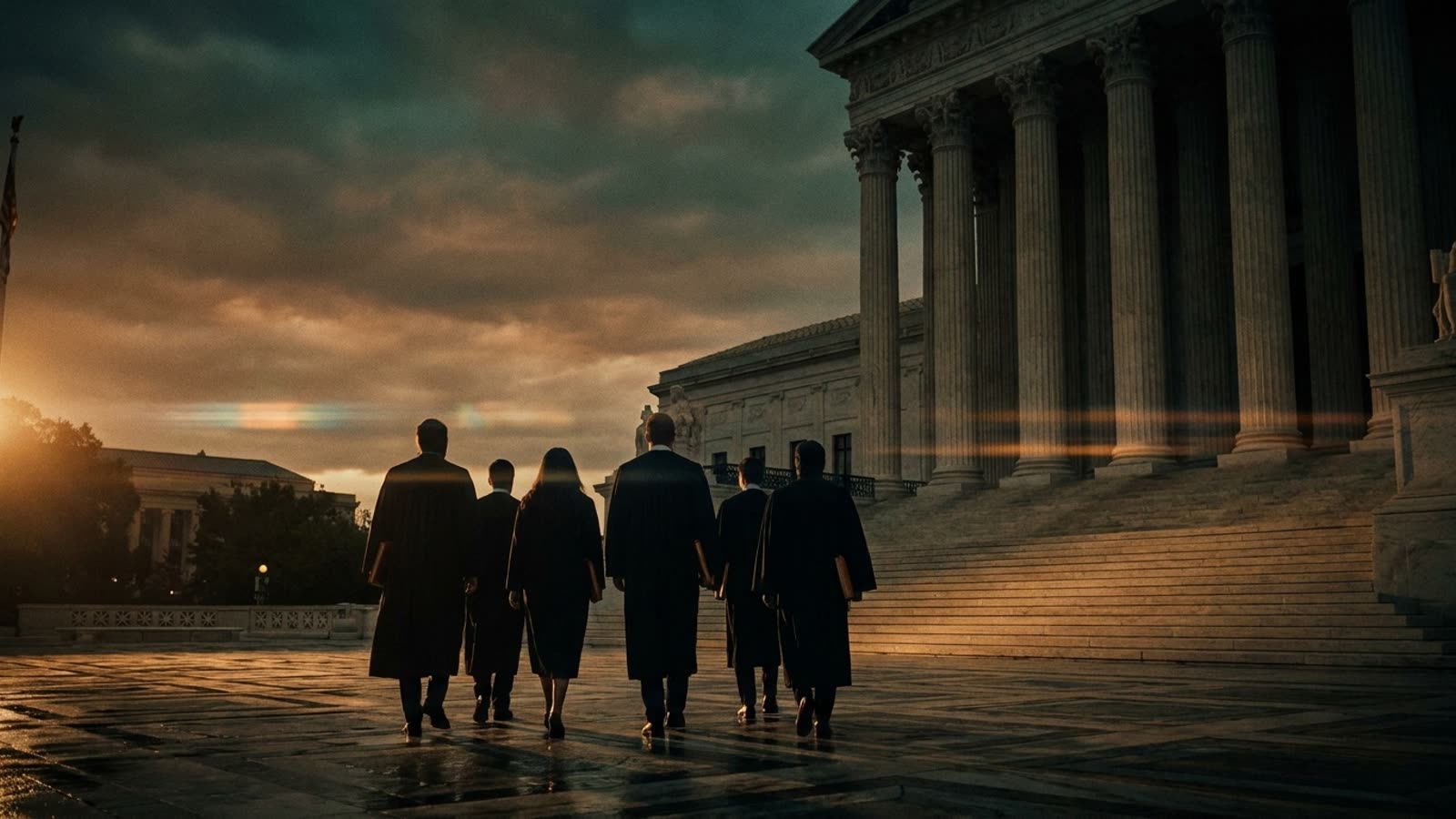
Every term, roughly three dozen law school graduates — most in their mid-twenties, none confirmed by the Senate, few known to the public — arrive at the Supreme Court to perform work that shapes the lives of three hundred million Americans. They are law clerks, and their fingerprints are on nearly every significant decision the Court issues.
The clerkship system is one of American government's strangest power arrangements. Justices, who serve for life and answer to no electorate, delegate substantial drafting and research responsibilities to employees who serve for a single year. The clerks do not merely fetch coffee and cite-check footnotes. They write first drafts of opinions, compose bench memos that frame how justices understand pending cases, and participate in the certiorari process that determines which of the roughly seven thousand annual petitions the Court will actually hear. A clerk's recommendation to deny review can quietly bury a legal question for a generation.
The pipeline and its critics
The path to a Supreme Court clerkship is narrow and self-reinforcing. Candidates typically graduate from a handful of elite law schools — Harvard, Yale, Stanford, and Chicago dominate — then clerk for a prestigious federal appellate judge before ascending to the high court. This feeder system means that the clerks who draft opinions on voting rights, criminal procedure, and economic regulation emerge from remarkably similar backgrounds. Critics have long argued that the pipeline produces ideological sorting and class homogeneity, not intellectual diversity.
The selection process is itself opaque. Justices choose clerks through informal networks, often relying on recommendations from former clerks who have become law professors or appellate judges. There is no public application portal, no standardized timeline, and no transparency about selection criteria. Some justices have hired exclusively from certain feeder judges for decades.
Influence that compounds
What makes the clerkship system especially consequential is not the year spent at the Court but the decades that follow. Former clerks occupy an extraordinary share of elite legal positions. They become law professors who train the next generation, partners at firms that argue before the Court, and judges on the lower courts that implement Supreme Court precedent. Several current justices themselves once served as clerks. The network is self-perpetuating, and its members share not just credentials but often jurisprudential worldviews shaped during their formative year in chambers.
The revolving door also raises questions about the Court's insularity. When the same small community produces clerks, argues cases, and eventually ascends to the bench, the institution risks becoming a closed loop — brilliant, credentialed, and disconnected from the legal realities most Americans experience.
Our take
The clerkship system is not a scandal; it is a structural feature that deserves more scrutiny than it receives. These are serious young lawyers doing serious work, but they are also unaccountable actors exercising influence that would alarm us in any other branch. The Court's legitimacy depends partly on the fiction that nine justices personally craft every word of every opinion. The reality is more collaborative and more delegated — and the public has a right to understand that the twentysomethings behind the marble columns matter more than the Court's mystique suggests.