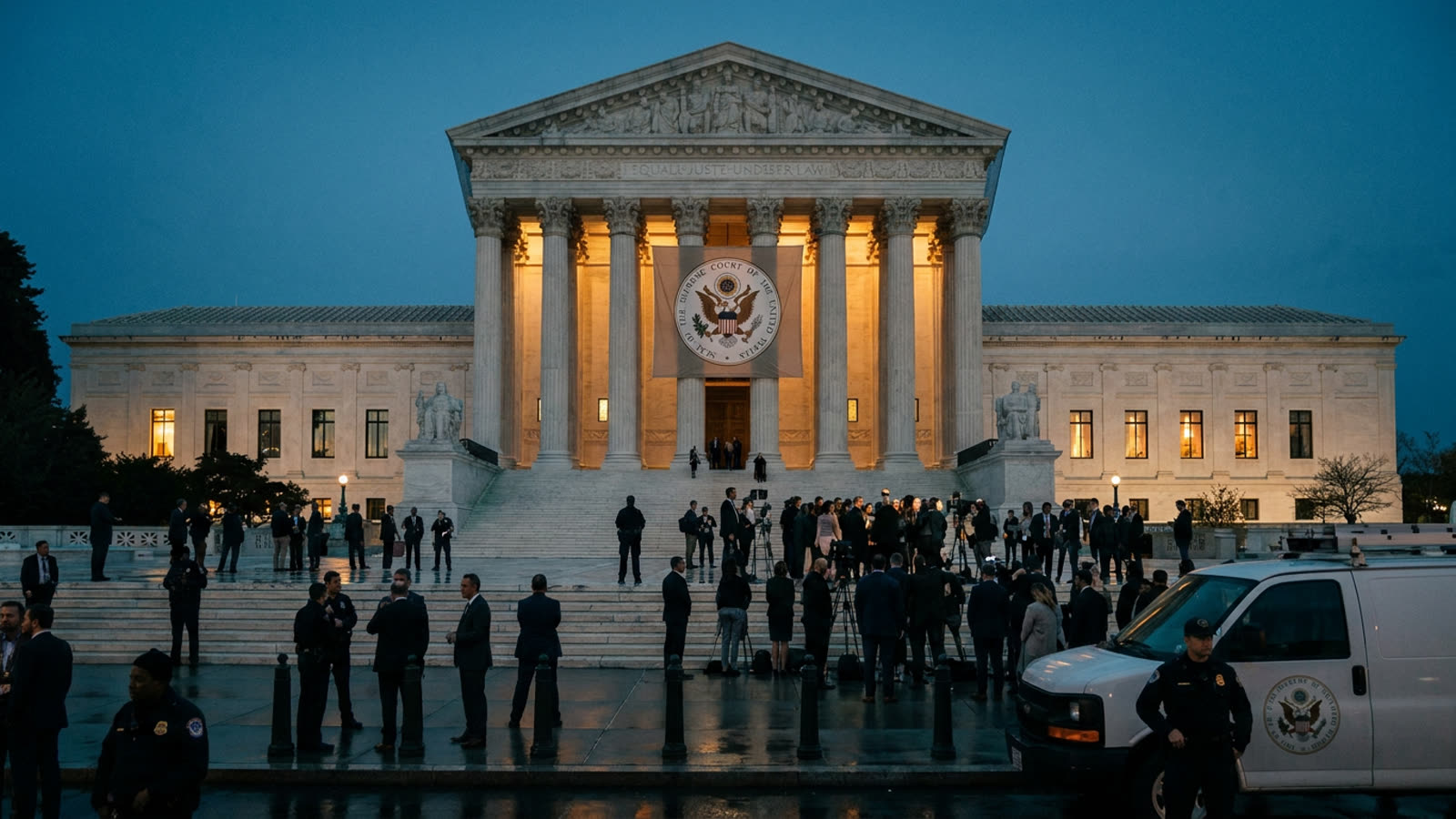
The United States Supreme Court receives roughly 7,000 petitions annually and agrees to hear fewer than 80. That acceptance rate — barely above one percent — makes the Court not just the final arbiter of American law but also its most selective gatekeeper. The decision of which cases to take, known as the certiorari process, operates largely in shadow, governed by unwritten conventions and strategic calculations that most Americans never see. Understanding this process reveals why certain legal questions languish for decades while others rocket to resolution.
The rule of four and its discontents
To grant certiorari requires only four of the nine justices — a threshold deliberately set below a majority to ensure minority viewpoints can force consideration of issues the Court might otherwise avoid. This "rule of four" dates to the Judiciary Act of 1925, when Congress gave the Court control over its own docket for the first time. The practical effect is profound: a determined quartet can place any properly presented question before the full Court, even over the objections of five colleagues who would prefer to let lower court rulings stand.
Yet the rule cuts both ways. Four justices may grant cert, but five are still required to win. This creates a peculiar strategic calculus: justices sometimes vote against hearing cases they care deeply about, fearing they lack the votes to prevail on the merits. Better to let a favorable circuit court ruling remain intact than to risk a Supreme Court loss that would bind the entire nation.
The cert pool and the power of clerks
Since the early 1970s, most justices have participated in the "cert pool," where law clerks from participating chambers divide the incoming petitions and write memoranda recommending whether to grant or deny review. A single clerk's assessment may be the only detailed analysis most justices see before voting. The system was designed for efficiency — the alternative being nine separate reviews of seven thousand petitions — but critics argue it concentrates enormous power in the hands of recent law school graduates and creates a homogenizing effect on case selection.
Not all justices participate. Samuel Alito has historically remained outside the pool, as did the late John Paul Stevens for his entire tenure. These holdouts conduct independent reviews, sometimes catching cases the pool overlooked or providing a counterweight to the prevailing clerk consensus.
Circuit splits and the cases that force the Court's hand
The single most reliable path to Supreme Court review is a circuit split — when two or more federal appellate courts have reached conflicting conclusions on the same legal question. The Court considers resolving such conflicts a core institutional duty, as allowing different rules to govern in different regions undermines the premise of uniform federal law. Sophisticated litigants structure their appeals specifically to create or highlight these splits, sometimes forum-shopping to generate the precise disagreement that will compel Supreme Court attention.
Yet even circuit splits offer no guarantee. Some conflicts persist for years as the Court waits for the issues to "percolate," allowing multiple lower courts to weigh in and refine the arguments. Others are deemed insufficiently important or too factually messy. The Court's discretion remains nearly absolute.
Our take
The certiorari process is where the Supreme Court exercises its most consequential and least accountable power. Every denied petition is a decision to let stand whatever the lower courts concluded — affecting real parties, real rights, real money — with no explanation required and no appeal possible. The justices who worry publicly about the Court's legitimacy might consider that legitimacy begins with transparency, and the cert process offers almost none. The cases that reach oral argument are only the visible fraction of the Court's work. The invisible majority may matter more.