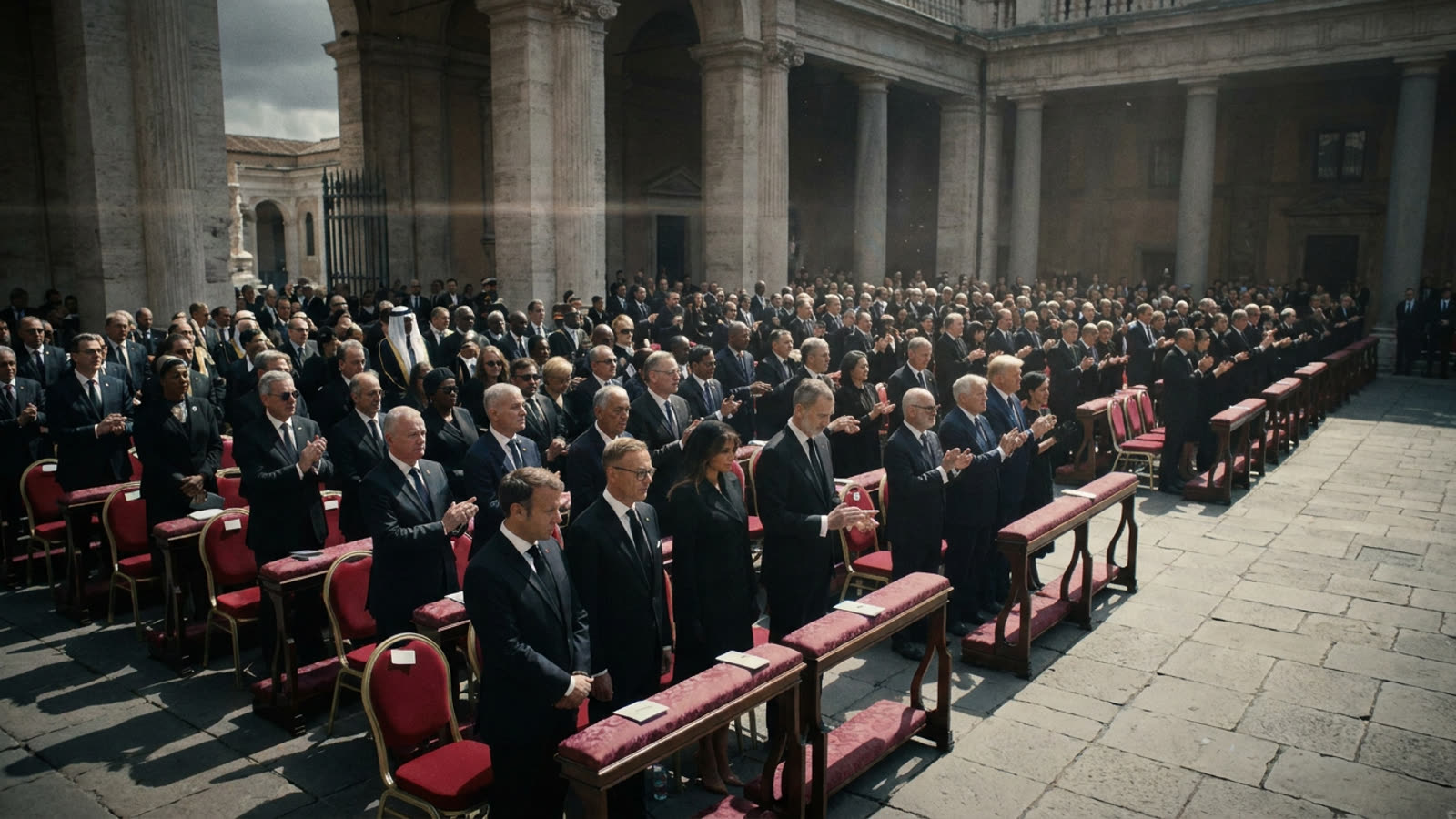
The death of a head of state creates something diplomats otherwise struggle to manufacture: a legitimate reason for rivals to occupy the same room. Funerals suspend the normal protocols of international relations, compressing months of back-channel negotiations into forty-eight hours of proximity. The result is a peculiar form of statecraft conducted in black ties and somber expressions, where the real business happens in cathedral anterooms and motorcade queues.
This is not accidental. State funerals have functioned as diplomatic summits since at least the Congress of Vienna, when European monarchs discovered that mourning provided cover for deal-making. The format persists because it solves a fundamental problem: leaders who cannot be seen seeking dialogue can attend a funeral without losing face.
The architecture of mourning
Every element of a state funeral carries diplomatic weight. Seating arrangements signal hierarchy and favor. The decision to send a president versus a vice president versus a foreign minister communicates volumes about bilateral relations. Delegations scrutinize who walks beside whom in processions, who shares a pew, who receives a private audience with the bereaved family.
The host nation wields considerable soft power through these choreographic choices. Placing two adversarial delegations in adjacent rows forces interaction. Scheduling sequential bilateral meetings in the margins allows the host to broker conversations that neither party could publicly initiate. The funeral becomes a neutral zone where deniability is built into the setting.
Historic encounters
Some of the twentieth century's most consequential diplomatic exchanges occurred at funerals. Winston Churchill's 1965 funeral brought together Charles de Gaulle and figures from across the Cold War divide. When Egyptian President Anwar Sadat was assassinated in 1981, his funeral drew an extraordinary assembly including three former American presidents, creating opportunities for regional dialogue that formal summits could not replicate.
The pattern holds in the contemporary era. Memorial services routinely generate more substantive leader-to-leader contact than G20 summits, precisely because the informal setting permits conversations that would be politically costly in official venues. A handshake at a funeral can be dismissed as mere protocol; the same gesture at a summit would require explanation.
The logistics of grief
Host governments invest enormous resources in funeral diplomacy. Advance teams map out every potential encounter. Intelligence services brief delegations on which counterparts might be receptive to overtures. Protocol offices choreograph arrivals to maximize or minimize interactions depending on strategic objectives.
The compressed timeline works in diplomacy's favor. Leaders cannot consult parliaments or conduct polling before a sidebar conversation. Decisions that would take months through normal channels get made in hours because everyone present has the authority to commit. The funeral creates what negotiation theorists call a "forcing event" — a deadline that concentrates minds and enables compromise.
Our take
There is something darkly efficient about conducting statecraft over coffins. The ritual of mourning strips away the performative nationalism that usually encumbers diplomacy, replacing it with a shared acknowledgment of mortality that, however briefly, humanizes adversaries. That world leaders consistently use these occasions for substantive engagement suggests they understand something their publics might find uncomfortable: grief is a diplomatic resource, and the death of the powerful serves the living in ways that extend far beyond eulogy.