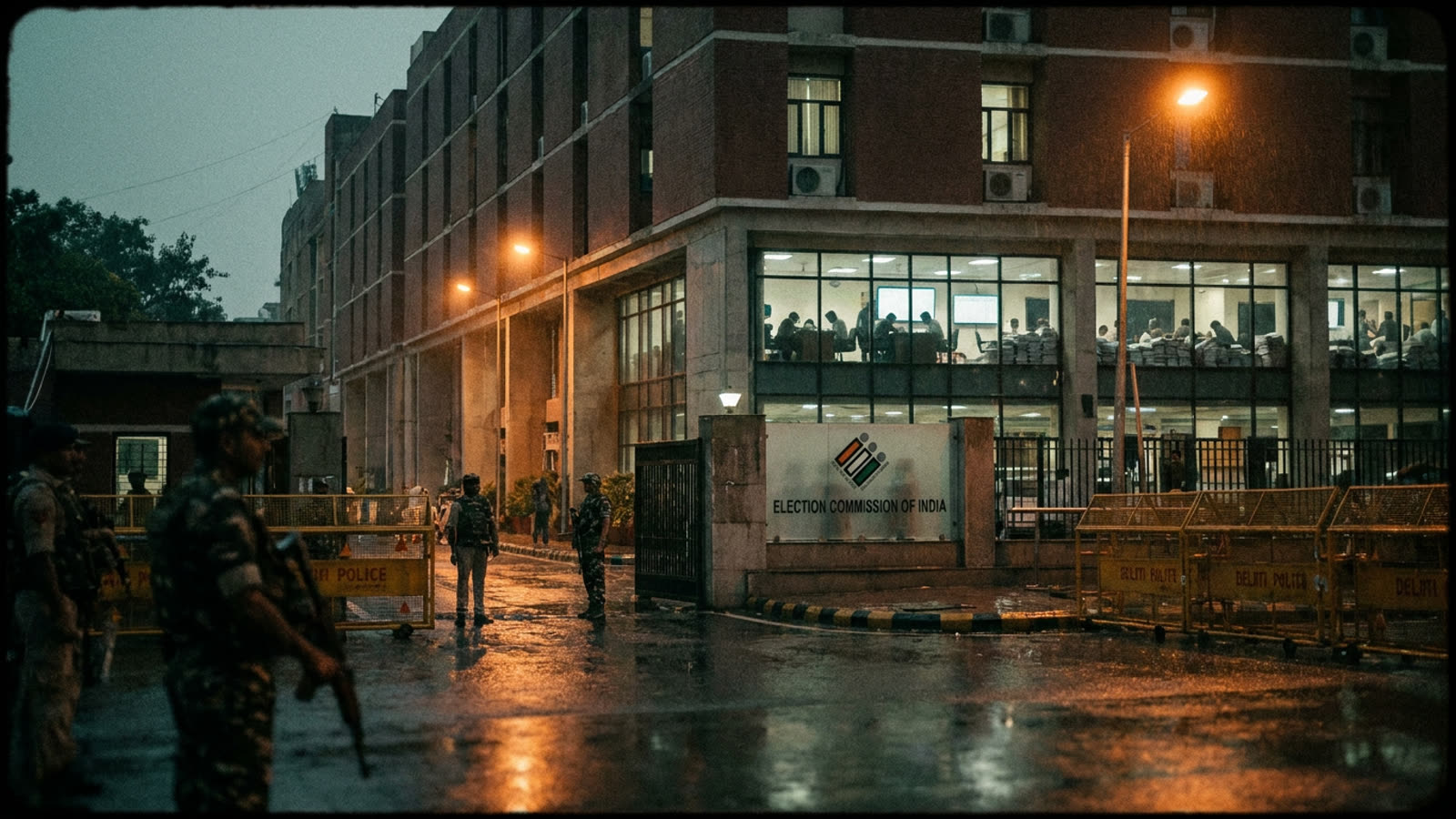
The drama of election night—the anchors, the maps, the concession speeches—obscures a quieter truth: by the time votes are counted, most of the consequential decisions have already been made by people whose names never trend on social media. Electoral commissions, the administrative bodies charged with running elections, operate in a peculiar zone of democratic life where procedural minutiae become existential questions. Where do you place a polling station? How do you verify a signature? When does a smudged ballot become a spoiled one? These are not merely technical matters. They are the architecture of legitimacy.
The invisible machinery
Electoral commissions vary wildly in structure. Some democracies vest authority in a single national body with constitutional independence—India's Election Commission, for instance, oversees voting for nearly a billion eligible citizens with a staff that swells to millions during election periods. Others, like the United States, fragment authority across thousands of county and state offices, creating a patchwork where rules about voter ID, early voting, and ballot design differ not just between states but between neighboring towns. Germany splits duties between a Federal Returning Officer who certifies results and sixteen state authorities who manage logistics. The common thread is not uniformity but the attempt to create distance between those who seek power and those who administer the process by which power is conferred.
This independence is always contested. Governments appoint commissioners, fund their operations, and write the laws they enforce. The tension between operational autonomy and political accountability is never fully resolved—it is managed, cycle after cycle, through norms, legal constraints, and the willingness of officials to absorb criticism from all sides. A well-functioning commission is one that both major parties accuse of bias; it means the referees are calling fouls on everyone.
When trust breaks down
The fragility of this arrangement becomes visible when commissions fail or are perceived to fail. Kenya's 2017 presidential election was annulled by the Supreme Court after the electoral commission's servers transmitted results that could not be verified against paper records. The commission's chairman later fled the country, citing threats. Zimbabwe's elections have been shadowed for decades by allegations that the Zimbabwe Electoral Commission operates as an extension of the ruling party. In these cases, the commission's loss of credibility does not merely delegitimize a single result—it poisons the well for future contests, making every subsequent election a referendum on whether the process itself can be trusted.
Even in established democracies, commissions face pressure that tests their independence. Australia's Electoral Commission has weathered accusations of partisan boundary-drawing. Britain's Electoral Commission has clashed with governing parties over campaign finance enforcement. The pattern is consistent: commissions that enforce rules against powerful actors become targets, and their survival depends on institutional buffers—fixed terms, bipartisan appointments, judicial oversight—that make retaliation costly.
The unglamorous craft
What commissioners actually do, day to day, is profoundly unglamorous. They negotiate with schools and community centers to secure polling locations. They recruit and train hundreds of thousands of temporary workers. They test voting machines, print ballots in dozens of languages, and establish protocols for what happens when the power goes out. They adjudicate complaints about misleading campaign materials and decide whether a candidate's paperwork was filed six minutes late or six minutes early. The work is logistical, legal, and relentlessly detailed. It rewards bureaucratic temperament, not charisma.
This unglamorous quality is, paradoxically, the source of their authority. Commissions derive legitimacy not from democratic election but from demonstrated competence and perceived neutrality. When they become exciting—when commissioners become household names—something has usually gone wrong.
Our take
Democracy's most important institution is the one voters think about least. Electoral commissions succeed precisely when they are boring, when the machinery hums along and the losers concede because they trust the count. The current global trend—where election administration has become a front in partisan warfare—represents a dangerous unraveling. Once the referees are delegitimized, every game becomes a brawl. The quiet professionals who run elections deserve more attention when things are calm, not less, because by the time their work becomes controversial, the damage is already underway.