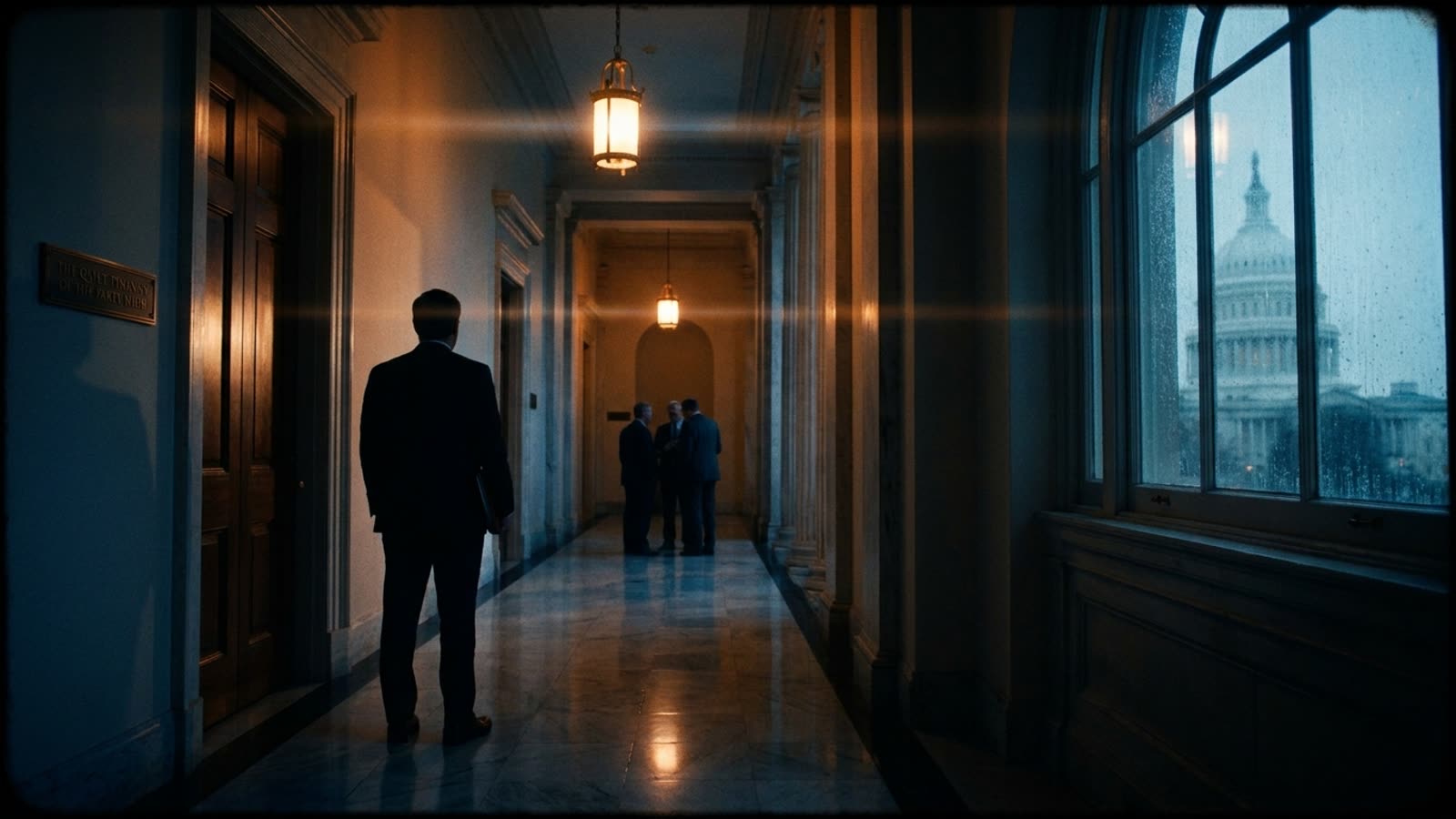
The most consequential economic decisions in the world are made by small groups of unelected officials sitting around conference tables in buildings designed to project stability and discretion. Central bank monetary policy committees — the Federal Reserve's FOMC, the European Central Bank's Governing Council, the Bank of England's MPC — determine the price of money itself, and through it, the trajectory of employment, inflation, housing markets, and retirement accounts across entire continents.
Yet for all their power, these committees operate through processes that few outside the economics profession truly grasp. The mystique is partly intentional. Central bankers have long believed that a certain oracular distance from democratic clamor helps them make unpopular but necessary decisions. But it also reflects genuine complexity: setting interest rates is less a technical calculation than a collective judgment call under radical uncertainty.
The information machine
Weeks before each rate decision, central bank staff begin assembling vast dossiers on economic conditions. At the Federal Reserve, this culminates in the Beige Book — a qualitative survey of business conditions across twelve regional districts — and the Tealbook, a confidential staff forecast that committee members receive days before meeting. The ECB's staff projections serve a similar function, as do the Bank of England's forecasting rounds.
These documents matter enormously, but they do not dictate outcomes. Committee members bring their own models, their own readings of the data, their own intuitions about where the economy is heading. A regional Fed president from an industrial district may see labor market tightness that a New York-based governor misses. A former academic on the ECB council may weight theoretical considerations differently than a career central banker.
The theater of consensus
Most monetary policy committees operate by consensus rather than simple majority vote, though the formal rules vary. The Fed chair traditionally seeks to build agreement before meetings, sounding out governors and regional presidents through bilateral conversations. The Bank of England's MPC is more openly adversarial, with dissenting votes common and published. The ECB's Governing Council, with its twenty-six members representing diverse national economies, requires particular diplomatic skill to steer.
This consensus-building shapes outcomes in subtle ways. A chair who wants to raise rates but faces significant internal opposition may settle for hawkish language in the post-meeting statement rather than an actual hike. Dissents signal future policy direction to markets: two votes for a cut today often presage an actual cut at the next meeting.
The communication problem
Modern central banking has become as much about managing expectations as about setting rates. Forward guidance — telling markets what you plan to do — can move financial conditions without any actual policy change. But this creates a credibility trap: if you signal one path and then deviate, markets may stop believing you.
The result is an elaborate dance of language. Central bankers parse their words with Talmudic precision, knowing that the difference between "patient" and "flexible" can move billions in bond markets. Press conferences have become high-stakes performances where a misplaced adjective can trigger volatility.
Our take
The opacity of monetary policy committees is both their strength and their democratic weakness. Insulation from political pressure allows them to make decisions that elected officials cannot — raising rates into a recession, for instance, when inflation demands it. But that same insulation breeds a technocratic distance from the citizens whose lives these decisions reshape. The mortgage holder in Manchester or Michigan has every right to understand how the price of their debt gets determined. Central banks have grown more transparent over decades, but the gap between their power and public comprehension remains troublingly wide.