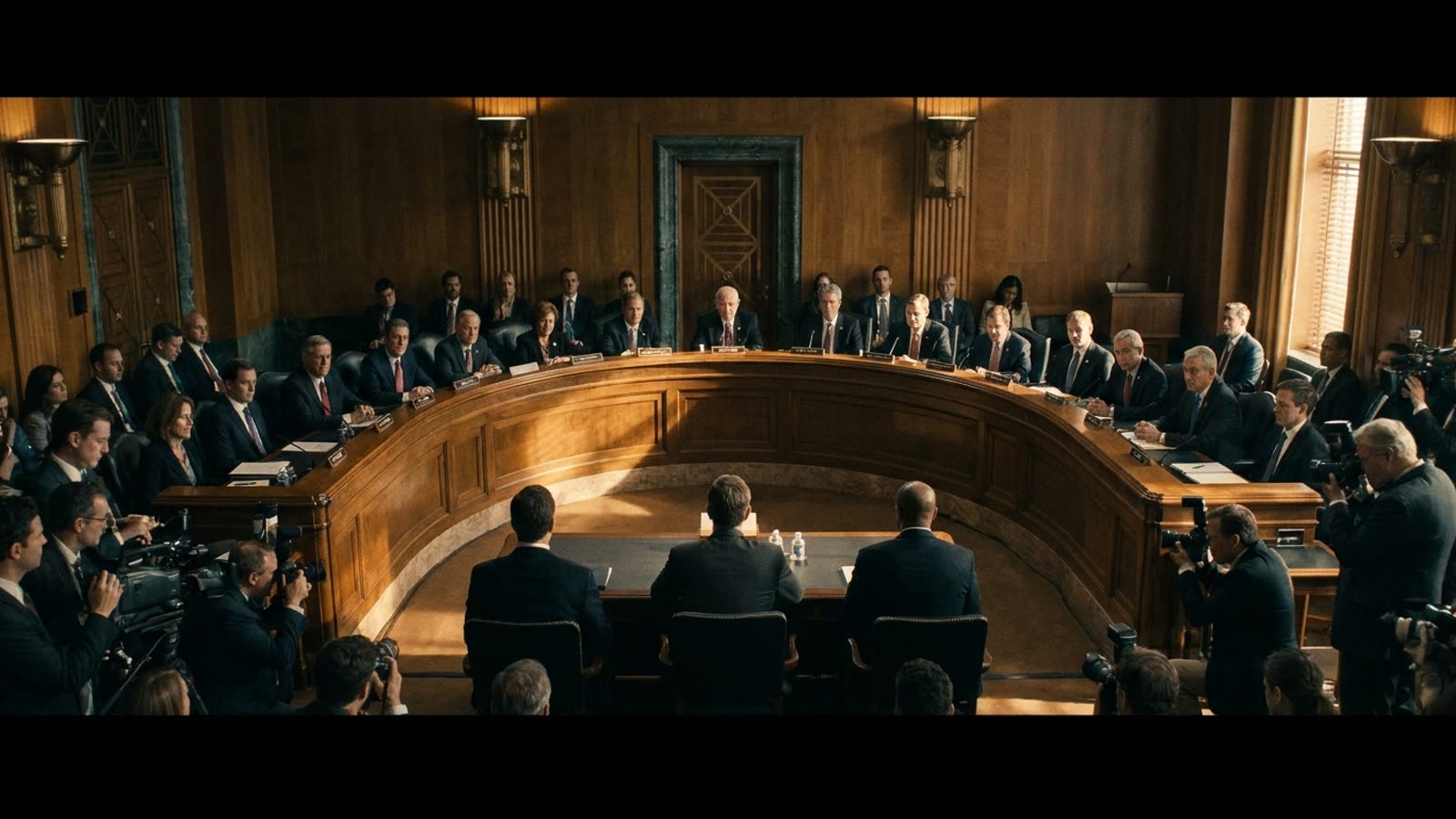
Every six weeks or so, a small group of economists and former bankers files into a secure room, debates the state of an economy, and emerges with a number that will ripple through every mortgage, bond portfolio, and corporate balance sheet in their jurisdiction. The ritual looks technical. It is, in fact, deeply political—a negotiation between competing theories of how money works, institutional memory of past crises, and the career incentives of people who will never face voters.
The Federal Reserve's Federal Open Market Committee has twelve voting members. The European Central Bank's Governing Council has twenty-six. The Bank of England's Monetary Policy Committee has nine. These numbers matter less than the procedures that govern how dissent is expressed, how forecasts are constructed, and who speaks first in the room.
The choreography of consensus
Most rate-setting committees operate on a principle of managed disagreement. Members receive staff briefings days before meetings, ensuring everyone argues from the same data even if they reach different conclusions. The sequence of speakers is typically structured so that the chair speaks last, preventing the gravitational pull of authority from collapsing debate prematurely. At the Bank of England, external members—academics and former private-sector economists—are explicitly appointed to challenge the institutional view of career central bankers.
Yet the published minutes and voting records reveal a striking pattern: outright dissent is rare, and when it occurs, dissenters are usually the same individuals meeting after meeting. This suggests that the real negotiation happens before the formal vote, in the wording of statements and the shading of forecasts rather than in dramatic standoffs over the headline rate.
The forecast as battlefield
Central banks project inflation and growth several years into the future, and these forecasts are not neutral. A projection showing inflation returning to target without further rate increases is an argument against hiking. A forecast showing persistent price pressures is an argument for tightening. Committee members who cannot win the vote on rates often fight instead over the assumptions embedded in the forecast—the expected path of energy prices, the degree of slack in the labor market, the speed at which past rate increases will bite.
This is why central bank communication has become so baroque. The difference between "inflation is expected to return to target" and "inflation is projected to return to target" can signal a shift in the committee's confidence. Market participants parse these texts like Talmudic scholars because the words are, in a real sense, policy.
Accountability without elections
Central bank independence is now orthodoxy, but it creates a democratic tension that has never been fully resolved. Committee members are typically appointed by elected officials but serve fixed terms designed to insulate them from political pressure. They testify before legislatures but cannot be fired for policy disagreements. Their decisions redistribute wealth—lower rates favor borrowers and asset owners; higher rates favor savers and creditors—yet they justify those decisions in the antiseptic language of price stability.
The legitimacy of this arrangement rests on the belief that monetary policy is too technical for democratic deliberation and too important to be left to politicians chasing short-term popularity. Whether that belief survives the next inflationary shock or financial crisis is an open question.
Our take
Rate-setting committees are a remarkable experiment in technocratic governance, and they have largely delivered on their narrow mandate of low and stable inflation for decades. But the pretense that their work is apolitical has always been a convenient fiction. Every rate decision is a distributional choice dressed in the language of economic science. The more honest central bankers have begun to acknowledge this; the rest rely on complexity as a shield. Citizens would benefit from understanding that the people setting their borrowing costs are not oracles reading the economy's vital signs but fallible experts making judgment calls under uncertainty—and that those judgment calls deserve scrutiny, not reverence.