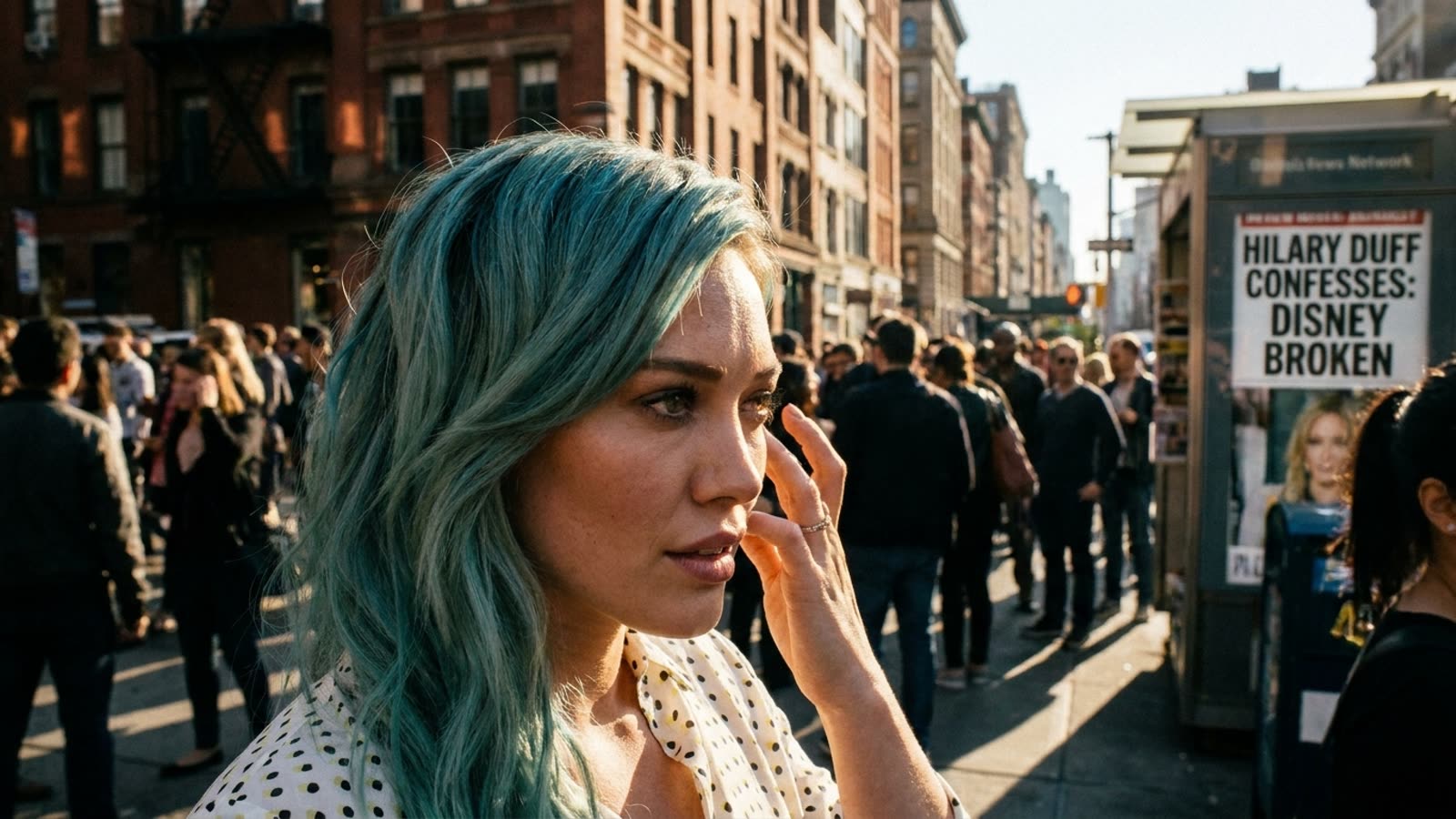
When Hilary Duff says she was "fucking done" with Lizzie McGuire by the time the 2003 movie wrapped, she is not being provocative. She is being precise.
The actress, now 39, has spent two decades fielding questions about the Disney Channel character that made her famous at 13, enduring the particular torture reserved for child stars: being asked, perpetually, to perform gratitude for an experience that left her depleted. Her recent admission that she never wanted to sing "What Dreams Are Made Of" again—that she was "exhausted by it"—is the kind of honesty that Disney's publicity apparatus was designed to prevent.
The content factory's human cost
Lizzie McGuire ran for only two seasons, 65 episodes, plus a theatrical film. By contemporary standards of IP extraction, this is modest. But Duff was simultaneously recording albums, doing press tours, and serving as the face of a merchandising empire that generated hundreds of millions in revenue. She was, in the language of the era, "working." In the language of now, she was being strip-mined.
The exhaustion Duff describes is not unique to her. It is the defining feature of child stardom in the content age—the understanding that a young person's appeal has a half-life, and that every possible dollar must be extracted before puberty renders them unmarketable. Frankie Muniz cannot remember filming Malcolm in the Middle. Jennette McCurdy wrote a bestselling memoir about her mother's abuse, enabled by Nickelodeon's appetite for her labor. The Disney Channel alone produced a generation of performers whose subsequent struggles—Demi Lovato, Miley Cyrus, Selena Gomez—have been chronicled exhaustively, usually by the same entertainment press that celebrated their overwork.
The failed revival tells the real story
In 2019, Disney announced a Lizzie McGuire revival for its new streaming service, with Duff attached. The project collapsed within months. The official explanation involved creative differences; the unofficial one, widely reported, was that Disney wanted a family-friendly continuation while Duff and original creator Terri Minsky envisioned an adult Lizzie navigating the disappointments of her thirties. Disney, characteristically, wanted the nostalgia without the honesty.
That Duff is only now speaking freely about her relationship to the character suggests the revival's failure liberated her. There is no sequel to protect, no brand partnership to maintain. She can finally say what anyone paying attention already knew: that being Lizzie McGuire was work, and that work was hard, and that the relentless positivity required of Disney talent is itself a form of labor.
Our take
Duff's comments are valuable precisely because they are unremarkable. She is not alleging abuse or exploitation in the legal sense. She is simply describing what it felt like to be a teenager whose every waking hour was monetized by a corporation expert at converting childhood into content. That this modest honesty feels revelatory—that we are trained to expect child stars to perform eternal gratitude for opportunities that left them depleted—tells us everything about what we demand from famous children, and what we refuse to see.