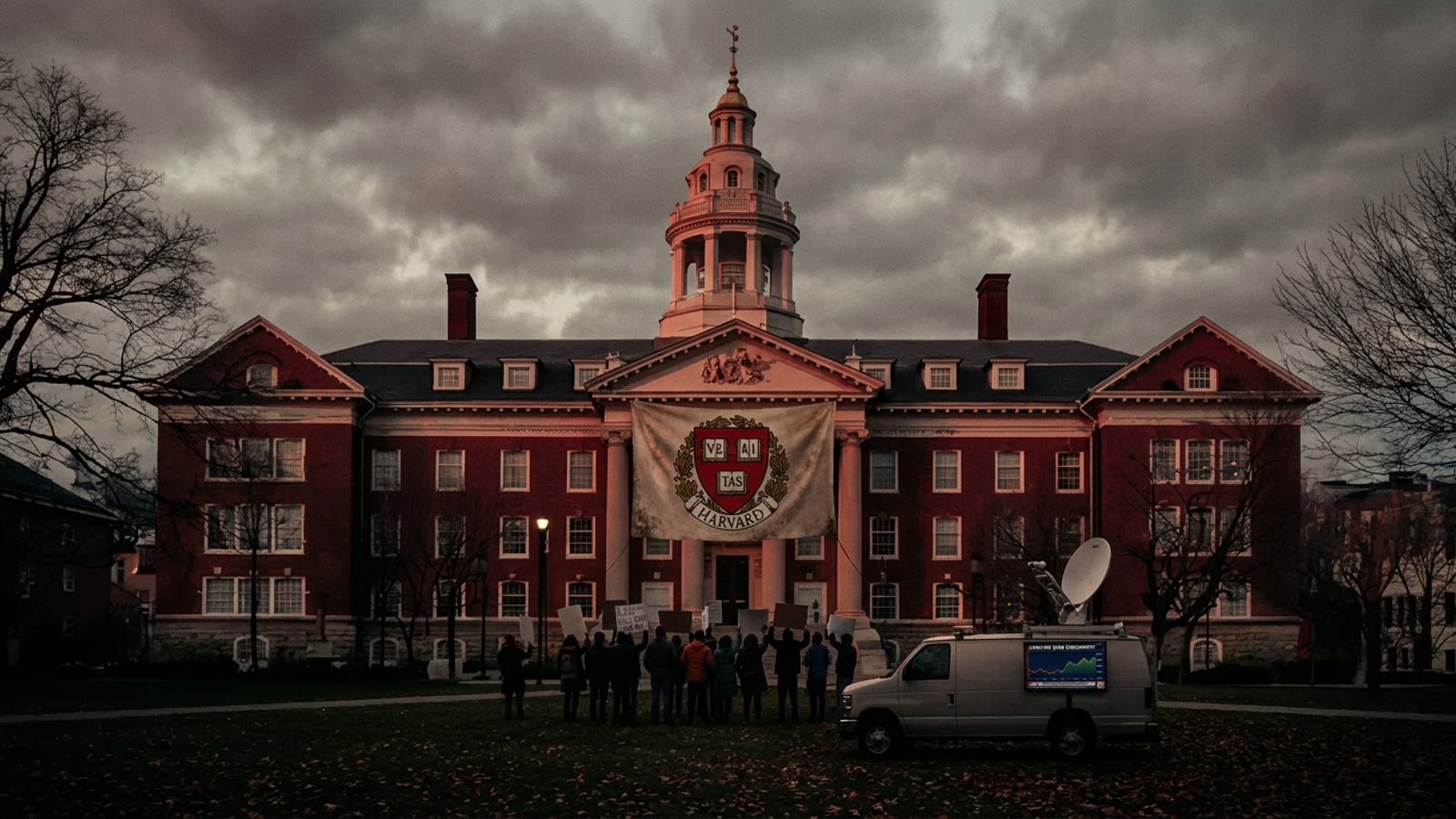
The numbers are almost comically mismatched. Harvard's endowment has swelled to $68 billion — a figure that exceeds the GDP of most countries — while the university simultaneously announces layoffs driven by collapsing federal research funding. It is the starkest illustration yet of a structural problem in American higher education: endowments are not piggy banks, and paper wealth cannot replace the government money that actually keeps labs running.
The stock market rally of the past year has been generous to Harvard's portfolio, pushing the endowment to record heights. But endowments are designed to generate steady income in perpetuity, not to be liquidated in a crisis. Harvard's standard payout rate hovers around 5 percent annually, meaning the university draws roughly $3.4 billion from the fund each year — a sum that sounds enormous until you consider that federal grants once contributed billions more to research operations alone.
The federal funding cliff
Washington's pullback from academic research has been swift and brutal. Agencies across the government have slashed grant programs, and Harvard — which has long been one of the largest recipients of federal research dollars — has felt the cuts acutely. The layoffs are concentrated in research support staff, the technicians and administrators who keep laboratories functional. Faculty positions, protected by tenure, remain largely untouched, but the infrastructure around them is eroding.
The university has begun courting corporate sponsors to fill the gap, a pivot that carries its own risks. Industry-funded research often comes with strings attached: publication restrictions, intellectual property claims, and priorities that may not align with basic science. Harvard's leadership insists it will maintain academic independence, but the desperation is palpable.
Why endowments can't save the day
Critics have long argued that wealthy universities hoard money while raising tuition and cutting services. The reality is more complicated. Endowment funds are typically restricted by donor intent — a gift earmarked for a professorship in medieval history cannot be redirected to a chemistry lab. Even unrestricted funds are governed by spending policies designed to preserve purchasing power across generations. Raiding the principal to cover operating shortfalls would violate fiduciary duty and, eventually, leave future students worse off.
None of this makes the optics less jarring. A $68 billion balance sheet and a pink slip in the same sentence is the kind of juxtaposition that fuels populist resentment of elite institutions. Harvard's communications team has its work cut out.
Our take
Harvard's predicament is not really about Harvard. It is about a federal government that has decided, whether by ideology or fiscal necessity, that it no longer wants to be the primary funder of American research. Universities can adapt — they are already adapting — but the transition will be painful, and the long-term consequences for American science are unknowable. The endowment is a red herring. The real story is a policy choice, made in Washington, that will ripple through laboratories and lecture halls for decades.