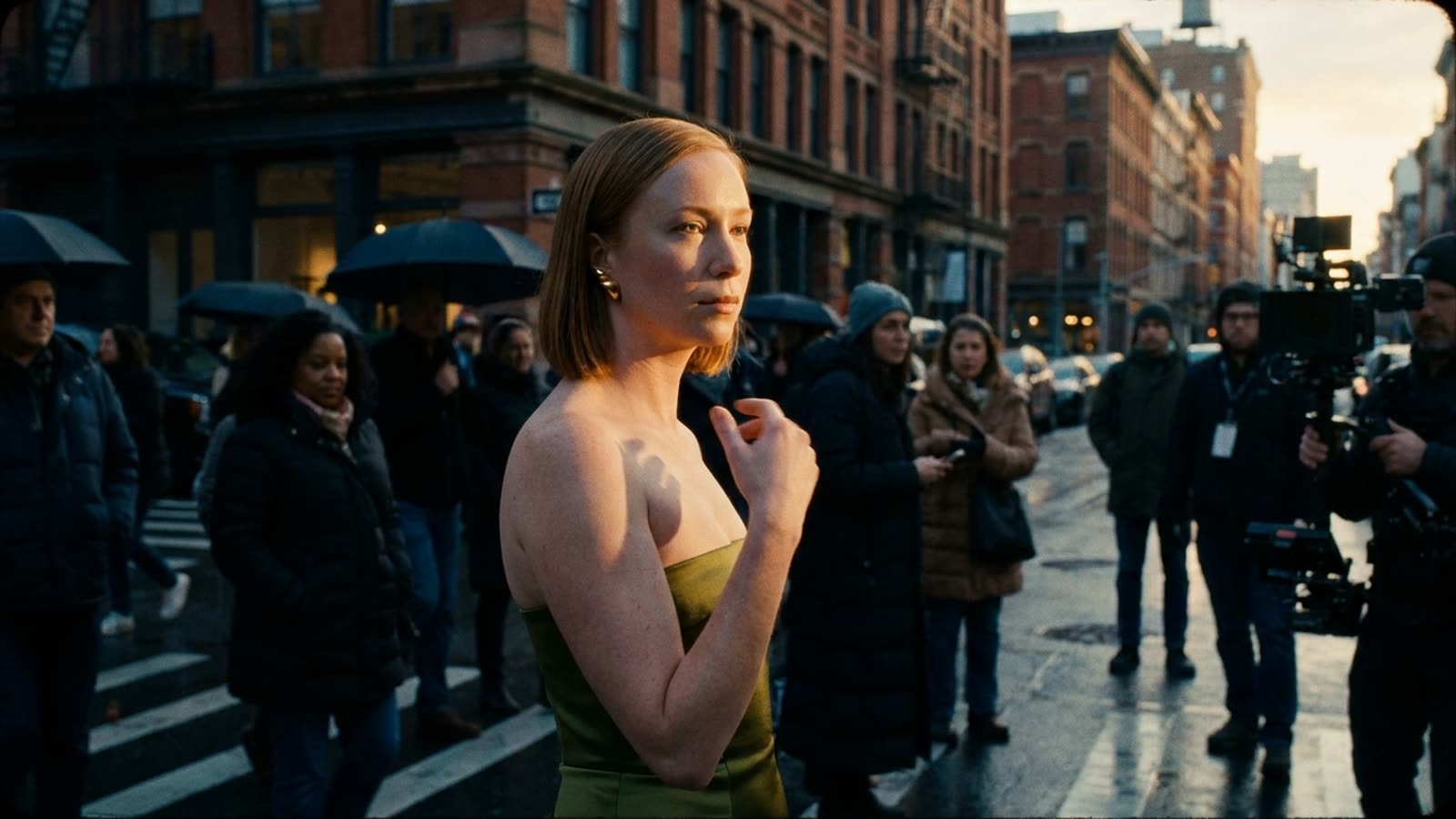
When Hannah Einbinder says advocating for Palestine is "the bare minimum," she's making a calculation that most of her peers refuse to make. The Emmy-nominated actress, fresh off her acclaimed turn in Hacks, has positioned herself as one of the few A-list-adjacent talents willing to stake professional capital on the most divisive issue in contemporary Hollywood politics.
"I know how many eyes I have on me," Einbinder told interviewers this week. "I know the difference that it can make." It's a statement that sounds almost quaint in an era when celebrity activism has largely retreated to the safest possible terrain — climate platitudes, vague calls for kindness, the occasional voter registration drive. What Einbinder is doing is categorically different, and the industry is watching to see what it costs her.
The silence of the A-list
Hollywood's response to the ongoing conflict has been notable primarily for its caution. While a handful of actors have signed open letters or posted carefully worded statements, the major talent agencies and studios have largely enforced an unofficial policy of strategic ambiguity. Careers have been built on not alienating any potential audience segment, and the Israel-Palestine divide cuts across demographics in ways that make risk-averse publicists break into cold sweats.
Einbinder's willingness to speak plainly — and repeatedly — stands in stark contrast. She's not hedging with calls for "peace on all sides" or retreating behind boilerplate humanitarian language. She's taking a position, naming it, and accepting that some doors may close as a result.
The generational fault line
What makes Einbinder's stance particularly interesting is its generational dimension. Younger talent, raised on social media and accustomed to parasocial relationships with their audiences, increasingly view political silence as its own form of statement — one that reads as complicity or cowardice. The old Hollywood playbook of studied neutrality feels alien to performers who built their followings on apparent authenticity.
This doesn't mean the industry rewards outspokenness. It means a cohort of rising stars is willing to accept professional friction as the price of personal integrity. Whether that calculation proves wise or naive will depend largely on whether audiences reward or punish the honesty.
Our take
Einbinder is making a bet that the entertainment industry's center of gravity is shifting — that the audience she wants to reach values conviction over caution, and that the roles worth having will come from collaborators who share her willingness to risk something. It's a wager that would have been unthinkable for a performer at her career stage a decade ago. Whether she's reading the room correctly or simply refusing to read it at all, she's at least doing something vanishingly rare in celebrity culture: meaning what she says.