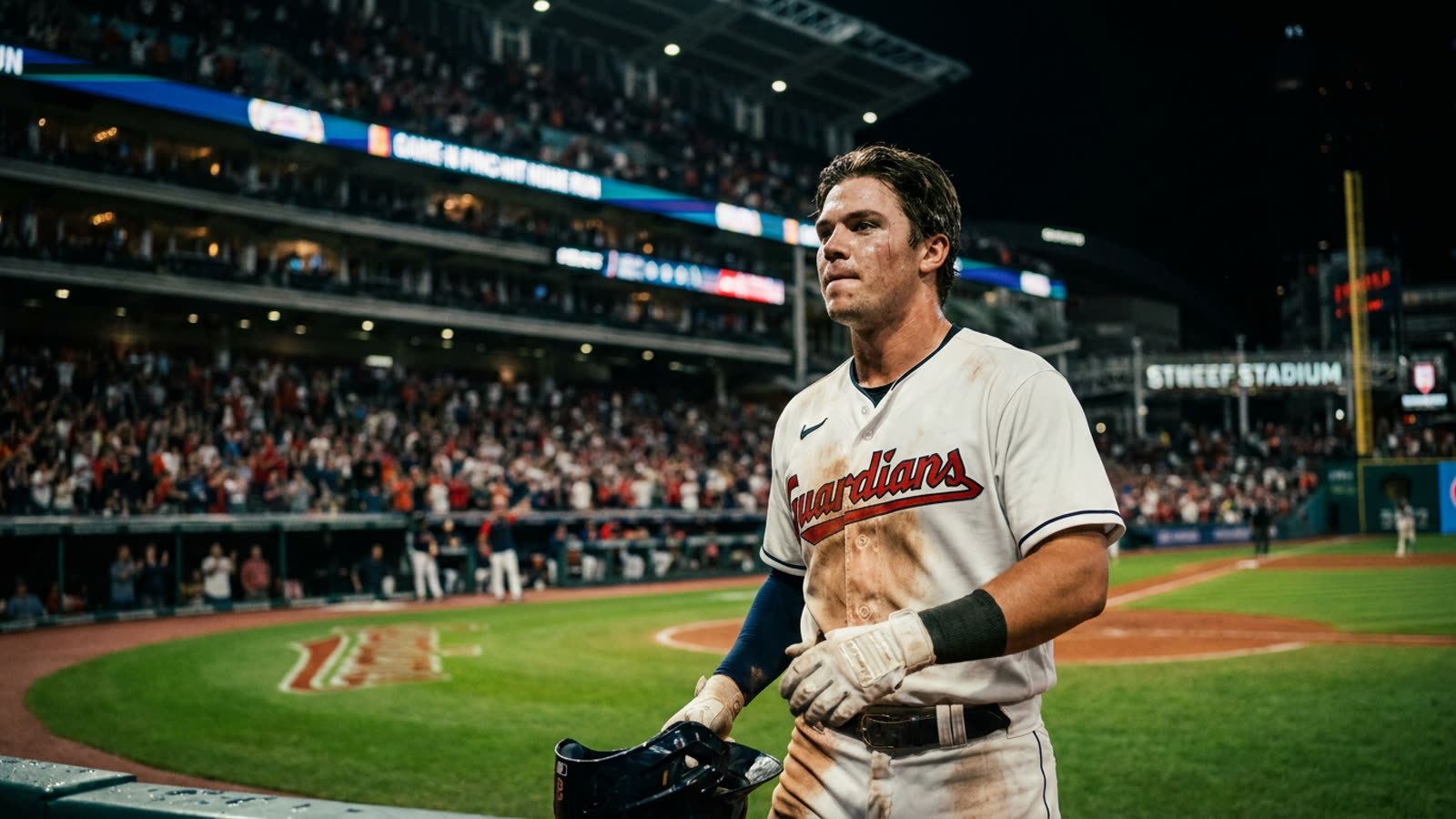
The box score will credit Gavin Williams with a dominant start: seven innings, two hits, eleven strikeouts, zero runs. What it won't capture is how close that gem came to meaning nothing—until Spencer Manzardo, summoned from the dugout in the eighth inning, launched a pinch-hit home run that turned a scoreless deadlock into a Cleveland victory.
This is the Guardians' formula distilled to its essence: elite pitching protected by a bench deep enough to conjure offense from thin air.
Williams's evolution
The 24-year-old right-hander has always possessed the arm talent that made him a first-round pick. What's changed in 2026 is his command of the strike zone and, crucially, his ability to navigate a lineup a third time through. Against a patient opposing order, Williams mixed a darting slider with a four-seam fastball that touched 97 mph, generating swings and misses at a 34% clip. Eleven strikeouts without a walk is the kind of line that announces a pitcher has arrived.
Yet baseball's cruelty is that a zero on the scoreboard offers no margin. Williams departed after seven with the game still knotted at nothing.
The Manzardo moment
Manager Stephen Vogt turned to Manzardo—a 25-year-old first baseman who has spent most of the season platooning—with a runner on second and two outs. The matchup favored the pitcher: a hard-throwing reliever against a hitter with limited at-bats this month. Manzardo worked the count full, then drove an elevated fastball into the right-field seats.
It was his fourth pinch-hit appearance of May and his second to produce an extra-base hit. For a Guardians club that leads the American League in bench production, Manzardo's emergence offers another weapon opponents must account for.
Depth as identity
Cleveland's roster construction is unfashionable in an era of star-chasing. The payroll ranks in the bottom third of the league; the farm system keeps graduating contributors who accept reduced roles. What the Guardians lack in glamour they compensate for with interchangeable parts and a pitching infrastructure that suppresses runs. Through late May, they own the AL's best run differential despite ranking middle-of-the-pack in home runs.
The model demands patience and internal development—luxuries not every front office can afford. But when a pinch-hitter can rescue an ace's masterpiece, the model looks less like frugality and more like competitive advantage.
Our take
Baseball romantics will remember Williams's eleven strikeouts. Pragmatists will remember Manzardo's swing. The Guardians, as usual, will take the win and move on, unbothered by which narrative prevails. In a sport increasingly defined by star power and spending, Cleveland keeps proving that depth—real, functional, trust-it-in-October depth—remains a viable path to contention. The rest of the American League should be concerned.