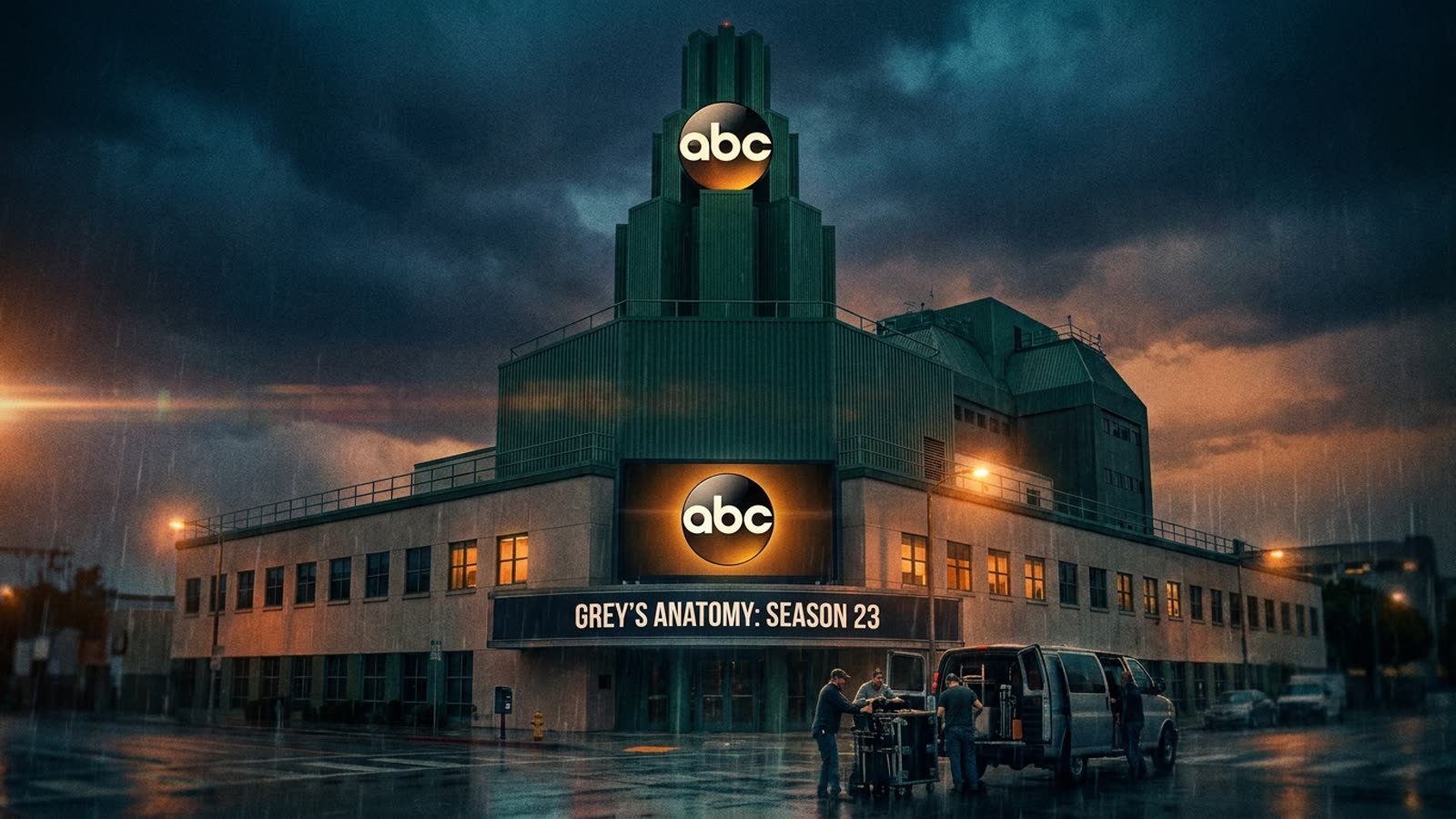
Television's most resilient patient is back on the table. Grey's Anatomy premiered its 23rd season this week, a milestone so improbable that discussing it requires the same suspended disbelief the show demands when its surgeons perform miracles in elevators. Under new showrunner Meg Marinis, the series opened with a cliffhanger-laden episode that suggests Grey Sloan Memorial Hospital has no intention of closing its doors—even as the creative team carefully avoids confirming this isn't the end.
The premiere, titled "Collide," introduced what Marinis calls a "new sheriff" at the hospital, though the real news lies in what's being developed off-screen: a Texas-set spinoff that would mark the franchise's first geographical expansion since Private Practice decamped to Los Angeles in 2007. Add a promised Dolly Parton guest episode—because apparently no long-running drama is complete without a country music legend cameo—and you have a season engineered to feel both like a victory lap and a soft launch for whatever comes next.
The Ellen Pompeo question
Meredith Grey's reduced presence has been the show's open wound since Ellen Pompeo stepped back from full-time duties. Marinis's comments to press this week were notable for their diplomatic emptiness: no confirmation of Pompeo's episode count, no clarity on whether the character's arc is building toward a definitive conclusion. The show has spent three seasons now in a quantum state where Meredith is simultaneously the protagonist and a recurring guest star, present enough to justify the title but absent enough that entire episodes function without her.
This ambiguity is strategic. Grey's has outlasted its original premise, its original cast, and several of its original network executives. It survives by never committing to an ending, treating each season finale as a potential series finale while leaving enough threads to continue indefinitely.
The spinoff industrial complex
The Texas spinoff represents ABC's bet that the Grey's brand has value independent of Grey Sloan Memorial. It's a reasonable gamble: the show still draws respectable live-plus-same-day numbers for broadcast, and its streaming performance on Hulu remains strong enough that Disney keeps renewing. But spinoffs of aging dramas have a mixed record. For every Better Call Saul, there's a Joey.
What's telling is the timing. Announcing a spinoff while refusing to confirm whether the mothership is ending suggests ABC wants to transition audiences gradually rather than risk the ratings cliff that comes with a definitive finale. It's the television equivalent of a company announcing a CEO's "expanded role" before quietly pushing them out six months later.
Our take
Grey's Anatomy at 23 seasons is less a television show than a habit, and habits are notoriously hard to break—for networks, for audiences, for the actors collecting residual checks. The Dolly Parton episode will generate press, the Texas spinoff will generate pilot orders, and the "is this the final season?" question will generate another year of speculation. Shonda Rhimes built something that functions like a perpetual motion machine: it doesn't need to be good anymore, it just needs to keep moving. The real cliffhanger isn't what happens to the characters—it's whether anyone at ABC has the nerve to finally call time of death.