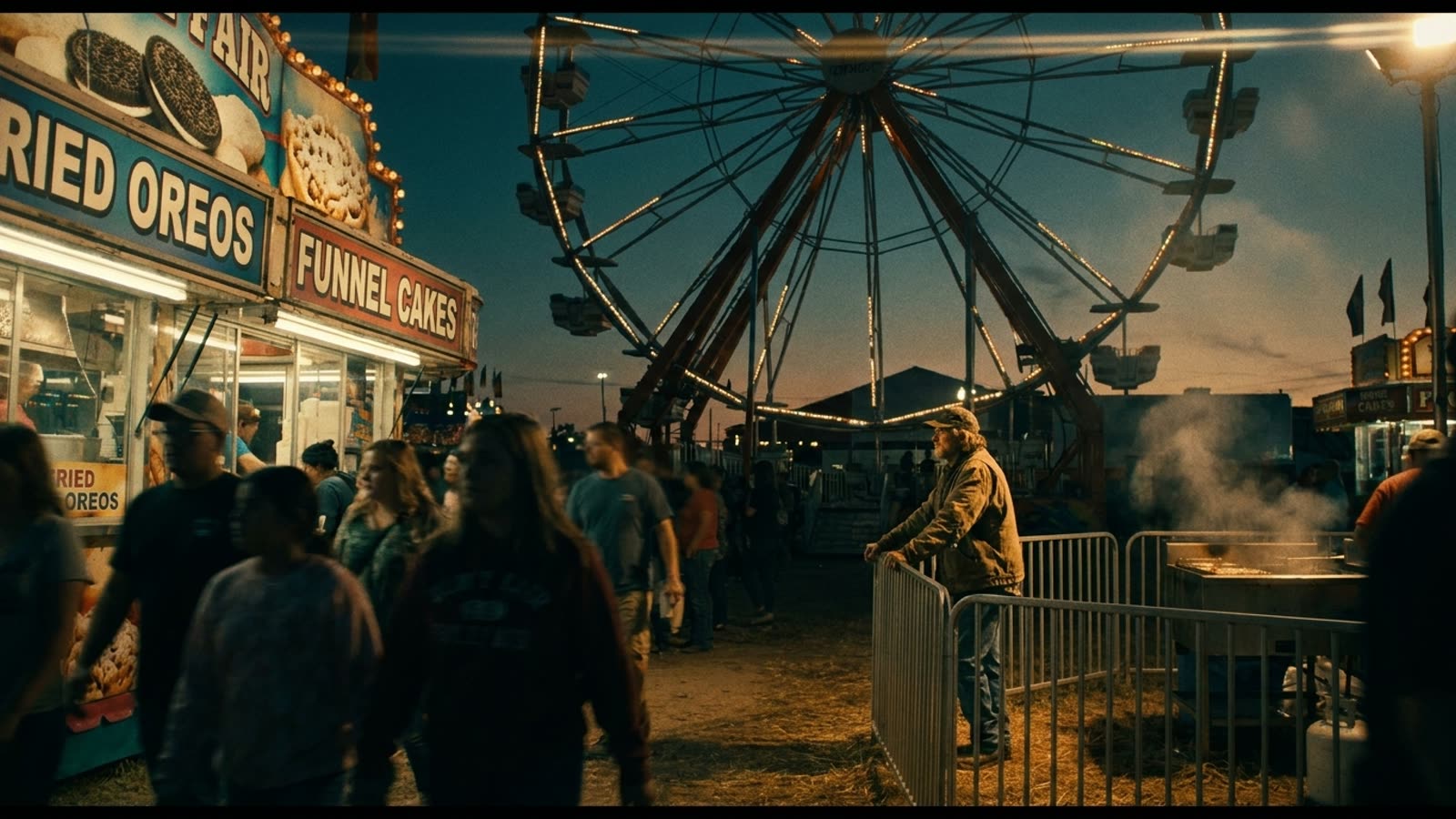
The state fair should be extinct by now. In an era of infinite streaming entertainment, same-day delivery, and algorithmic feeds calibrated to each individual's dopamine receptors, the prospect of paying admission to walk through livestock barns and eat corn dogs in 95-degree heat seems almost perversely anachronistic. And yet fairgrounds across America are reporting attendance figures that rival or exceed pre-pandemic highs, with some state fairs now generating economic impacts in the hundreds of millions of dollars for their host regions.
The great American state fair has become something it never intended to be: a refuge from modernity.
The economics of deliberate inefficiency
What makes the state fair's persistence so curious is how aggressively it violates every principle of contemporary consumer experience. Lines are long. Parking is a nightmare. The food will shorten your life. Nothing is convenient, nothing is optimized, and that appears to be precisely the point.
Fair organizers have learned to lean into the inefficiency rather than apologize for it. The Texas State Fair, the Iowa State Fair, and dozens of regional counterparts have transformed their apparent weaknesses into marketing propositions. The message, implicit but unmistakable: here is a place where your phone is useless, where the only algorithm is the smell of funnel cake pulling you toward the midway.
The food innovation alone has become a competitive sport among fairgrounds. Deep-fried butter. Bacon-wrapped everything. Cotton candy burritos. The escalating absurdity isn't accidental—it's content generation for an Instagram age, ensuring that each fair season produces shareable moments that no streaming service can replicate.
Nostalgia as luxury good
The state fair's audience has shifted in telling ways. What was once primarily working-class family entertainment has increasingly attracted affluent millennials and Gen-X parents seeking to manufacture for their children the kind of analog experiences they remember from their own youth. The fair has become nostalgia tourism, and nostalgia, it turns out, commands premium pricing.
VIP packages, reserved seating for grandstand concerts, and "skip the line" passes have proliferated—the fair learning from theme parks that even an experience premised on democratic accessibility can be tiered for those willing to pay. The contradiction is very American: we'll sell you an escape from capitalism's relentlessness, and we'll upsell you while we're at it.
Our take
The state fair's survival is less about agriculture or tradition than about a growing hunger for experiences that resist the frictionless perfection of digital life. We've optimized convenience to the point of sterility, and now we'll pay good money to stand in line for something ridiculous. The fair isn't nostalgia for a simpler time—it's nostalgia for a time when things were allowed to be complicated, messy, and gloriously inefficient. That we've turned this longing into a commercial proposition is peak America, but at least the corn dogs are real.