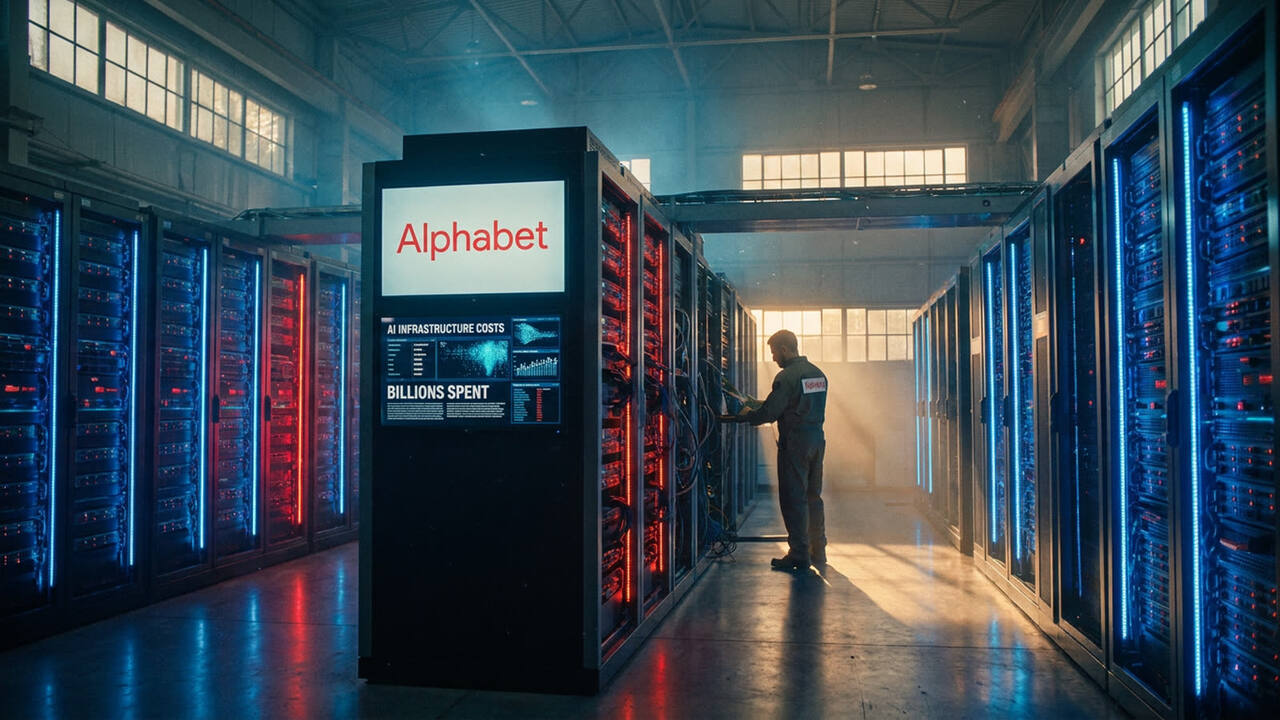
The AI gold rush has a dirty secret hiding in plain sight: the actual cost of running these systems at scale is proving far higher than the industry's cheerful projections suggested. Recent infrastructure disclosures from Google and Amazon—the two companies with the clearest view of enterprise AI deployment—paint a sobering picture that should give pause to every executive who signed off on an AI transformation budget.
The warning signs are embedded in capital expenditure figures and utilization data that most analysts have glossed over in their enthusiasm for revenue growth narratives. But the math is unforgiving. When the companies that literally sell AI compute are signaling that the economics are tighter than expected, downstream customers should pay attention.
The infrastructure reality check
Google's parent Alphabet and Amazon have collectively committed hundreds of billions to AI infrastructure over the next several years. That spending reflects not generosity but necessity: the computational demands of modern AI systems scale in ways that traditional software never did. Each query to a large language model consumes orders of magnitude more compute than a conventional search or database lookup.
What the recent disclosures reveal is that utilization rates—the percentage of time expensive GPU clusters actually run paying workloads—remain stubbornly below the levels needed to justify current pricing. The cloud giants have been subsidizing AI services to drive adoption, absorbing losses that enterprise customers will eventually have to pay themselves or see reflected in price increases.
The enterprise miscalculation
Most corporate AI budgets were built on vendor promises that assumed rapid efficiency gains would drive costs down. Those gains have materialized more slowly than projected. Meanwhile, the appetite for AI capabilities has grown faster than the infrastructure to support it, creating a supply-demand imbalance that keeps prices elevated.
Companies that planned to deploy AI across their operations based on 2024-era cost projections are discovering that scaling from pilot to production multiplies expenses in unexpected ways. The pilot that cost a few thousand dollars monthly can balloon to six or seven figures when extended across an organization—and that is before accounting for the human expertise needed to manage these systems.
Why this matters beyond tech
The AI cost overhang has implications far beyond Silicon Valley. Every industry from healthcare to manufacturing has been told that AI adoption is table stakes for competitiveness. If the true costs are materially higher than advertised, the ROI calculations that justified billions in corporate investment may need revision.
This does not mean AI lacks value. It means the value proposition is different from what was sold. AI may prove transformative for specific high-value applications while remaining uneconomical for the broad deployment many companies envisioned.
Our take
Google and Amazon are not issuing these warnings out of altruism—they are managing expectations before the bills come due. The smart play for enterprises is to treat current AI cost projections with the same skepticism they would apply to any vendor promise, build in substantial contingency buffers, and ruthlessly prioritize use cases where the economics actually work. The AI revolution is real, but its price tag is higher than the brochure suggested.