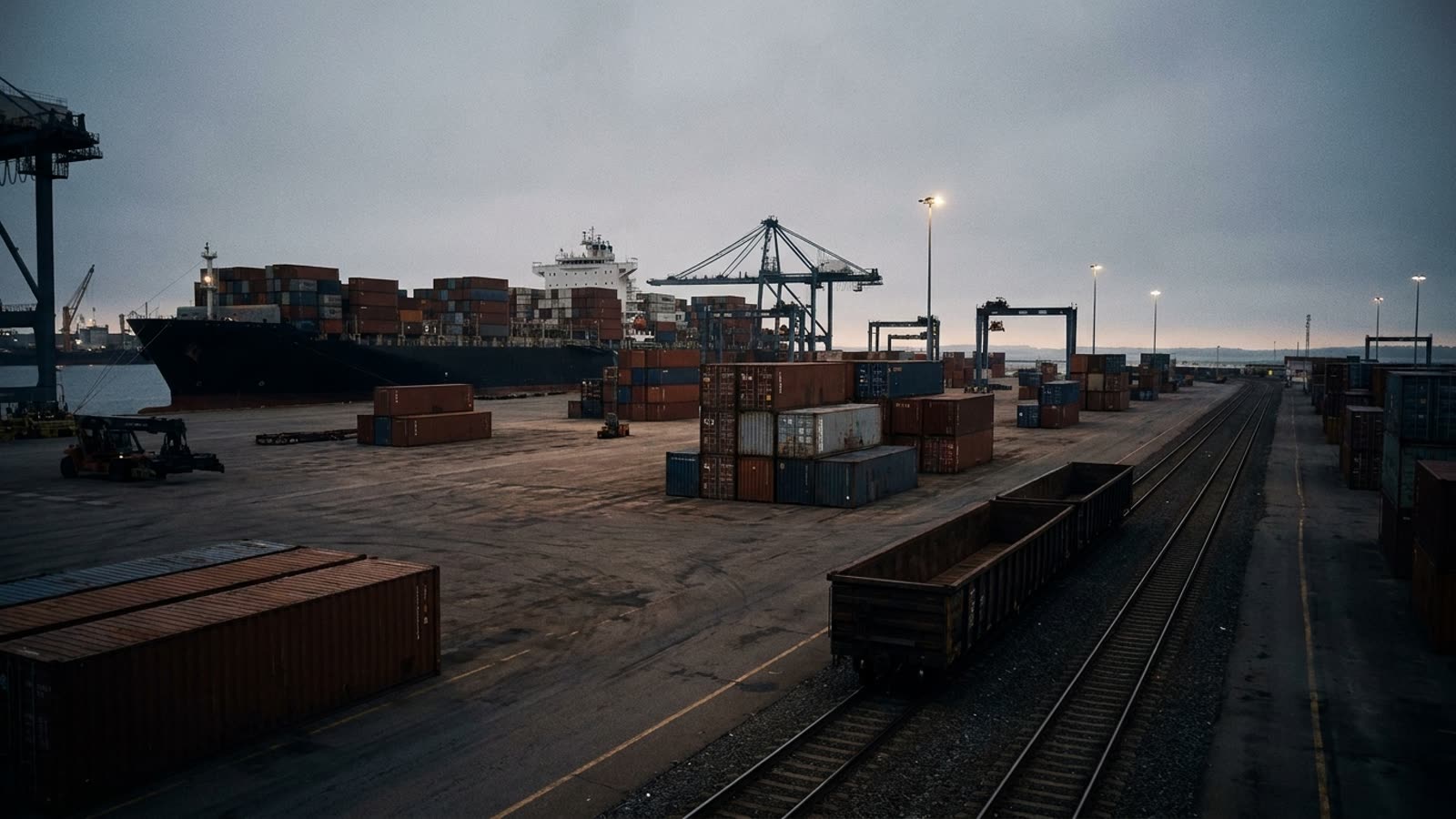
The comfortable narrative that pandemic-era supply chain chaos was a one-time disruption has collided with reality. Global shortages are intensifying across critical industrial inputs—semiconductors, rare earth minerals, specialty chemicals, and precision components—creating bottlenecks that economists warn could shave percentage points off GDP growth and force painful workforce reductions in manufacturing sectors worldwide.
This is not a reprise of 2021's container ship queues and toilet paper hoarding. The current crisis is structural, rooted in geopolitical fragmentation, underinvestment in extraction and refining capacity, and the voracious appetite of artificial intelligence infrastructure for the same materials that automobiles, medical devices, and consumer electronics require.
The geometry of scarcity
The shortages are concentrated in precisely the inputs that modern economies cannot substitute away from quickly. Semiconductor lead times, which had normalized by late 2023, have stretched again as AI chip demand cannibalizes capacity that once served automotive and industrial customers. Rare earth processing remains overwhelmingly concentrated in China, and recent export restrictions have sent prices for neodymium and dysprosium—essential for electric vehicle motors and wind turbines—sharply higher.
Meanwhile, specialty chemical production in Europe has contracted as energy costs remain elevated compared to pre-2022 levels, forcing manufacturers to either absorb margin compression or pass costs to customers who are themselves squeezed. The result is a cascade of production delays, order cancellations, and inventory hoarding that amplifies scarcity.
Employment on the edge
The job implications are becoming visible. German automakers have announced reduced shift schedules at multiple plants, citing component availability rather than demand weakness. Japanese electronics manufacturers are reportedly delaying new product launches. In the United States, industrial production has flatlined even as services activity remains robust, creating a two-speed economy that complicates Federal Reserve policy.
Small and medium manufacturers face the sharpest dilemma: they lack the purchasing power to secure priority allocations and the balance sheets to stockpile inventory. For these firms, the choice increasingly is between accepting extended delivery times that frustrate customers or exiting product lines entirely.
The policy vacuum
Governments have responded with industrial policy ambitions—the CHIPS Act in America, the European Chips Act, various reshoring incentives—but the timelines for new capacity measured in years do not address shortages measured in quarters. The gap between announcement and operational capacity is where the economic damage accumulates.
Our take
The supply chain discourse shifted prematurely from crisis to lessons-learned, as if resilience were a matter of better software and diversified suppliers. What the current shortages reveal is that decades of optimization for cost efficiency created a system with almost no slack, and rebuilding redundancy requires capital expenditure and patience that neither markets nor political cycles reward. The pain will be distributed unevenly—manufacturing workers and their communities will bear it first—while the architects of just-in-time fragility remain insulated. This is the bill coming due.