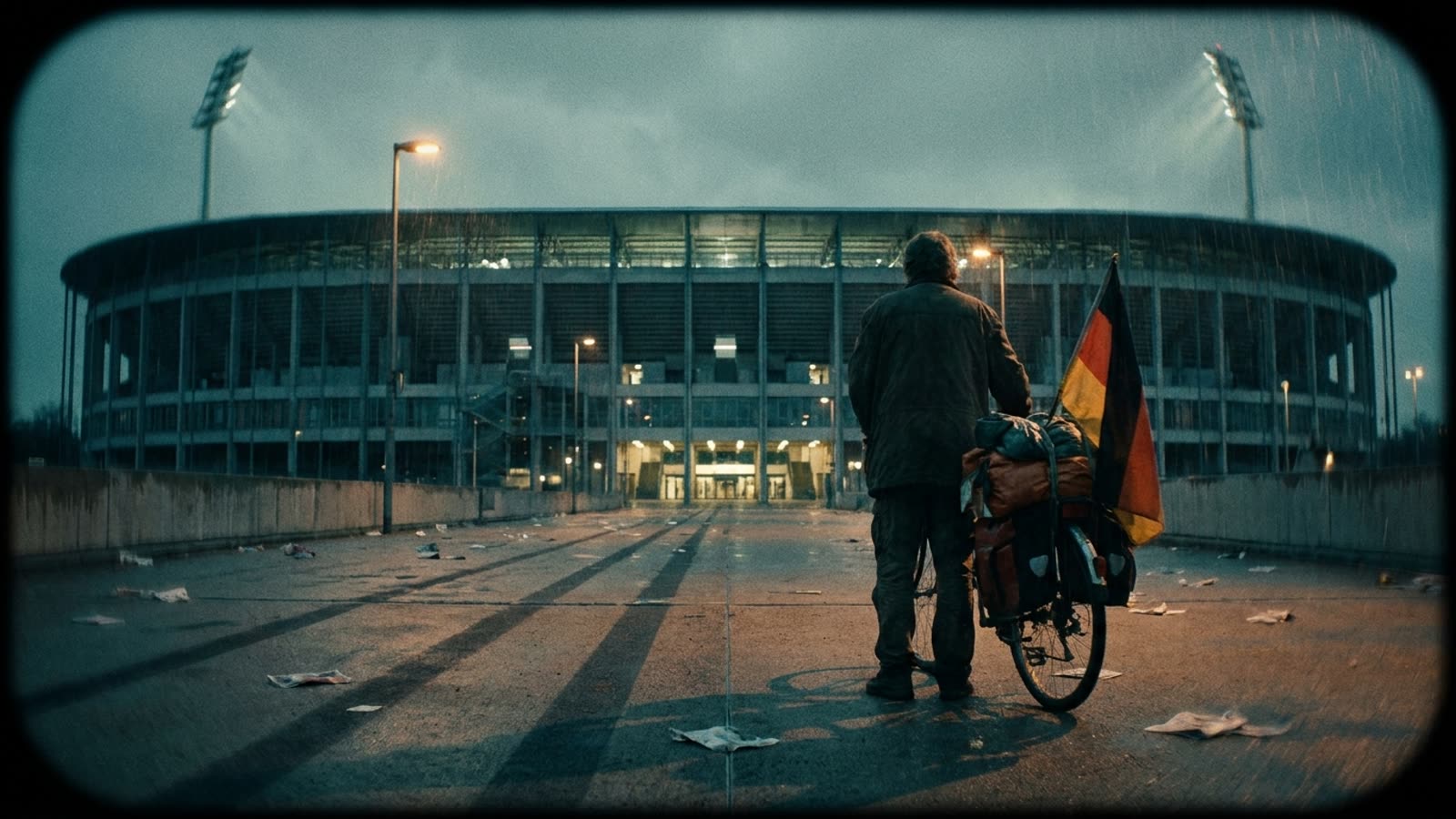
The World Cup generates endless statistics—possession percentages, expected goals, sprint distances covered. But the most striking number from the 2026 tournament so far has nothing to do with what happens on the pitch: 26,000 kilometers, the distance a German supporter named only as "Jürgen" has cycled to reach Houston for his national team's opening match.
His route, which began in Munich in early 2024, wound through Eastern Europe, across Central Asia, through China, down to Southeast Asia, across Australia, and finally—after a necessary flight over the Pacific—through Mexico and into Texas. Two years, four continents, countless flat tires, and one unwavering destination.
The logistics of devotion
The journey defies casual comprehension. Cycling 26,000 kilometers means averaging roughly 35 kilometers daily for two years, accounting for rest days, visa delays, and the occasional monsoon. Jürgen carried his kit in panniers, slept in hostels and strangers' homes, and documented his progress on social media, where his following grew from dozens of friends to hundreds of thousands of football romantics.
He crossed the Kazakh steppe in summer heat and the Australian Outback in conditions that would humble a support vehicle. He learned enough Mandarin to order noodles and enough Spanish to explain, repeatedly, why a middle-aged German was pedaling through Oaxaca in March.
What the journey reveals
Modern football has become a slick, corporatized product. The World Cup itself is now a 48-team behemoth spread across three countries, optimized for television revenue and sponsor visibility. Ticket prices have soared; the average fan experiences the tournament through screens, not turnstiles.
Jürgen's pilgrimage stands as a quiet rebuke to all of this. His journey cost him time, comfort, and presumably several romantic relationships, but it cost relatively little money. He arrived in Houston having spent less on his two-year odyssey than many fans will spend on a single VIP hospitality package.
More importantly, his route turned the World Cup from a destination into a process. He watched qualifiers in Tashkent bars, discussed German tactics with curious Malaysians, and became a minor celebrity in cycling communities from Tbilisi to Perth. By the time he reached Minute Maid Park, he had already experienced more of what football means globally than any executive in a Zurich boardroom ever will.
Our take
FIFA will not mention Jürgen in its official tournament retrospective. His journey generates no licensing fees, sells no merchandise, and cannot be monetized through a streaming partnership. But his story will outlast whatever happens in the final. Football's power has always resided in its capacity to inspire irrational devotion—the willingness to sacrifice comfort, money, and sanity for ninety minutes of hope. In an era when the sport's governing bodies seem determined to squeeze every last dollar from that devotion, one German on a bicycle has reminded us what they are actually selling.