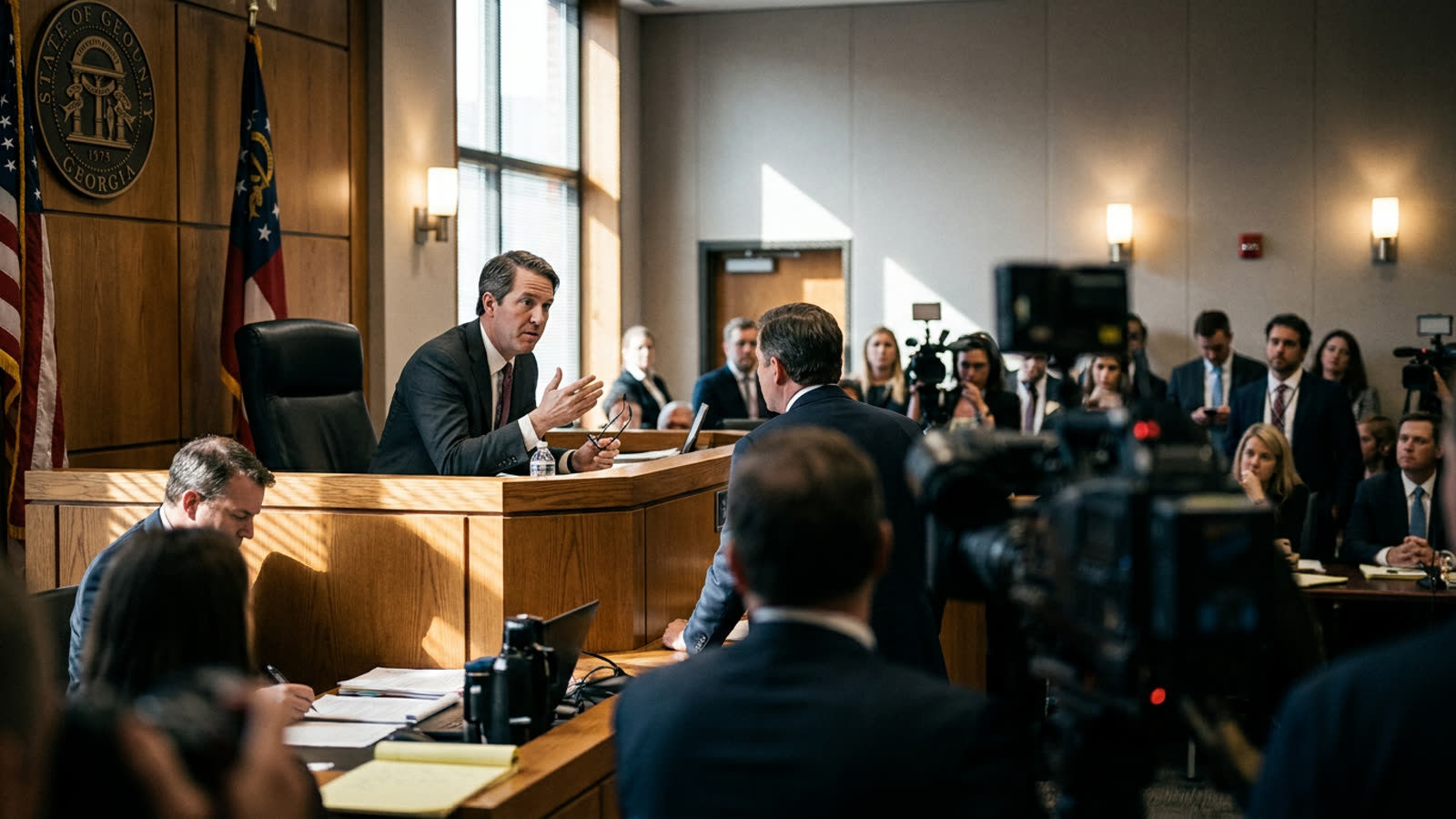
A federal judge overseeing one of the most closely watched election cases in the country has abruptly stepped down after revelations of an inappropriate relationship conducted inside his own courthouse, throwing Georgia's already fraught election-law landscape into fresh chaos.
Judge Scott McAfee, who had been presiding over a sprawling lawsuit challenging various provisions of Georgia's 2021 voting law, resigned from the case this week after reports surfaced alleging he had engaged in a sexual relationship with a courthouse employee. The details remain murky—neither McAfee nor the federal judiciary's administrative office has commented publicly—but the fallout is immediate and significant. The case, which involves challenges to voter-ID requirements, drop-box restrictions, and ballot-counting procedures, now faces an indefinite delay as it awaits reassignment.
Why this case matters
The lawsuit, brought by a coalition of voting-rights groups, was already a flashpoint in the national debate over election administration. Georgia's 2021 law became a symbol of the post-2020 push by Republican-controlled legislatures to tighten voting rules, and the legal challenge had reached a critical juncture. McAfee had been expected to rule on several pending motions within weeks—decisions that could have shaped how Georgia conducts its elections through 2028.
Now, a new judge must be assigned, must familiarize themselves with thousands of pages of filings, and must decide whether to revisit any of McAfee's earlier procedural rulings. Plaintiffs' attorneys are privately furious; defendants are publicly silent but presumably relieved by the delay.
The scandal itself
Courthouse sex scandals are not unheard of in the federal judiciary, but they are rare enough to command attention. McAfee, a relatively young jurist appointed during the first Trump administration, had cultivated a reputation for meticulous, if slow, case management. The alleged relationship reportedly involved a clerk in a different division of the courthouse, which may explain why the matter was not flagged earlier by internal ethics monitors. Georgia's legal community is now bracing for a broader inquiry into whether any of McAfee's rulings in other cases were compromised.
What happens next
The Northern District of Georgia's chief judge will reassign the case, likely within days. But the practical effect is a reset: briefing schedules will slip, hearings will be postponed, and any hope of a definitive ruling before November's midterm primaries is effectively gone. For voting-rights advocates, the delay is a defeat in itself—uncertainty benefits the status quo, and the status quo is the law they are challenging.
Our take
Judges are human, and humans do foolish things. But the judiciary's legitimacy depends on the perception that its officers are held to higher standards than the rest of us. McAfee's resignation is the right outcome, but it does not undo the damage: a critical case is now adrift, and Georgia voters are left waiting to learn the rules of their own elections. The scandal is embarrassing; the vacuum it leaves is consequential.