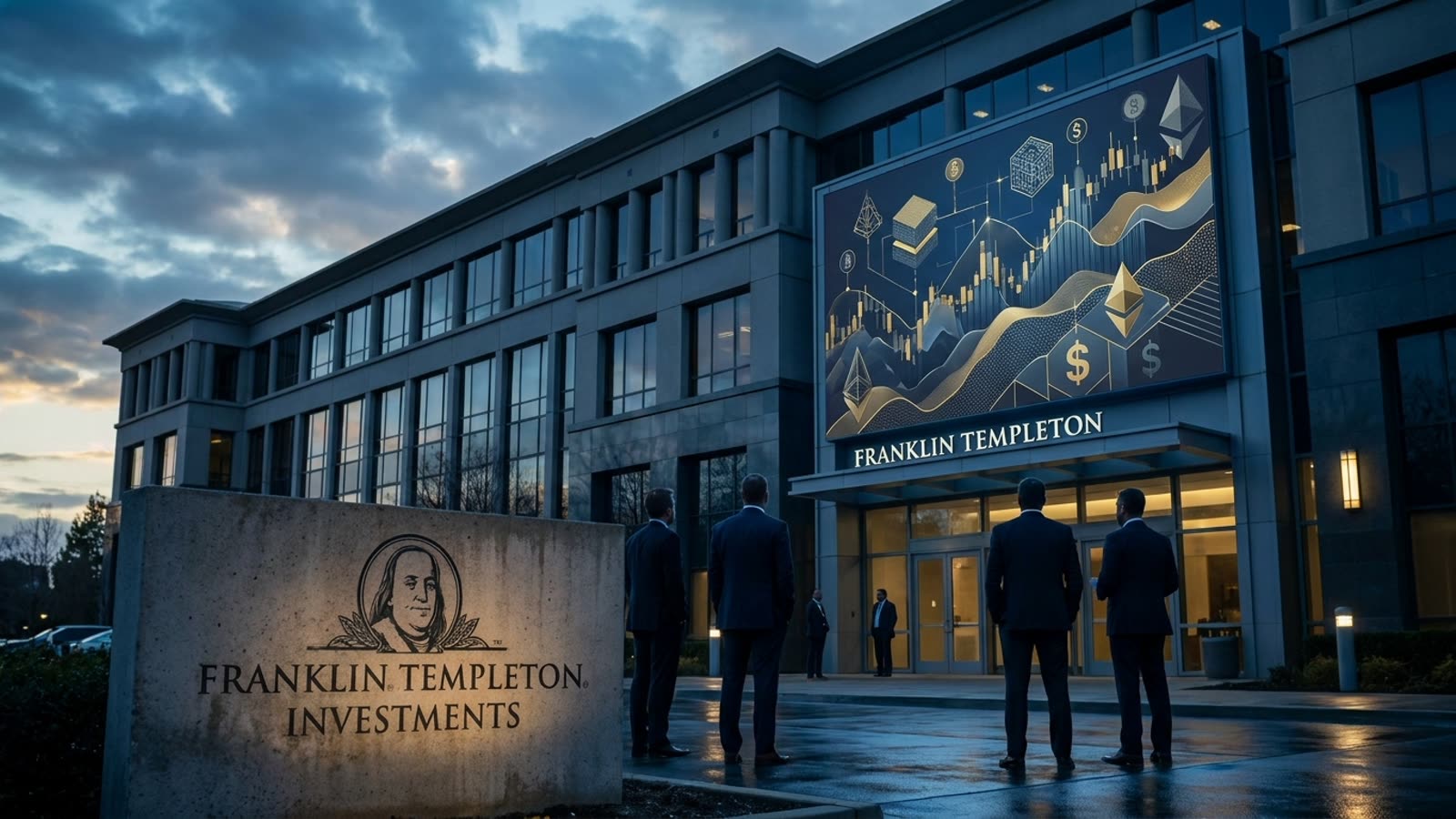
The announcement is easy to miss amid the noise of memecoins and regulatory melodrama, but it may matter more than any of it: Franklin Templeton, one of the oldest names in American asset management, is partnering with Payward—the parent company of Kraken—to bring tokenized versions of traditional financial products to market. The collaboration is not a press release dressed up as strategy. It is the institutional plumbing being laid for a financial system that treats blockchain rails as infrastructure rather than ideology.
Franklin Templeton has been quietly building its crypto credentials for years. Its OnChain U.S. Government Money Fund, launched in 2021, was among the first registered funds to use a public blockchain for transaction processing and share ownership recording. Kraken, meanwhile, has spent the post-FTX era positioning itself as the exchange that actually wants to be regulated, securing licenses in jurisdictions from Abu Dhabi to the United Kingdom. The pairing is not accidental: both parties have bet that the future of digital assets lies in compliance, not circumvention.
What tokenization actually means
Tokenization, in this context, refers to representing ownership of real-world assets—equities, bonds, money market funds—as digital tokens on a blockchain. The appeal is operational: settlement that takes seconds instead of days, fractional ownership that opens products to smaller investors, and a single ledger that eliminates the reconciliation headaches plaguing traditional finance. The skepticism is also operational: blockchain settlement is only as fast as the slowest regulatory approval, and fractional ownership means little if liquidity remains thin.
The Franklin Templeton-Kraken partnership appears designed to address both sides. Franklin Templeton brings the assets and the institutional credibility; Kraken brings the distribution network and the technical infrastructure. The initial focus will reportedly be on tokenized money market products and fixed-income instruments—safe, boring, and exactly the kind of thing that might actually work.
Why now
Timing matters. The Securities and Exchange Commission, under new leadership, has signaled a willingness to engage with tokenized securities rather than simply litigate them out of existence. BlackRock's tokenized Treasury fund crossed $2.5 billion in assets earlier this year. And the traditional finance industry, having watched crypto's retail boom from the sidelines, is increasingly unwilling to cede the infrastructure layer to native crypto firms.
Franklin Templeton is not betting on Bitcoin maximalism or DeFi utopianism. It is betting that the technology underlying crypto—programmable, transparent, always-on ledgers—can make its existing business cheaper and more accessible. That is a far less exciting thesis than most crypto discourse offers. It is also far more likely to reshape how capital markets actually function.
Our take
The crypto industry has spent a decade promising to disrupt traditional finance while mostly disrupting itself. This partnership represents something different: traditional finance deciding the disruption is real enough to co-opt. Franklin Templeton does not need Kraken to survive; it chose Kraken because the technology is maturing and the regulatory window is opening. The tokenized future will not arrive with a bang. It will arrive with a money market fund settling on Ethereum, and most people will not notice until it is already normal.