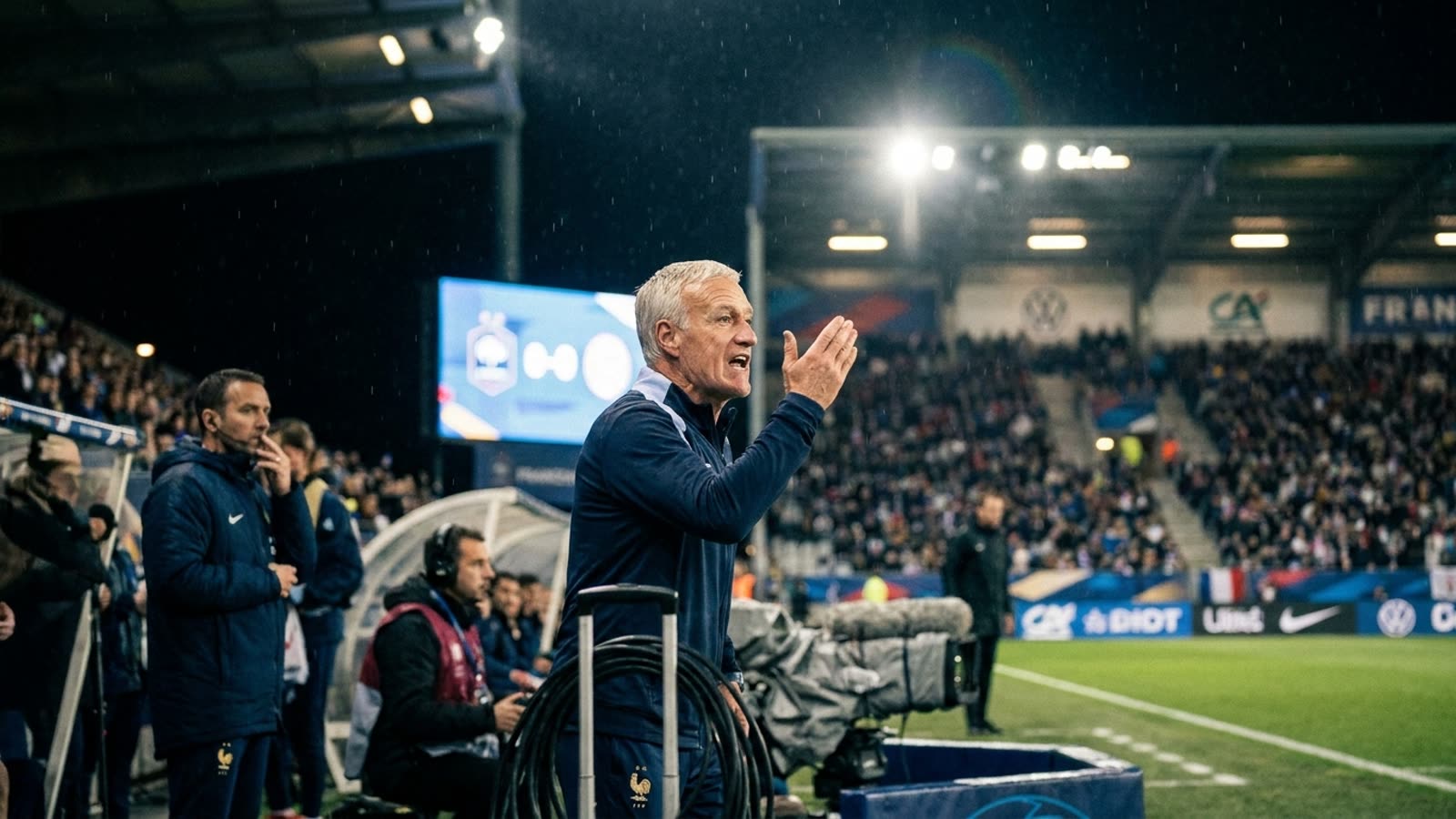
The French national team does not do drama in group stages anymore. They collect points the way a pension fund collects dividends: reliably, unspectacularly, with an eye toward long-term returns rather than immediate gratification. Their passage into the Round of 16 at the 2026 World Cup followed the template Didier Deschamps has refined over more than a decade at the helm — win the games you should win, manage minutes, rotate strategically, and save the fireworks for when elimination is actually on the line.
This is not a criticism. It is an observation about what tournament football has become at the highest level, and why France keeps reaching the business end of major competitions while more exciting teams flame out in the quarters.
The Deschamps doctrine
Deschamps took over France in 2012, inheriting a squad still recovering from the Knysna mutiny debacle. What he built was not a philosophy in the Guardiola or Bielsa sense — no manifesto, no tactical revolution. Instead, he constructed a system optimized for one purpose: winning knockout tournaments.
The approach prioritizes defensive solidity, squad harmony, and the management of egos over aesthetic purity. France under Deschamps can play beautiful football when required, but they are equally comfortable grinding out 1-0 wins through set pieces and defensive discipline. The 2018 World Cup triumph was a masterclass in pragmatism — France scored just once from open play in the knockout rounds before the final.
Now in 2026, at what is likely his final World Cup as manager, Deschamps has a squad bursting with attacking talent but continues to deploy them with characteristic restraint during the group phase. Why risk injury to key players in a match you can win at 70 percent intensity?
The mathematics of tournament survival
France's group-stage strategy reflects a deeper truth about World Cup mathematics. The difference between finishing first and second in a group is often marginal — you face a different opponent in the Round of 16, but the path to the final still requires beating excellent teams regardless. What matters far more is arriving at knockout rounds with a fully fit squad and players who have found their rhythm without exhausting themselves.
Deschamps understands this calculus intuitively. His rotation patterns ensure that fringe players get meaningful minutes, keeping the squad engaged while resting starters. His in-game management tends toward the conservative — protecting leads, making defensive substitutions, running down the clock. Critics call it negative football. The trophy cabinet suggests otherwise.
The contrast with teams that treat every group match like a cup final is instructive. Sides that peak too early, that leave everything on the pitch in matches against Costa Rica or Tunisia, often find themselves running on fumes when facing Germany or Brazil in the quarterfinals.
Our take
There is something almost bureaucratic about France's World Cup campaigns under Deschamps, and that is precisely why they work. Tournament football rewards consistency, depth, and the discipline to pace yourself across seven matches rather than three. Les Bleus have internalized this lesson more thoroughly than any other major nation. They will not win the "most exciting team" award in 2026. They might well win the actual trophy — again.